In 2026, coding is no longer a niche skill—it’s quickly becoming a new form of literacy. As artificial intelligence reshapes industries and technology becomes embedded in nearly every career path, parents are asking an important question: How do I prepare my child for a future that’s changing this fast?
The answer isn’t just more screen time—it’s smarter, more purposeful tech time. In this ultimate guide, we’ll break down everything you need to know about coding for kids—from when to start and which languages matter most, to how to choose the right program, how to incorporate AI classes for kids, and help your child build real-world skills that go far beyond the classroom.
Quick answer
Is Coding Still Worth Learning for Kids in 2026?
Yes. While AI can now generate code, kids who understand programming concepts are better equipped to build with AI, customize technology, debug systems, and create real digital products. Coding is increasingly becoming a foundational literacy alongside math and writing.

We will also address the elephant in the room: will coding knowledge still be useful in 10 years as more and more code is written by AI.
I’ve spent over a decade teaching tens of thousands of kids in 100+ countries how to code. In that time, I’ve watched the industry transform dramatically — and the question I get more than any other from parents right now is: ‘Does coding still matter in the age of AI?’ My answer, without hesitation, is yes. In fact, I’d argue it matters more now than it ever has. The kids who understand how technology works — not just how to use it — are the ones who will lead the next generation of innovation.
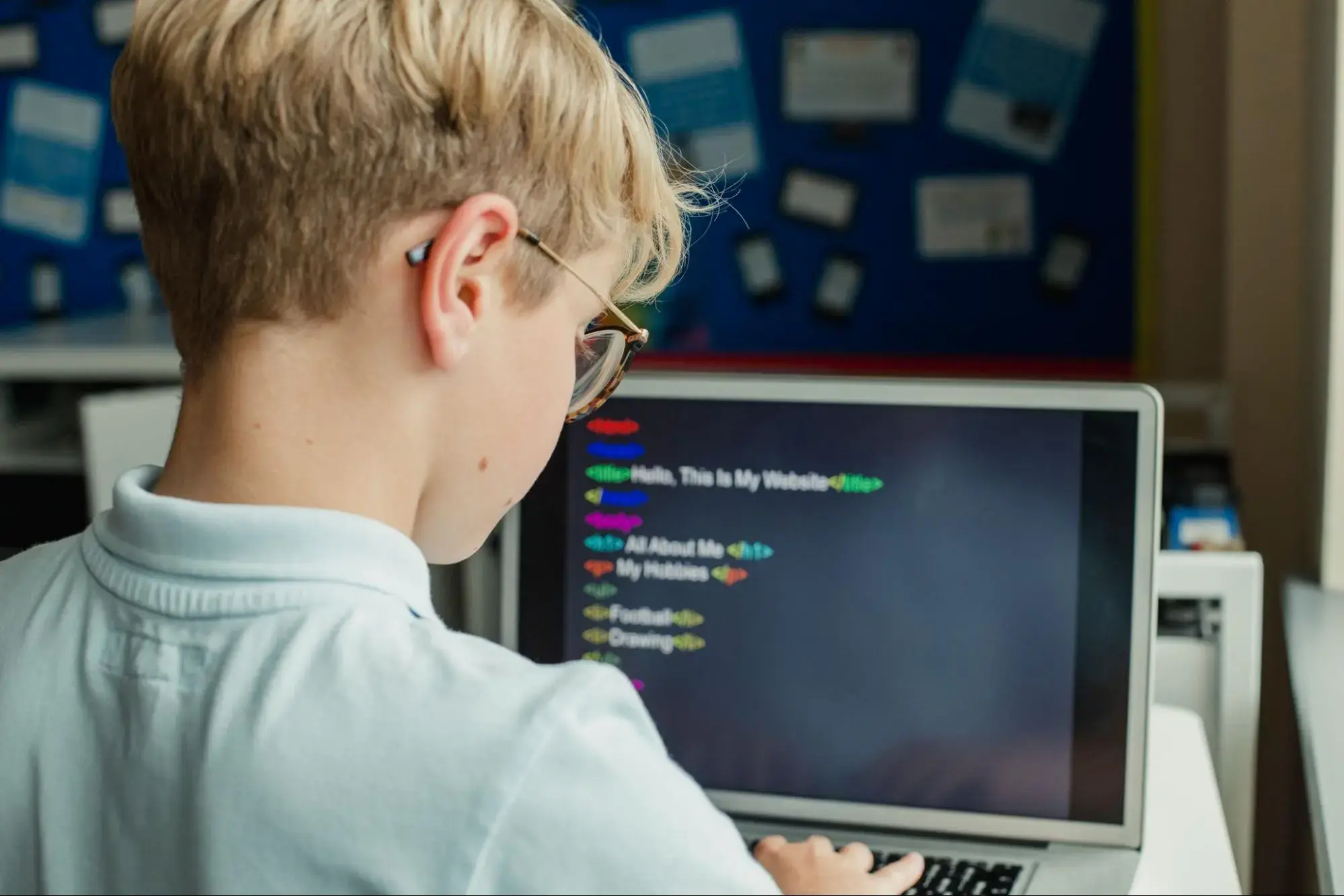
Table of Contents
What is Coding?
Coding (or computer programming) is a creative process executed by computer programmers wherein they tell a computer or machine how to perform a specific task. It involves writing executable scripts using computer programming languages like Java, Python, or JavaScript.
Some see coding as a way of communicating with computers. Programmers give computers instructions, and the computer carries them out. People who know how to code (i.e., coders, programmers, developers) can create games, apps, computer software, websites, and interactive digital content.
Should kids still learn to code in the Age of AI?
With AI tools now able to write code in seconds, many parents are wondering: does it still make sense for kids to learn coding? The short answer is yes—but the reason has evolved. Coding today isn’t just about typing syntax; it’s about learning how technology works, how to think logically, and how to build with AI and solve real problems. In the age of AI, kids who understand coding aren’t being replaced—they’re the ones best equipped to use AI, guide it, and build with it.
AI is a tool not a logic replacement.
AI can assist you in writing code, but it does not take away the need to know how code actually works. There will always be an advantage for individuals who can think computationally and create smart logic to debug errors as opposed to simply relying on what an AI tool tells them.
Customizing and understanding solutions will still require coding knowledge.
In most cases, AI-generated code does require some level of updating, editing, optimizing, or debugging. When you know how to code you can identify when something “didn’t work”, improve it, change it, and customize a solution to your needs.
Do you need to become an expert full stack developer to be able to vibe code AI applications and create automations? No. But if you do not have a foundational understanding of code, familiarity with coding tools such as GitHub, the ability to navigate front and back end code bases, and an understanding of APIs, you will struggle.
Innovators will be builders of technology, not just consumers.
The future generation of tech leaders will not only be applying AI to their visions, they will be building it. Learning how to code is the way to build new applications, customize AI or machine learning models, and reshape the future of technology as we know it.
Coding builds critical thinking and systematic problem solving.
The skills you learn from coding can be used across disciplines; whether medicine, finance, design or education, the formal mindset of thinking systemically and logically that coding teaches will be a huge advantage.
AI may accelerate software creation, but coding remains the foundation for understanding, customizing, and building technology.
Ways Kids Learn Coding
One of the best things about learning coding today is that there’s no single “right” path. Some kids thrive in self-paced environments where they can explore independently, while others do best with live instruction, mentorship, or social learning. The key is finding a format that matches your child’s age, personality, interests, and goals.
Here are the most common ways kids and teens learn coding in 2026:
Self-Paced Coding Platforms
Self-paced coding platforms allow kids to learn on their own schedule through interactive lessons, videos, projects, and challenges. These programs are ideal for independent learners who enjoy experimenting and progressing at their own pace.
Many self-paced platforms teach coding through games and hands-on projects. Younger students often begin with visual coding tools like Scratch, while older learners may transition into Python, web development, Roblox scripting, or AI projects.
Examples:
- • CodaKid
- • Tynker
Self-paced learning can be especially effective for motivated students who enjoy building projects outside of school hours.
Live Online Coding Classes
Live online coding classes combine structured curriculum with real instructors and classmates. These programs are popular with parents because they provide accountability, guidance, and personalized support while still allowing kids to learn from home.
Many live coding academies now teach real programming languages and professional tools used in the tech industry, including Python, JavaScript, Lua, Roblox Studio, and AI tools.
Examples:
- • CodaKid
- • CodeWizardsHQ
Live instruction is often one of the fastest ways for beginners to build confidence and stay consistent.
Coding Camps
Coding camps are short-term immersive programs that typically run during summer, school breaks, or weekends. Camps are designed to be highly engaging and project-focused, allowing kids to quickly explore topics like Roblox game development, Minecraft modding, AI, robotics, or app development.
For many students, coding camps are a great low-pressure way to discover whether they enjoy programming before committing to a longer program.
Examples:
- • iD Tech
- • CodaKid Virtual Camps
Private Coding Tutoring
Private coding lessons provide personalized 1-on-1 instruction tailored to a student’s skill level, goals, and interests. This format works especially well for students who want accelerated progress, individualized support, or advanced mentorship.
Private tutoring is becoming increasingly popular for teens interested in:
- • AI engineering
- • Competitive tech portfolios
- • App development
- • Roblox monetization
- • College admissions projects
- • Startup and entrepreneurship pathways
Examples:
- • CodaKid 1-on-1 Lessons
- • ID Tech 1:1 Tutoring
School & After-School Programs
Many schools now offer coding clubs, STEM electives, robotics teams, or computer science pathways. These programs help expose students to technology concepts in a collaborative setting and can be a great introduction to coding fundamentals.
However, the quality and depth of school coding programs vary significantly. Some focus primarily on digital literacy or block coding, while others offer advanced pathways in Java, Python, cybersecurity, or AI.
Examples:
- • FIRST Robotics
- • Code.org school initiatives
Game-Based Learning
One of the most effective ways to teach kids coding is through games and interactive digital worlds they already love. Game-based learning helps students stay engaged while learning complex concepts like logic, variables, events, functions, and debugging.
Platforms like Minecraft, Roblox, Scratch, and Unity have inspired millions of kids to learn coding because they allow students to create instead of simply consume technology. Instead of only playing games, students can build their own worlds, mechanics, apps, AI systems, and interactive experiences while learning real programming concepts along the way.
Popular examples include:
For many students, game development becomes the gateway into deeper programming, AI, entrepreneurship, and software engineering skills later on.
Which Learning Style Is Best?
The best learning environment depends on your child’s age, motivation level, and goals.
- • Younger beginners often do well with game-based learning and live instruction.
- • Independent learners may thrive with self-paced platforms.
- • Highly motivated teens may benefit from private mentorship and portfolio-driven projects.
- • Social learners often enjoy coding camps and group classes.
The good news is that modern coding education is flexible. Many families combine multiple approaches over time as their child’s skills and interests evolve.
Ways Kids Learn Coding: Comparison Table
Related Reading:
- Best Coding Classes for Kids — Online and In-Person [2026]
- Best AI Classes for Teens Ages 13–18 — Online Courses & Activities
What Coding Languages Should Kids Learn First?
Not all coding languages are created equal — and the right starting point depends on your child’s age, interests, and goals. Here’s how to think about the progression:
Scratch (ages 6–10)
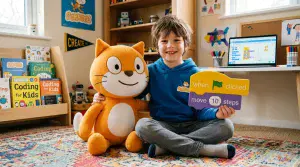
Scratch is the gold standard for young beginners. Its drag-and-drop block system removes the frustration of syntax errors and lets kids focus on logic, creativity, and building real projects — games, animations, and interactive stories — from day one. It’s free, browser-based, and widely used in schools worldwide.
Python (ages 10+)
Python is the most recommended first text-based language — and for good reason. Its clean, readable syntax closely resembles plain English, making the jump from block coding far less intimidating. More importantly, Python powers AI, data science, automation, and web development, making it one of the most future-relevant skills a young learner can pick up today.
JavaScript (ages 12+)
JavaScript is the language of the web. It runs in every browser and is the foundation for building interactive websites and apps. For teens interested in front-end development, startups, or seeing their work go live on the internet, JavaScript is a natural next step after Python.
Lua (ages 10+)
Lua is the scripting language behind Roblox Studio. For kids who are already spending time on Roblox, learning Lua is a seamless transition — they’re essentially learning to code inside a world they already love. Many young Roblox developers go on to monetize their games, making Lua one of the few languages where kids see real-world results early.
Java (ages 12+)
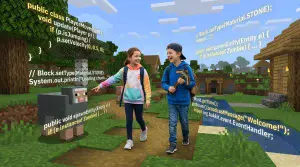
Java is the language behind Minecraft modding and one of the most widely taught languages in high school and university computer science programs. It’s more complex than Python, but teens who master it build strong fundamentals that transfer directly to professional software development.
When should kids move from block coding to text-based languages?
Most kids are ready to transition around ages 9–11, once they’ve grasped core concepts like loops, conditionals, and events in Scratch. The shift doesn’t need to be abrupt — Python in particular was designed to feel approachable for learners coming from visual coding environments. The key signal isn’t age; it’s when a child starts bumping up against the limits of what block coding can do and wants to build something more.
Why Coding Is Beneficial for Kids
Young minds are adaptable and malleable. They are quickly able to absorb and retain knowledge. Kids that are exposed to coding at a very young age have the benefit of learning how to critically assess situations, explore different perspectives, construct creative solutions, and execute the trial-and-error learning process. The earlier kids learn how to code, the easier it will be for them to master this skill and all the subsequent skills coding encourages.
1) Builds the Foundation to Create with AI
The future won’t belong only to people who use AI tools — it will belong to people who can build with them.
Learning to code gives kids and teens the technical foundation to create AI-powered apps, games, automations, websites, and digital products instead of simply consuming technology.
As AI becomes integrated into nearly every industry, students who understand coding concepts like logic, data, APIs, and problem-solving will be far better positioned to turn their ideas into real projects and opportunities.
2) Promotes Logical & Critical Thinking
Coding encourages logic, reasoning, and critical thinking in kids. Research backs this up: students who code tend to score higher on cognitive ability tests, and an MIT study found programming can directly benefit cognitive development.
A core part of learning to code is decomposition — breaking complex problems into smaller, manageable pieces. This maps directly to real-life problem-solving, where kids learn to identify a problem, analyze it, build a solution, test it, and iterate.
The more kids write, debug, and troubleshoot code, the more this process becomes second nature — a skill that pays off well beyond the screen.
(Want to go deeper? Read: The #1 Skill That All Kids Need to be Successful in an Uncertain Future)
Related Reading:
Coding for 10-Year-Olds: A Comprehensive Guide for Parents

3) Promotes Focus & Creativity
Because computer programming seems so technical, many people don’t equate it with creative thinking — especially given how methodical and procedural the act of coding can be. But programmers know this all too well: coding can promote creativity. A certain level of creative thinking is required when you’re programming from scratch.
Think about it; kids who know how to code can develop apps, games, animations, websites, and more. They can create interactive content by writing down lines of existing code (or snapping together some blocks, seeing as block coding is a popular format of coding for kids). Still, the actual blueprint for that content comes from their imagination.
Once kids learn how to code, the way they consume digital media and technology changes. Every time they try out a new app or play a new video game, they can draw inspiration for their creation. They could look at an online fighting game and wonder, what if this was an adventure game instead? And with their coding knowledge, they could make this hypothetical a reality.
Coding can be a viable outlet for their creative expression. Some kids draw. Some kids play an instrument or sing. Some kids code.
And with this creativity comes a certain level of focus, too. See, when kids develop a program, they have to consider all aspects of it in order to write the corresponding code.
Let’s take developing a video game as an example. Kids will have to write code to make a character walk forwards, backward, and maybe even side to side. They’ll have to write code so the character can jump or dodge. They also have to consider how a character interacts with the environment and then write code that covers all eventual outcomes following that interaction (i.e., if a character picks up an object, if a character destroys an object, if a character uses an object, etc.).
It’s a lot to think about. If a child doesn’t have the right amount of focus and organization, they may end up coding a lot of bugs or filler in their script instead.
4) Encourages Confidence & Resilience
Coding is unforgiving — one misplaced comma can break an entire script. That precision teaches kids patience and resilience as they write, debug, and rewrite their way to a working result.
It also builds confidence. Completing difficult projects, even after repeated failure, trains kids to trust their decisions — a mindset that carries into school, friendships, and beyond.

Coding vs AI Tools: What Kids Actually Need to Learn
Every week, a parent asks some version of the same question: “If AI can write code, why should my kid bother learning?”
It’s fair. Tools like ChatGPT and GitHub Copilot generate working scripts in seconds. So what are we actually teaching when we teach kids to code?
One distinction: prompting vs. building.
Prompting Gets You Started. Building Gets You Somewhere.
AI tools are only as useful as the person directing them. A kid who understands how code works can spot when AI output is wrong, fix it, and extend it. A kid who doesn’t is stuck copy-pasting and hoping for the best.
Think of it like cooking. AI is a great sous chef — it can chop and measure. But if you don’t understand flavor and technique, you can’t course-correct when something goes wrong. You’re not cooking. You’re reheating.
Passive AI Use Is a Dead End
There’s a growing gap between kids who use AI passively — to finish homework, generate projects, skip thinking — and kids who use it actively, as a tool they control.
Passive users get short-term wins and long-term skill debt. Active users build faster because they understand what’s underneath.
What Coding Teaches That AI Can’t
Coding develops computational thinking — the ability to break problems into logical steps, spot patterns, and build systems. This is what makes someone good at working with AI, not just through it.
A child who understands loops, conditionals, and data structures writes better prompts, catches more errors, and builds more ambitious things. Coding teaches the mental models that make AI powerful instead of just convenient.
Foundations First, Shortcuts Second
Shortcuts are only useful once you know what you’re skipping. Kids who learn the fundamentals first — logic, structure, debugging, decomposition — can pick up every new AI tool that comes along and hit the ground running. Kids who only learn the shortcuts have nowhere to go when the shortcut breaks.
The goal isn’t to raise programmers who compete with AI. It’s to raise thinkers who know how to use it.
What Age Should Kids Start Coding?
The short answer: earlier than most parents think. Kids as young as six can start learning coding concepts — not through typing lines of code, but through games, visual tools, and creative play that build the logical thinking coding requires. The earlier they start, the more natural it becomes.
Here’s how to think about each stage:
Ages 6–8: Block coding, creativity, and games
This is the ideal age to introduce coding as play. Visual, drag-and-drop tools like Scratch Jr. and early Scratch projects let young kids build simple animations, games, and stories without worrying about syntax. The goal at this stage isn’t fluency — it’s familiarity. Kids learn that computers follow instructions, that sequences matter, and that they can create things, not just consume them. Confidence built here carries forward into every stage that follows.
Ages 9–12: Moving into real languages
This is where things get serious — and exciting. Most kids this age are ready to transition from block coding into text-based languages like Python, or to channel their interests into Roblox Studio (Lua) or Minecraft modding (Java). Projects become more complex: simple apps, games with real mechanics, basic automations. Problem-solving and debugging become natural habits. Kids who start text-based coding at this stage have a significant head start by the time they reach high school.
Ages 13–18: AI tools, apps, APIs, and real-world portfolios
Teenagers can work at a level that genuinely surprises people. This is the stage for building full applications, exploring AI and machine learning, working with APIs, and developing a portfolio that stands out on college applications and internship interviews. Many teens in this age group go further — launching Roblox games that generate income, building apps with real users, or pursuing entrepreneurship before graduation. For motivated students, private mentorship and project-based learning at this stage can be genuinely career-defining.
It’s never too late to start.
While starting young has clear advantages, kids who begin coding at 12, 14, or even 16 can still build impressive skills and portfolios. The right program, the right project, and the right motivation matter far more than the starting age.
Why Coding Is an Investment in Your Child’s Future
Starting early with coding unlocks opportunities most kids won’t have access to until much later — if at all.
College admissions edge. Admissions officers notice students who’ve built real things. An original app, game, or AI-powered project stands out far more than another extracurricular.
Career head start. The World Economic Forum ranks AI and machine learning among the fastest-growing job roles globally. Kids who code arrive at the starting line already fluent in the language of these fields.
Entrepreneurship, earlier. Some teenagers are building and launching products before they can drive. Coding removes the barrier between an idea and something real.
Portfolios that speak for themselves. Unlike grades or test scores, a portfolio of projects is tangible proof of skill — useful for scholarships, internships, and job applications for years to come.
Technical fluency as leverage. In almost every industry, people who understand how technology works have an advantage over those who don’t. Coding builds that fluency early, when it’s easiest to absorb.
Digital leverage. A kid who can code can automate, build tools, and solve problems at a scale that non-technical peers simply can’t match — regardless of what field they eventually go into.
The question isn’t whether coding will be relevant to your child’s future. It’s whether they’ll be equipped to take advantage of it.
Related Reading:
5 Things that All Kids Should Study to Get a High Paying Job in the Future
4 Ways a Code Academy Can Change Your Child’s Future

Tips To Get Your Child Interested in Coding
If your child is already interested in computer programming, coding, and/or game/app development, you probably won’t have to do much to convince them. It would be more of a matter of finding online coding courses that you can agree on (in terms of budget, curriculum, schedule, and so on). But if your kid doesn’t seem excited about computer sciences/STEM subjects, there are a few ways you can pique their interest:
1) Combine It with Their Current Passion
Earlier, we mentioned that coding could be gamified to make it more engaging to younger audiences. You can apply the same concept to spark your kids’ interest in coding because the beauty of coding is that it can be quite versatile. Here are some ways coding for kids can be implemented in different hobbies:
Toys: Does your kid prefer playing with toys overlooking a computer screen? Not a problem at all. Plenty of fun, unplugged toys cover the basics of STEM and coding. Our suggestions? Code Car: The Fastest Start with Typed Coding, ThinkFun Gravity Maze Marble Run Logic Game, and Learning Resources Coding Critters.
Robots: If your kid is into robots, they’re this close to jumping on coding, I can promise you that. Plenty of coding for kids’ kits out there involves a programmable robot. Cozmo Coding Toy is a popular one. So is Wonder Workshop Dash – Coding Robot for Kids. And if your kid loves Sesame Street, WowWee Elmoji is a great choice.
Building: LEGO remains one of the best toys for budding builders and tinkerers. Their ability to recognize and meet public demand regarding LEGO kit themes and concepts is nothing short of astonishing. Check out their LEGO Boost Robotics Creative Toolbox or their LEGO City Arctic Scout Truck for a great way to teach kids coding concepts using their favorite building blocks.
Drawing/Painting: If your kid loves drawing, you can introduce them to animation tools that can help bring their artistic creations to life! For instance, Scratch is a kid-friendly coding platform that allows children to create interactive stories, games, and animations using Scratch’s block-based programming language. Kids can upload their own backgrounds and characters (called Sprites) to the platform to personalize their projects.
Video Games/Mobile Games: Kids who love computer games and mobile games could be interested in making their own. Avid gamers can learn basic programming skills through wildly popular computer games like Minecraft and Roblox.
Related Reading:
7 Surprising Things That Every Parent Should Know About Minecraft
5 Reasons Why Roblox Coding is the Next Big Thing in Kids Computer Science Education
2) Learn Coding with Them
Although independence can be incredibly rewarding, many kids still prefer having their parents with them as they dive into new experiences. Learning new things can be far less daunting and intimidating when you go into it with people you trust. If your kid is hesitant about learning to code, why not suggest that you two learn together? After all, if you don’t consider yourself particularly tech-savvy, this could be a great learning opportunity for you, too!
3) Make it Social
Considering the current global pandemic, this may be a little difficult, but try turning coding lessons into a social activity. For instance, maybe you could coordinate with teachers and other parents to schedule a “Community Coding” lesson. Or find coding academies online that allow for private group classes that your kids and their friends can join. Kids tend to share the same interests with their peer group so they don’t feel “left out.” For natural social butterflies, having a network of fellow coders can also motivate him/her to keep learning and practicing.

Conclusion
Like it or not, coding is becoming the language of the 21st century. It has become a basic literacy that kids, teens, and even young adults can benefit from knowing. Think about it; we ultimately depend on machine intelligence: smartphones, laptops, security systems, etc. With such technologies being a permanent fixture in our lives, shouldn’t we at least know how to communicate with them?
Ergo, coding for kids is no longer an optional activity. It is now, for all intents and purposes, a necessary skill that they should have a basic understanding of—else they risk getting left behind by their peers.
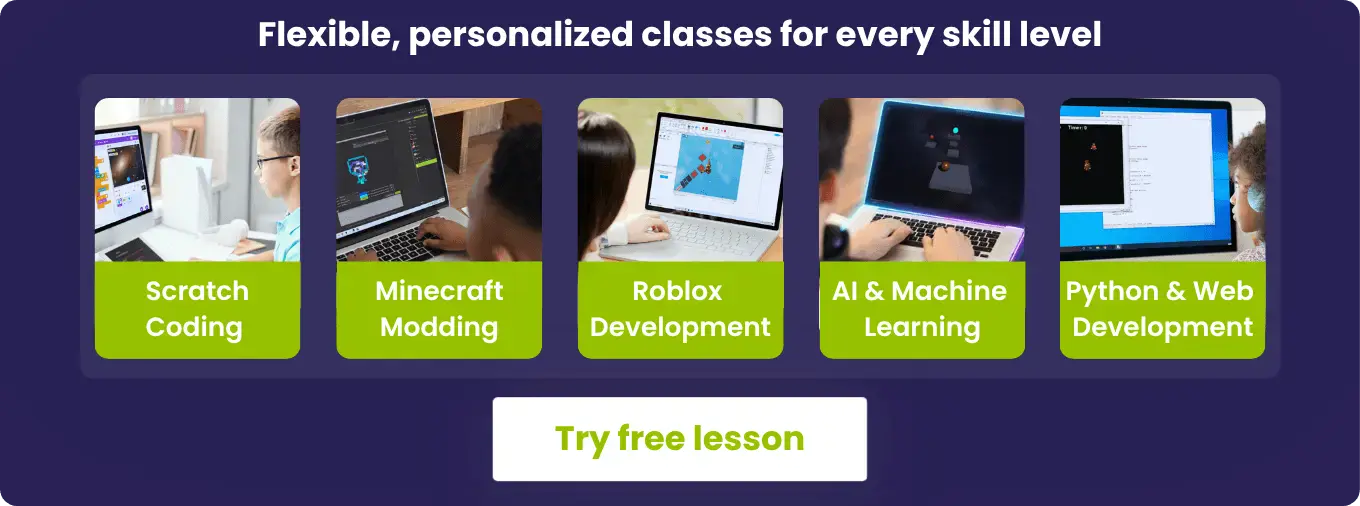
Do you want your child to start learning how to code? Get access to CodaKid’s award-winning online courses today by enrolling in a free trial!
FAQs
What age should kids start learning to code?
Kids can begin as early as age 6 using visual block-based tools like Scratch. The earlier they start, the more naturally computational thinking develops — but it’s never too late, and many platforms serve learners all the way up to age 18.
Does coding still matter now that AI can write code?
Yes — arguably more than ever. AI can generate code, but kids who understand how code works can direct, debug, and improve what AI produces. Without that foundation, they’ll struggle to customize solutions or catch errors.
What’s the best coding language for kids to learn first?
Most beginners start with Scratch (block-based), which requires no typing and teaches core logic. From there, Python is widely recommended as a first text-based language due to its clean syntax and broad applications in AI, data, and web development.
How do I get my child interested in coding if they’re not into computers?
Connect coding to what they already love — robots, LEGO, drawing, or games like Minecraft and Roblox all have coding applications. When kids see coding as a way to build things they care about, the interest follows naturally.
What should I look for when choosing a coding program for my child?
Look for age-appropriate curriculum, real programming languages (not just drag-and-drop forever), strong student support, and flexible scheduling. Bonus if the program incorporates AI projects, which are increasingly relevant for where the industry is headed.