Table of Contents
AI for Kids: A Parent’s Guide (2026)
Are you wondering how to prepare your child for the future in a world driven by rapid technological advancements? You’ve probably heard the buzz around Artificial Intelligence (AI) for kids and how it’s reshaping industries, jobs, and even daily life. But how does this impact your child, and why should you care about teaching them AI skills now?
This article will explore why AI education isn’t just a passing trend but a key to unlocking your child’s future success. We’ll discuss how AI is changing society, why starting early matters, and the practical steps you can take to introduce your child to AI concepts. By the end, you’ll have a clear understanding of how AI can empower your child with skills that will be essential in 2026 and beyond.
The Growing Role of AI in Society

Artificial Intelligence is no longer a concept of the future—it’s already here, influencing nearly every aspect of our lives. From the way we communicate to how industries function, AI is at the core of these transformations. But what does that mean for your child? Simply put, AI will shape the world they grow up in. Whether it’s virtual assistants like Alexa, AI-powered recommendations on YouTube, or autonomous cars, AI is part of their everyday experiences.
AI’s growing role in healthcare, finance, education, and even entertainment means that understanding how it works will be crucial for tomorrow’s leaders and innovators. Kids who learn AI concepts now will have an edge, as they’ll be better equipped to navigate and shape the AI-driven world. It’s not just about programming or math—it’s about understanding problem-solving, creativity, and the ethical implications of technology. The earlier we prepare kids for this shift, the more adaptable and successful they’ll be in their future careers.
Why Start AI Education Early?
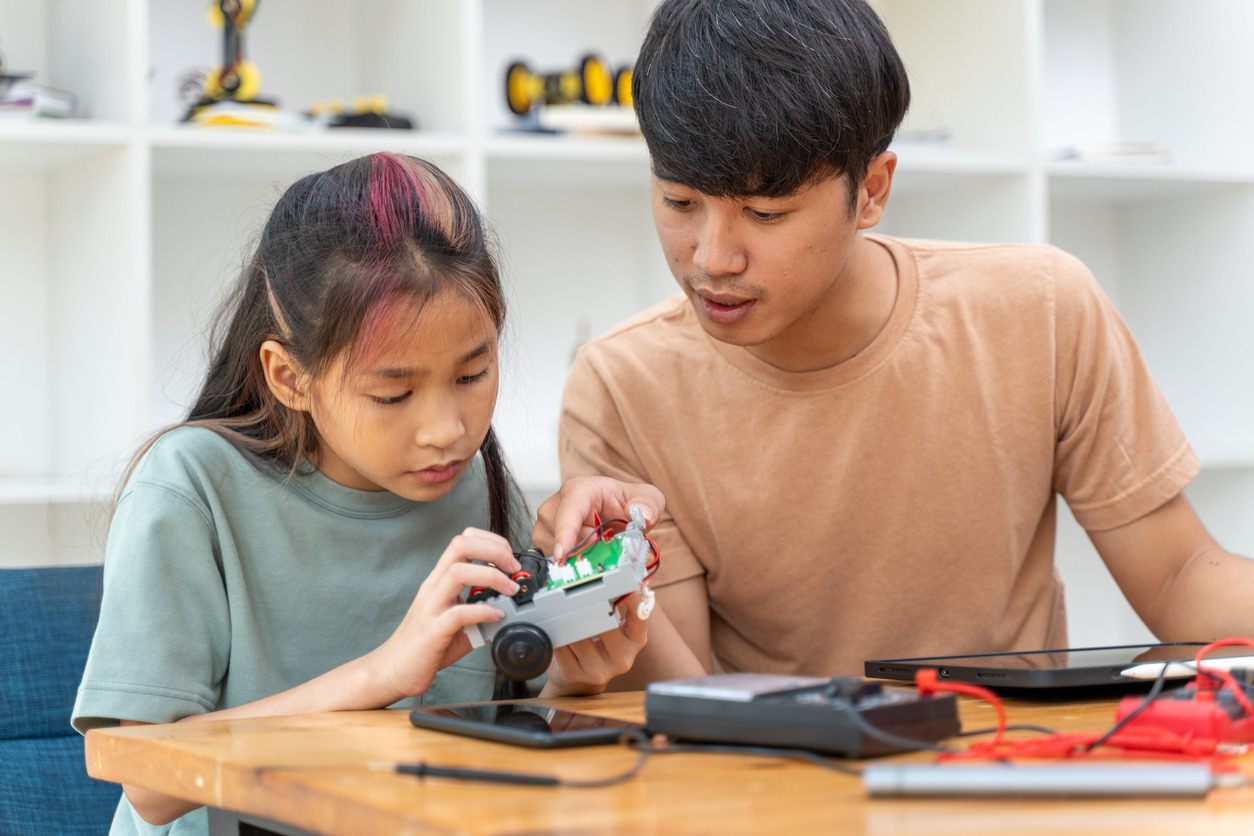
Introducing AI concepts to kids as early as possible can provide numerous benefits. First, children are naturally curious, and their brains are primed to absorb new information quickly. Starting early taps into their natural inclination to explore, helping them view AI as an exciting tool rather than something complex or intimidating.
Another major reason to begin early is that foundational AI skills overlap with other key subjects like math, logic, and creative problem-solving. These skills help children develop critical thinking and an ability to approach challenges from multiple angles. Imagine how empowering it can be for your child to understand not only how technology works but also how to control it and even create it.
Here’s why early AI education makes sense:
- Curiosity and learning capacity: Young minds are open and eager to learn, making them perfect candidates for early exposure to AI concepts.
- Cross-disciplinary benefits: AI involves math, logic, and creativity, boosting their overall cognitive skills.
- Preparedness for future careers: AI will dominate many industries in the future, giving early learners a head start.
By giving your child the tools to understand AI early, you’re setting them up to be not just consumers of technology, but creators and innovators in their own right.
Related Read: Top 10 Affordable AI Robots to Teach Kids Coding and AI
AI Education as a Foundation for Future Careers
In a world where automation and AI are becoming deeply integrated into industries, the future job market will demand a whole new set of skills. By 2026, experts predict that AI will play a critical role in sectors ranging from healthcare to entertainment. For children, understanding AI concepts now will not only open doors to high-tech careers but also provide a competitive edge in any field.
AI education doesn’t just prepare kids to work in tech-related jobs. It teaches them problem-solving, logical reasoning, and creative thinking—skills that are relevant across various disciplines. Whether your child dreams of being a data scientist, a medical professional using AI-powered diagnostics, or an entrepreneur launching AI-driven startups, early exposure to AI will be a strong foundation for future career success. Moreover, it fosters a mindset of adaptability, helping them stay on top of emerging technologies and changes in their chosen fields.
This foundational knowledge will be especially important as AI automates routine tasks, leaving the workforce to focus on creativity, strategic thinking, and innovation. Those who understand how AI functions will be positioned to lead and shape its applications in the workplace, making them valuable assets in any industry.
AI Learning Tools for Kids

Teaching AI to kids doesn’t need to be overwhelming. In fact, there are several user-friendly, engaging platforms available that introduce AI concepts through hands-on learning and creative projects. These tools break down complex ideas into bite-sized lessons that are accessible even for younger learners, making AI education both fun and approachable.
Here are some effective AI learning tools designed for kids:
- Scratch with AI Extensions: Scratch is a popular block-based programming platform where children can build games, animations, and stories. The introduction of AI extensions allows kids to incorporate AI-driven elements, like speech recognition, into their projects, making learning interactive.
- Google’s AI Experiments: Google offers a range of playful experiments that let kids experiment with AI through visual and audio-based projects. This allows them to get a feel for how AI interprets patterns and data.
- CodaKid’s AI Courses: CodaKid’s curriculum provides structured courses where kids can learn AI through coding projects. These courses are designed for various age groups and help kids understand core AI concepts while building real, working programs.
These tools help children grasp AI principles through play, creativity, and experimentation. Not only do they make learning AI fun, but they also help demystify complex topics, building confidence and curiosity. By incorporating these platforms into a child’s learning journey, parents can spark an interest in AI and help foster future-ready skills from an early age.
Related Read: Interactive AI Learning Tools for Kids: Apps and Platforms to Get Started
Challenges in AI Education and How to Overcome Them
While the benefits of introducing AI to kids are clear, there are still challenges that parents and educators face when integrating AI education into learning routines. One of the biggest hurdles is the complexity of AI concepts. Machine learning, neural networks, and data science might seem too advanced or abstract for young learners, leaving parents feeling overwhelmed or unsure of where to start.
Another challenge is the accessibility of resources. Not all schools have the tools, technology, or trained staff to teach AI effectively. This can create a learning gap for students in underfunded or underserved communities, where access to high-quality STEM education may be limited.
However, the right approach and resources can overcome these challenges:
- Simplifying AI concepts: Start small. Instead of jumping into advanced topics, focus on introducing basic ideas such as pattern recognition, problem-solving, and logic. Visual and interactive tools, like Scratch or CodaKid, are excellent ways to simplify AI for young minds.
- Self-paced online learning: If formal education systems are lacking AI courses, there are plenty of online platforms that offer self-paced learning opportunities. Parents can support their kids by exploring these together and selecting age-appropriate materials.
- Encouraging curiosity: AI education doesn’t have to be rigid. Encourage your child’s natural curiosity and let them experiment with tools and projects. This makes learning feel less like work and more like an exploration.
With the right creative solutions, you can keep your child ahead as AI becomes more prominent in education and the workforce.
Ethics and Responsibility in AI Education

As we introduce children to AI, it’s equally important to teach them about the ethical implications and responsibilities that come with this powerful technology. AI has the potential to influence many aspects of society, from privacy and data use to job automation and decision-making. Children need to understand not only how to create AI but also the importance of using it responsibly.
One ethical concern is bias in AI algorithms. Since AI systems learn from data, they can sometimes reflect the biases present in that data. It’s crucial for kids to learn how to recognize and mitigate such biases, ensuring that their creations are fair and inclusive. Discussions about fairness, transparency, and accountability should be part of the AI education journey.
Additionally, children should be aware of privacy issues. With AI systems often relying on personal data, teaching kids about the importance of data privacy and ethical data usage is critical. They need to understand that while AI can provide many benefits, it must be handled with care to avoid misuse or harm.
Weaving ethics into AI education ensures the next generation of developers and users are not only skilled but also responsible, thoughtful innovators.
Related Read: ChatGPT for Kids: Safe and Fun Ways to Explore AI
The Future of AI in Education and Beyond
The future of AI in education looks incredibly promising. AI is not only a subject to be learned but also a tool that can enhance the way children learn other subjects. Adaptive learning platforms powered by AI can tailor educational experiences to each student’s unique pace and style, offering personalized feedback and recommendations. This personalized approach can make learning more efficient and enjoyable for kids, helping them excel in areas where they need the most support.
Beyond the classroom, AI will continue to shape industries, automate tasks, and drive innovation. Children learning AI today will design the intelligent systems of tomorrow — from healthcare solutions to environmental technologies and beyond.
In an AI-driven future, understanding and working with AI will no longer be optional — it will be essential. The more we invest in AI education now, the more prepared children will be to navigate an AI-driven world. The future is bright for those who grasp AI early — by giving kids the right tools, we shape tomorrow’s leaders.
Preparing Today’s Kids for Tomorrow’s AI-Driven World
As AI continues to shape our world, equipping children with the knowledge and skills to work with it matters more. Early AI education gives children a strong foundation for future careers, critical thinking skills, and an understanding of ethical responsibilities.
Teaching AI has its challenges, but the right tools and resources can make it an exciting part of education. From learning platforms to ethics discussions, AI education is about more than technology — it’s about preparing kids for the future.
If you’re ready to take the next step in your child’s learning journey, we invite you to explore our AI courses for kids at CodaKid. Our programs make learning AI engaging and accessible, giving your child hands-on experiences that will empower them for the future. Let’s build the innovators of tomorrow, one step at a time.
FAQs
What is AI education for kids?
AI education for kids teaches children core AI concepts — how it works, how it’s used, and how to build projects. It goes beyond coding to include topics like pattern recognition, machine learning, data, and ethics. Beginners learn AI through visual tools and games. As kids advance, they move into hands-on projects using languages like Python to build real AI applications. The goal is to help children understand AI as both users and creators, not just passive consumers of technology.
At what age should kids start learning about AI?
Children as young as 6–8 can explore basic AI concepts through playful, visual tools that introduce patterns and decision-making. Ages 9–12 is an ideal window for structured AI education, including introductory lessons on how AI models are trained and work. For deeper machine learning and data science content, ages 13 and up with a Python foundation is the sweet spot. The key is to match the complexity of the content to the child’s developmental stage and prior coding experience.
How is AI already being used in kids’ everyday lives?
AI is already deeply embedded in children’s daily experiences, even if they don’t realize it. Voice assistants like Alexa and Siri use AI to understand and respond to speech. YouTube and Netflix use AI recommendation systems to suggest videos based on viewing history. Video games use AI to control non-player characters and adapt difficulty levels. Spelling and grammar tools like Grammarly are AI-powered. Even the filters and face-recognition features on social media apps rely on AI. Helping kids recognize these everyday examples is a powerful way to make AI feel tangible and relevant rather than abstract.
What AI skills will kids need for future jobs?
Key AI career skills include machine learning, data literacy, Python, prompt engineering, critical thinking, and a solid grasp of ethics. Beyond technical skills, employers will value workers who know when to use AI, question it, and improve it.
How do you teach AI to kids without overwhelming them?
The key is to start with concepts kids already understand and build from there. Begin with pattern recognition — something children do naturally — and connect it to how AI learns from examples. Use hands-on tools like Scratch or Google’s AI Experiments so kids can interact with AI and build real projects. Keep sessions short and curiosity-driven, and avoid introducing jargon too early. Plain-language explanations and real-world analogies go a long way in making abstract concepts click.
What are the best AI learning tools and platforms for kids?
The most effective AI learning tools for kids include:
- Scratch with AI Extensions (ages 6–12) — MIT’s block-based coding platform supports AI-driven features like speech and image recognition.
- Google’s AI Experiments — browser-based, interactive projects that let kids explore how AI interprets sound, images, and drawings.
- CodaKid’s AI Courses — structured, project-based curriculum for multiple age groups that teaches AI through real coding projects.
- Machine Learning for Kids — a free tool that lets children train machine learning models and use them in Scratch or Python projects.
- Teachable Machine by Google — a beginner-friendly web app where kids can train image, sound, or pose recognition models with no coding required.
Why is AI ethics important to teach children?
Teaching AI ethics is essential — AI systems have real consequences, and today’s children will be the ones building them. Kids need to understand that AI learns from data, and if that data reflects societal biases, the AI will too. This can lead to unfair outcomes in hiring, healthcare, and lending. Children must also understand privacy — AI systems rely on personal data, raising important questions about consent and data use. Teaching fairness, transparency, and accountability alongside technical skills helps children become not just capable developers, but responsible ones.
How is AI changing education for kids?
AI is transforming education in several meaningful ways. Adaptive learning platforms personalize lessons to each student’s pace and strengths, while intelligent tutoring tools deliver immediate, targeted feedback. Educators can now identify and support struggling students earlier, with these tools expected to play a larger role ahead.