Coding competitions are a fun way for kids to learn programming, improve problem-solving, and work in teams. Here’s a quick rundown of 10 beginner-friendly coding contests for kids, covering various age groups, skill levels, and interests:
- CodeMonkey Challenge: Ages 4–14+. Focuses on block coding and real-world languages like Python and CoffeeScript. Fully online.
- Google Code-In: Ages 13–17. Offers open-source tasks in Python, JavaScript, and more. Online-only (discontinued after 2019).
- CoderZ League: Ages 8–16. Team-based robotics programming using Blockly and Python. Virtual format.
- Tynker Code Jam: Ages 6–18. Encourages creativity with block coding, JavaScript, and Python. Online participation.
- Wonder Workshop Robotics Competition: Ages 6–12. Uses Blockly and JavaScript to program Dash robots. Fully virtual.
- Scratch Olympiad: Ages 5–18. Focuses on creative projects using Scratch. Online competition.
- ACSL Junior Division: Grades 7–9. Combines theory and coding in Python, Java, or C++. Online tests and challenges.
- Codingal Competitions: Ages 6–18. Includes events like SC4K Coders’ Coliseum, using Python, Java, and C++. Online format.
- IKCC: Ages 7–14. Scratch-based contests with free global participation. Online submissions.
- FIRST LEGO League: Ages 4–16. Combines LEGO building and coding. In-person or virtual events.
These coding competitions cater to beginners and young coders, offering opportunities to learn programming in a structured, engaging way. Whether your child prefers block-based coding or text-based languages, there’s a competition to match their interests and skill level.
Table of Contents
CodeMonkey’s Code Rush Competition: Computer programming for beginners
1. CodeMonkey Challenge
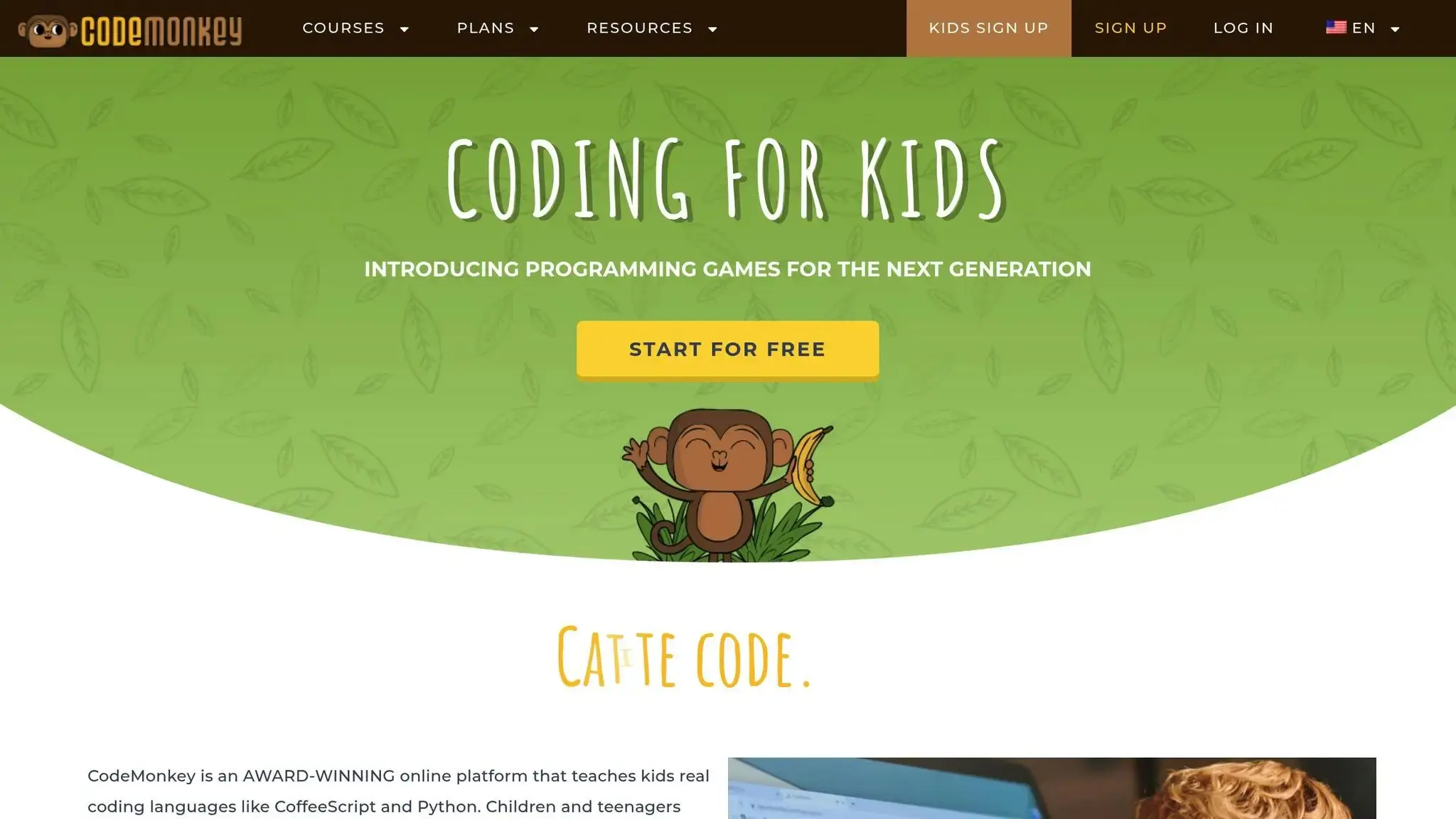
CodeMonkey Challenge is an online platform that introduces kids to programming through interactive games. Launched in 2014, this award-winning platform has reached millions of learners globally, offering an accessible way for kids to get involved in coding competitions.
What sets CodeMonkey apart is its use of industry-standard programming languages instead of simplified, block-based tools. This hands-on approach encourages kids to create their own challenges while learning essential coding skills in a competitive yet supportive environment.
Age Group Suitability
CodeMonkey Challenge is designed for kids aged 4 to 14+, with tracks tailored to their developmental stages. Covering grades K-8, the platform ensures both young learners and middle schoolers can find challenges that match their abilities.
- CodeMonkey Jr. (grades K-1, ages 4-6): Introduces block coding for pre-readers, requiring no reading skills.
- Beaver Achiever (grades 1-2, ages 6-8): Focuses on early-reader block coding.
- Coding Adventure (grades 3-5, ages 7-10): Moves into beginner text coding.
- Dodo Does Math: Combines text-based programming with math challenges.
The platform also allows students to explore courses beyond their age group if they’re ready for more advanced material.
Programming Languages Used
Unlike many beginner platforms, CodeMonkey Challenge teaches real-world programming languages like CoffeeScript and Python, which are widely used in the tech industry.
- CoffeeScript: Featured in the Coding Adventure course, it serves as a stepping stone to JavaScript, a key language in web development.
- Python: Used in advanced courses such as Coding Chatbots and Banana Tales, Python is one of the most in-demand programming languages today.
This focus on practical languages gives participants a head start in the tech world. According to the U.S. Bureau of Labor Statistics, jobs for computer and information research scientists are expected to grow by 26% between 2023 and 2033, with a median annual salary of $145,080.
Participation Format
CodeMonkey Challenge operates entirely online, making it accessible from anywhere with an internet connection. This virtual setup removes location barriers, allowing students to participate from home, school, or any other place with internet access.
The platform is versatile enough for various settings, including schools, after-school programs, and home use. Teachers can use the Challenge Builder to design custom tasks for their students or host classroom hackathons to apply coding skills in real-world scenarios.
Skill Level Required
CodeMonkey Challenge is perfect for beginners with no prior coding experience. Its structured curriculum ensures students can start from scratch and gradually tackle more complex challenges as they improve.
- Beginners start with visual block coding.
- Intermediate learners can try courses like Game Builder (grades 5-6), which introduces more advanced text coding.
- Advanced students can take on Coding Chatbots, diving into Python programming.
This flexible approach allows kids to progress at their own pace while building a solid foundation in coding, making it an ideal starting point for their programming journey.
2. Google Code-In
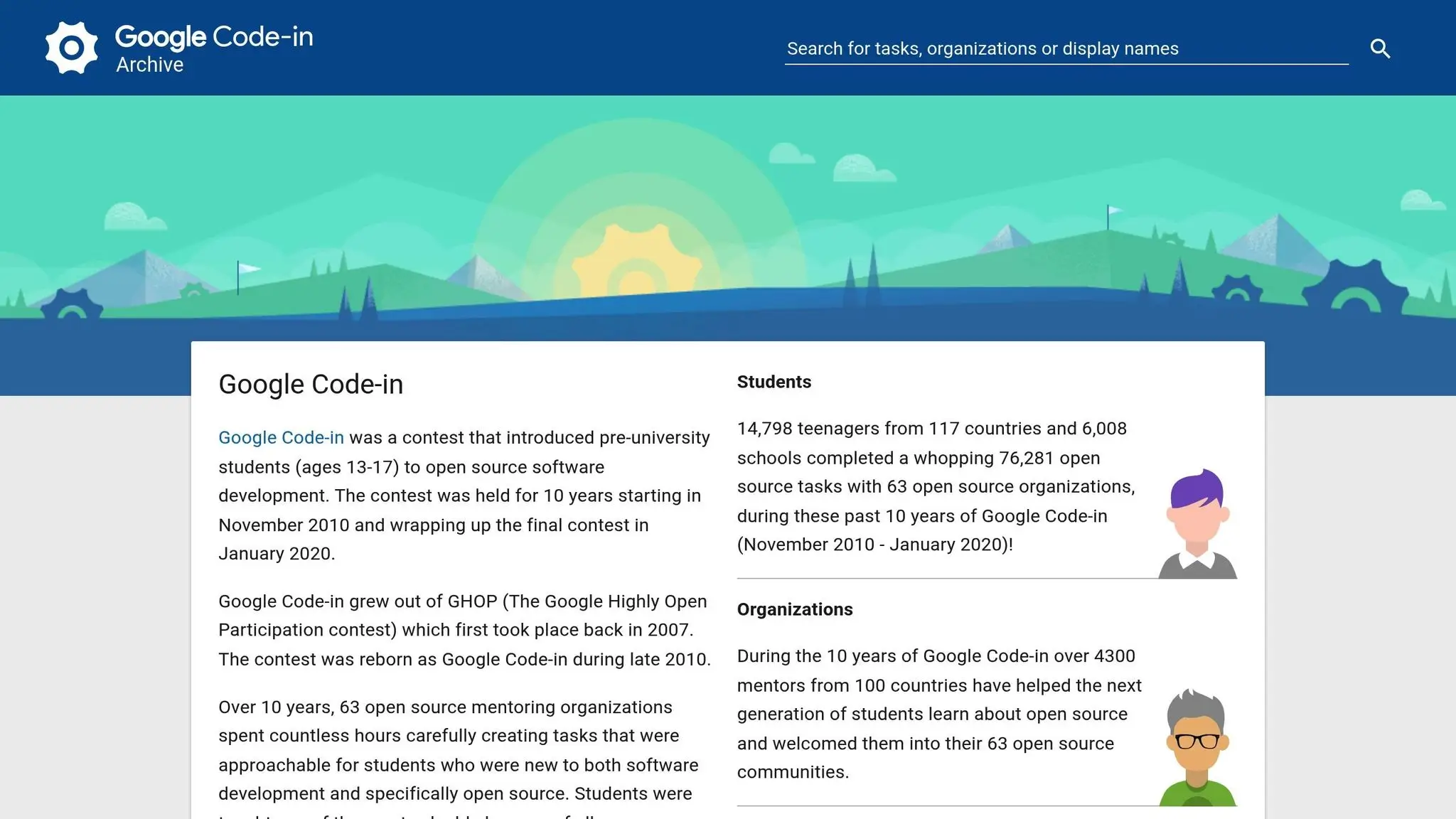
Google Code-In brought young developers from around the globe into the world of open source. Running from 2010 to 2019, this online competition gave pre-university students the chance to work directly with established open source organizations, offering them real-world experience.
Unlike traditional coding challenges, Google Code-In encouraged participants to make meaningful contributions. Students could choose tasks like coding, documentation, or even quality assurance that directly benefited the open source community.
In its final year, the program saw 3,566 participants from 29 organizations complete an impressive 20,840 tasks. A standout story is that of jayaike, a 17-year-old who became the first Nigerian to win the grand prize by contributing to CloudCV, an open-source platform for evaluating AI models. These milestones highlight the program’s impact on young developers.
“Google Code-In was really pivotal in my career development as a software engineer and I hope Google brings it back ;)”
- jayaike, swe@google
Age Group Suitability
The program was designed for pre-university students aged 13 to 17. To participate, students needed parental or guardian consent, ensuring they had proper supervision throughout the competition.
Programming Languages Used
Google Code-In allowed participants to work with a range of programming languages, including C++, Python, Java, Go, JavaScript/TypeScript, and Kotlin. This flexibility let students choose languages they were familiar with or explore new ones.
Participation Format
Entirely online, Google Code-In was accessible to students worldwide. After registering, participants could browse tasks and select projects that suited their interests and skill levels. Mentorship and communication were handled via platforms like IRC, mailing lists, and Slack. Grand Prize winners were also treated to a trip to Google’s headquarters in Mountain View, California – an unforgettable opportunity to see the tech industry up close.
Skill Level Required
The coding competition welcomed students of all skill levels, from complete beginners to seasoned coders. Tasks were available in varying degrees of difficulty, allowing participants to contribute at their current level while also challenging themselves to grow. This range ensured that even those new to programming could gain valuable experience and make a real difference in open source projects.
3. CoderZ League
CoderZ League is transforming how students learn robotics by offering virtual challenges with simulated robots. This approach makes robotics programming accessible to any school that has computers, breaking down barriers to participation.
In this fully virtual coding competition, students work in teams to program robots through step-by-step missions. These teams compete at various levels – starting from their class and school, then moving on to district, state, and beyond.
One notable achievement came in January 2021, when the RoboGriffins from Palumbo High School claimed victory in the CoderZ Pro League World Championship, outperforming a team from Moscow’s School 1329.
“CoderZ gave me a huge opportunity to discover my coding abilities… I encourage every student interested in STEM to participate in CoderZ.”
- Mingjin Lu, RoboGriffins co-captain
The competition features a structured progression, starting with virtual Boot Camp and Qualifier phases. Top-performing teams, based on participation and points, earn spots in in-person Finals. The league is designed to grow with students’ skills, making it both accessible and challenging.
Age Group Suitability
CoderZ League is designed to include a broad range of students through its two-tier system. CoderZ League Junior is perfect for students in grades 5 through 8, while CoderZ League Pro caters to participants from grades 7 through 12, including kids as young as 8 years old. Fifth graders can join teams with older students, and high school teams compete under separate recognition criteria.
Programming Languages Used
The league accommodates different skill levels with two programming options. In CoderZ League Junior, students use Blockly, a visual, block-based programming language that simplifies coding concepts. CoderZ League Pro offers the choice between Blockly and Python, allowing participants to transition from visual to text-based coding as they advance.
Participation Format
With its global reach, CoderZ League encourages teamwork through its online platform. Schools, classes, or individual teams can register to participate. The cloud-based format ensures that students can join from any computer with internet access. This setup not only builds coding skills but also fosters teamwork, communication, and problem-solving – key abilities in today’s remote learning environment.
“CoderZ League is great because it teaches my students resilience, troubleshooting, and teamwork… I also appreciate that these skills can be applied to not only coding and robotics but many subjects including history, math and English.”
- Mandy McCubbin, technology teacher, Fairfield Country Day School in Connecticut
Skill Level Required
The league’s tiered structure welcomes beginners while challenging experienced coders. Whether students are just starting out or already skilled, the platform offers opportunities to grow. Participants begin with simple robot commands and work their way up to more complex tasks. This inclusive approach ensures everyone can contribute, building their confidence in STEM along the way.
4. Tynker Code Jam
Tynker Code Jam invites young coders from around the globe to showcase their creativity through coding projects. Over the years, kids have submitted more than 30,000 projects to this competition. In 2021, the Summer Code Jam ran for six weeks, giving participants plenty of time to brainstorm, develop, and polish their creations. Like other coding competitions, this event provides a vibrant, virtual space that welcomes participants of all experience levels.
“Summer is a perfect time for students to practice coding to maintain important skills like creativity, problem-solving and critical thinking while away from school. Plus, it’s a lot of fun!” – Srinivas Mandyam, co-founder and CTO of Tynker
Age Group Suitability
Tynker Code Jam is open to kids aged 6 to 18, with the Summer edition specifically targeting those between 6 and 13. This makes it especially appealing to elementary and middle school students looking for a fun way to sharpen their coding skills.
Programming Languages Used
Participants can choose to work with block coding, JavaScript, HTML/CSS, or Python. Tynker’s platform supports a variety of project types, including game design, web design, animation, and even robotics.
Participation Format
This competition is entirely virtual, allowing participants to join through the Tynker iPad app or any internet-connected computer. This flexibility means students can work on their projects from home, school, or anywhere with a stable internet connection.
Skill Level Required
Tynker Code Jam is designed to accommodate both beginners and advanced coders. Participants can start with simple block-based animations and gradually progress to more advanced, text-based projects. The platform’s use of HTML5 and JavaScript ensures students gain hands-on experience with widely-used technologies as they advance their skills.
5. Wonder Workshop Robotics Competition
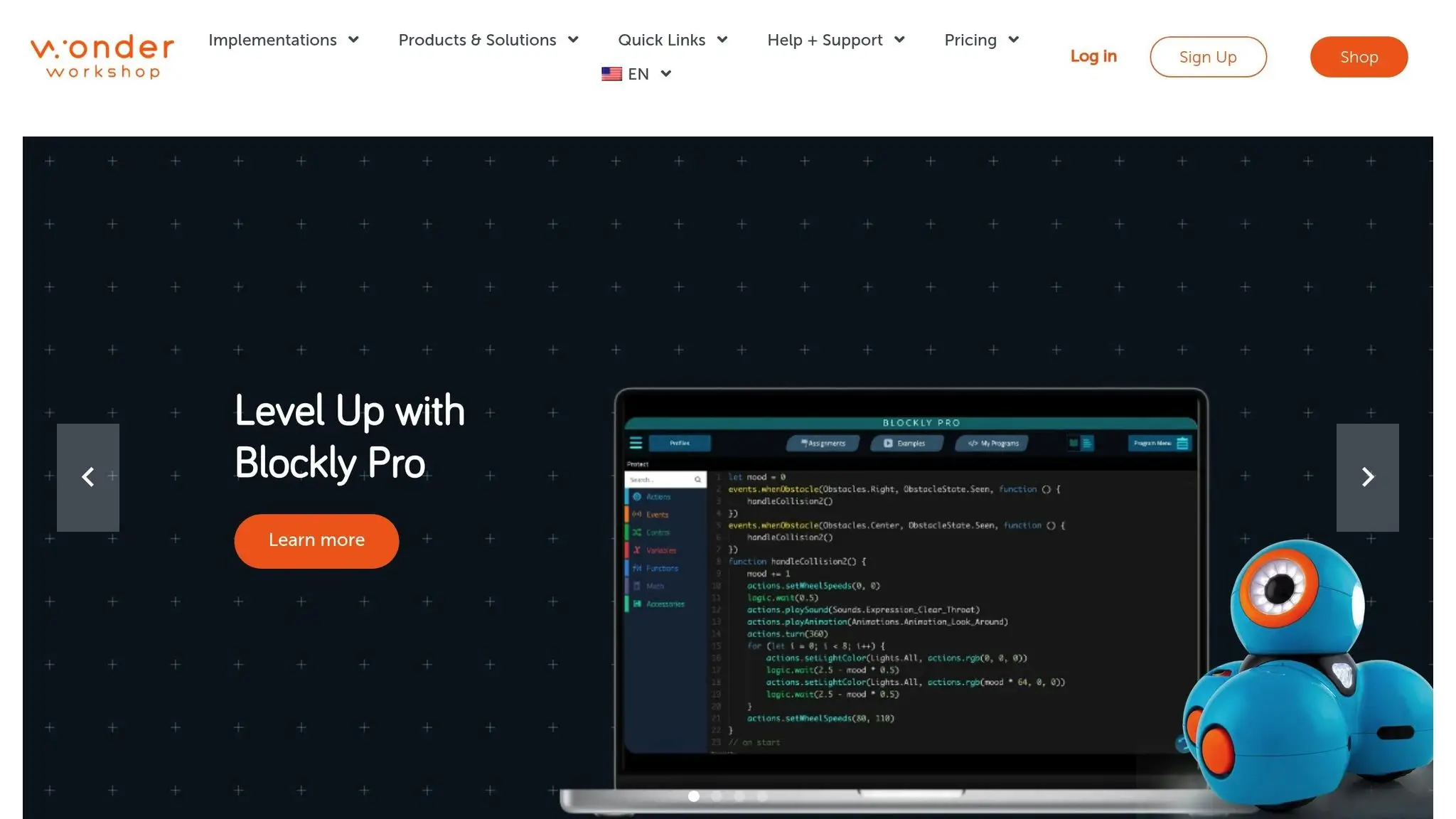
The Wonder League Robotics Competition is an online event that blends coding and problem-solving in a fun, interactive way. Since it began, this coding competition has engaged more than 90,000 kids across 65 countries. Held annually from October to April, it gives participants plenty of time to complete their missions.
What makes this competition stand out is its use of Dash robots to solve challenges inspired by real-world scenarios. Participants access their missions through the Make Wonder portal and submit solutions online, making travel unnecessary. The competition emphasizes developing problem-solving skills, encouraging a growth mindset, and sparking creativity – all while teaching essential coding concepts. The challenges are thoughtfully designed to match the abilities of different age groups.
Age Group Suitability
The competition is divided into two age categories to ensure the challenges are tailored appropriately. Kids aged 6–8 can join the Innovator Cup, while those aged 9–12 compete in the Pioneer Cup.
Programming Languages Used
Participants start with Blockly, a block-based coding language that’s easy for kids as young as 6 to use. As they gain experience, they can move on to Blockly Pro, which introduces JavaScript programming [45,46]. For those ready to tackle more advanced projects, the Wonder app provides tools to create complex programs. The competition also includes Virtual Dash, a 3D environment where students can test and refine their code, and the Coding Pathways feature, which guides learners step-by-step through the skills needed for their missions. This gradual progression makes coding accessible while offering room for growth.
Participation Format
Everything about this competition is virtual. From mission submissions to coach support and even award ceremonies, all activities happen online. Teams can register at makewonder.com/robotics-competition and access their missions through the Make Wonder portal [44,49].
Skill Level Required
Whether participants are beginners or more experienced coders, there’s something for everyone. The competition’s block-based Blockly system is perfect for newcomers, while advanced learners can take on more complex challenges by transitioning to JavaScript. Coaches also have the flexibility to adapt missions to fit their students’ abilities, ensuring every participant can engage and grow.
6. Scratch Olympiad
The International Scratch Olympiad is a global coding competition designed for young programmers. Since its inception in 2017, it has welcomed over 20,000 participants from around the world, all eager to showcase their creativity using MIT’s Scratch platform. The event champions the idea that coding can and should be fun, imaginative, and accessible to learners of all ages.
Unlike traditional coding contests that focus on algorithms, this competition emphasizes creative programming. Participants develop original Scratch projects based on specific themes, blending storytelling, art, and programming into unique creations. The format encourages innovation and problem-solving, offering kids a chance to explore coding in a way that feels more like play than work.
Age Group Suitability
The 2025 International Scratch Olympiad is open to a wide range of young coders, with participants divided into five age categories:
- Category A: 5–8 years old
- Category B: 9–10 years old
- Category C: 11–12 years old
- Category D: 13–14 years old
- Category E: 15–18 years old
This structure ensures that children compete alongside peers of similar ages, creating a fair and engaging environment. For the youngest group (Category A), Scratch Jr. serves as a perfect introduction to programming for kids aged 5 to 8.
Programming Languages Used
Participants in the Scratch Olympiad use Scratch, a block-based visual programming language, with the option to use RobboScratch as an alternative. Scratch is widely popular, with users in over 150 countries and translations available in more than 60 languages. While it’s primarily aimed at children aged 8 to 16, the platform also attracts a significant number of adult enthusiasts. For beginners, Scratch provides an easy entry point into coding, allowing them to learn by “remixing” existing projects from the vibrant Scratch community.
Participation Format
The 2025 International Scratch Olympiad is entirely online, making it accessible to participants from any corner of the globe. Registration and project submissions are managed through the official website, and entrants are required to create their projects on the MIT Scratch platform. This is an individual competition, meaning participants work independently rather than in teams. In some countries, there are national selection stages leading up to the international event, while in the United States, participants typically enter directly through a consolidated national stage.
Skill Level Required
The Scratch Olympiad is open to coders of all experience levels, from complete beginners to those with more advanced skills. The competition brings together young minds to demonstrate their programming abilities and creative problem-solving. Scratch’s visual, block-based interface makes it particularly beginner-friendly, offering an approachable way to dive into programming. With a registration fee of just $15, the event is an affordable opportunity for kids to explore coding. Participants submit their Scratch projects based on the announced theme, and winners are awarded electronic certificates for their achievements.
7. American Computer Science League (ACSL) Junior Division
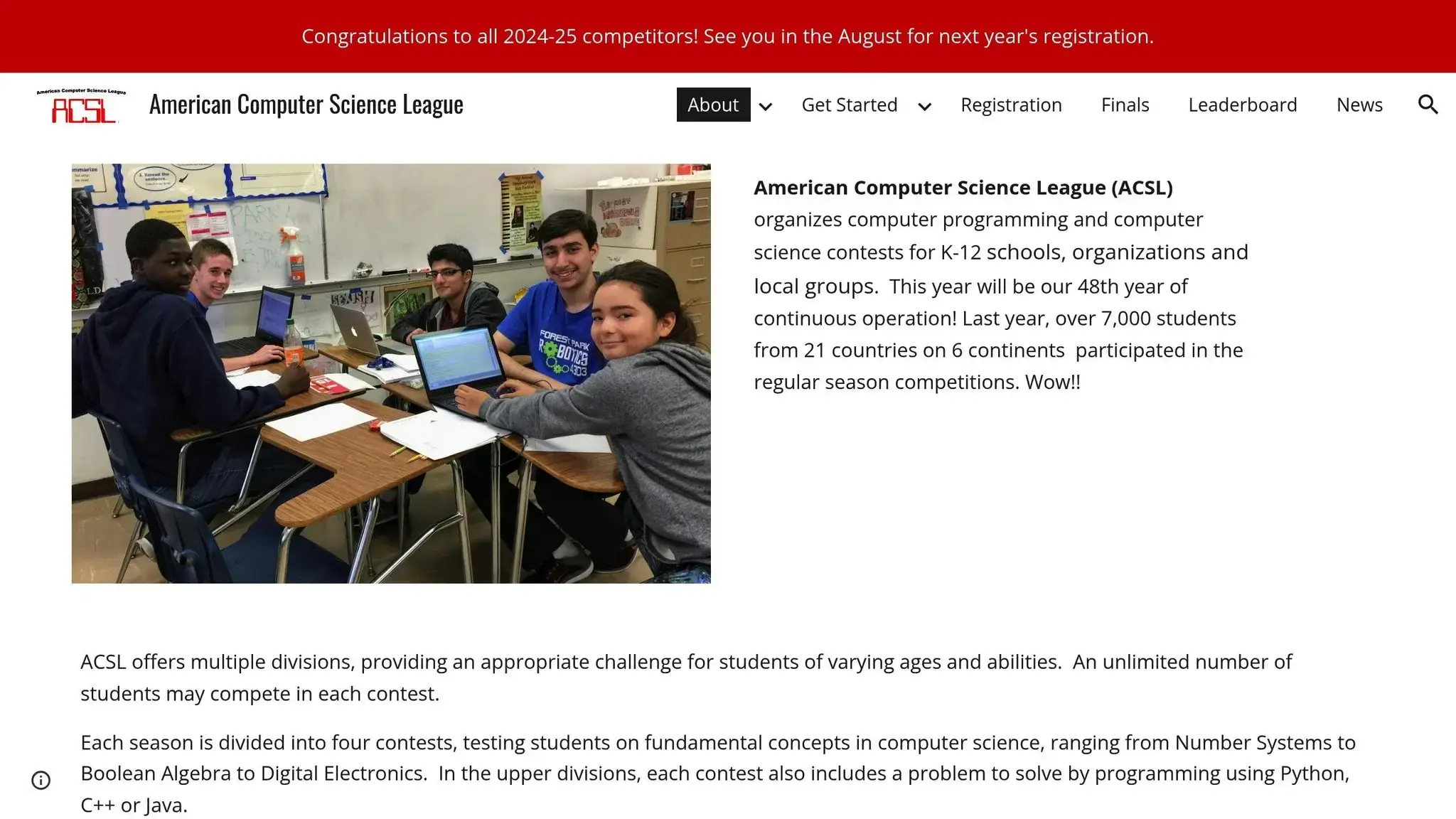
The American Computer Science League (ACSL) Junior Division offers middle school students a chance to dive into computer science through a blend of theory and hands-on programming. The competition begins with a 30-minute online test featuring six short-answer questions, followed by a 72-hour coding challenge designed to test and enhance participants’ skills.
Last year, around 8,000 students from the United States, Canada, Europe, and Asia participated in the regular season, showcasing the competition’s global reach and appeal. The format strikes a balance, making it approachable for a variety of skill levels.
Age Group Suitability
This division is tailored for middle schoolers, specifically those in grades 7–9. This age group, typically ranging from 12 to 15 years old, ensures students compete with peers at similar educational stages. Whether they are just starting out in programming or have prior experience, the Junior Division provides a supportive environment for growth.
Programming Languages Used
Participants work with Python 3, Java, or C++ – languages widely taught and used in programming education. While the coding challenge focuses on these languages, the short-answer section introduces concepts through code snippets written in ACSL, LISP, and Assembly. However, students aren’t required to write code in these additional languages, making the competition more accessible.
Participation Format
ACSL competitions are conducted entirely online, making them accessible to students from across the globe. The finals, scheduled for May 2025, will also take place online via the HackerRank platform, maintaining the same structure as the regular season. As the Indigo Research Team puts it:
“ACSL is held online and welcomes participation from all pre-college schools around the world. That is, the ACSL competition can be considered international”.
Skill Level Required
The Junior Division is designed to accommodate a wide range of skill levels. From beginners taking their first steps in coding to students with more advanced knowledge, everyone has the opportunity to participate. The 72-hour coding challenge format is especially helpful for newcomers, giving them the time to learn, experiment, and implement their solutions. This approach not only evaluates their current abilities but also encourages growth and learning throughout the competition season.
8. Codingal Competitions
Codingal organizes online coding competitions that have drawn more than 500,000 students from over 70 countries. These events provide a fantastic opportunity for kids and teens to sharpen their coding skills in a supportive and engaging environment. Among the standout competitions hosted by Codingal are the HackYoung Olympiad and SC4K Coders’ Coliseum. The platform prioritizes accessibility and skill development, making it an excellent choice for young, aspiring coders.
Here’s how Vivek Prakash, CEO, and Satyam Baranwal, Co-founder of Codingal, describe their mission:
“As parents ourselves, we know how important it is to give our kids every opportunity to succeed in the digital age. That’s why at Codingal, we’ve created a transformative learning experience when it comes to coding, covering everything from beginner-friendly Scratch to advanced Data Science courses.”
Age Group Suitability
Codingal competitions cater to students aged 6–18, though some events, like the SC4K Coders’ Coliseum 2025, welcome participants as young as 4. Typically, participants are grouped by grade level: Elementary (Grades 1–5), Middle (Grades 6–8), and High (Grades 9–12).
Programming Languages Used
Participants tackle challenges using programming languages such as C, C++, Java, or Python. Codingal’s Coding Challenge Practice Arena ensures that both beginners and advanced coders have options, with Python being especially beginner-friendly and C++ offering more advanced challenges.
Participation Format
All competitions are conducted online, making them accessible to students no matter where they are [67–69]. All that’s required is a computer or laptop with an internet connection, allowing participants to join from the comfort of their homes and at a pace that works for them.
Skill Level Required
These events are designed with beginners in mind. Codingal focuses on creating a learning experience that prioritizes growth and confidence-building over competition. This approach makes it a perfect starting point for students new to coding or those looking to strengthen their foundational skills in a welcoming online environment. It’s all about learning while having fun!
9. International Kids Coding Competition (IKCC)
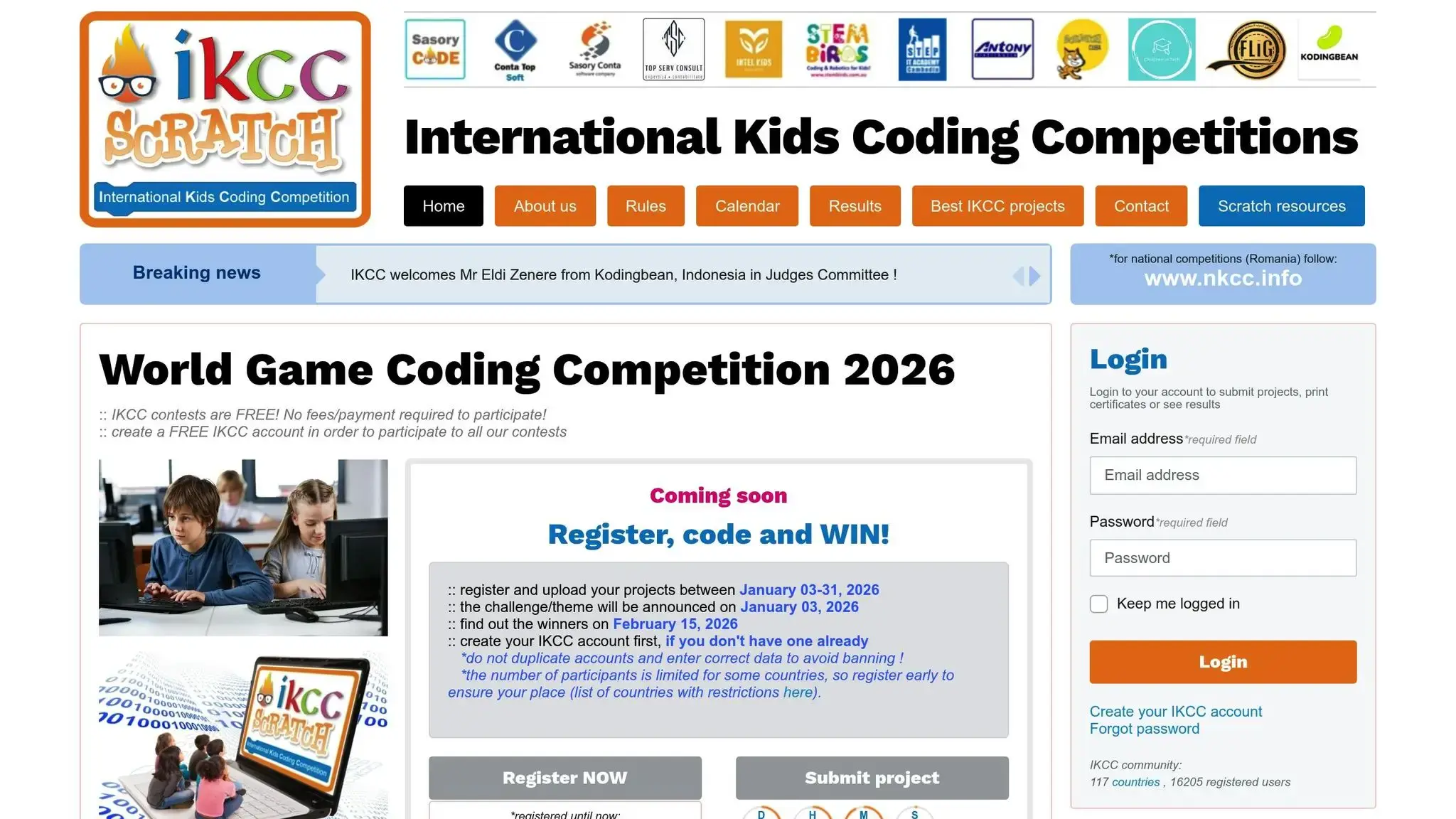
The International Kids Coding Competition (IKCC) is a fantastic platform for young minds to dive into the world of coding. Through engaging challenges like the Digital Olympiad and Scratch-based contests, kids can showcase their creativity and programming skills on a global stage. Best of all, participation is completely free, ensuring kids from across the globe can join in. Let’s explore the details of IKCC, including its age categories, programming tools, format, and the skill levels it caters to.
Age Group Suitability
To keep things fair and fun, IKCC organizes its contests into specific age brackets: 7–8, 9–10, 11–12, and 13–14 years old. A child’s age at the time of registration determines their category. For example, a 7-year-old at registration will compete in the 7–8 group. All contests are strictly individual – team entries are not allowed.
Programming Languages Used
IKCC uses Scratch 3.0, a visual, block-based programming language that’s perfect for kids. This user-friendly tool enables participants to create interactive projects, games, and animations. For instance, the World Game Coding Competition 2025 challenges students to develop games using Scratch. Kids can access Scratch directly online or download it from its official website, making it easy for beginners to get started.
Participation Format
IKCC operates as an online competition, making it convenient for participants to work from home, school, or even coding clubs. Projects are submitted through a simple online process – participants share their Scratch project link during submission. To join, kids just need to create an account on the IKCC website and register for their chosen event.
Skill Level Required
IKCC is designed with beginners in mind. Its use of Scratch’s visual, block-based interface means kids don’t need prior coding experience. Instead of focusing on technical syntax, young coders can unleash their creativity and develop logical thinking skills. This approach transforms coding into an artistic and storytelling experience, making it both fun and educational.
10. FIRST LEGO League (FLL) Explore and Challenge
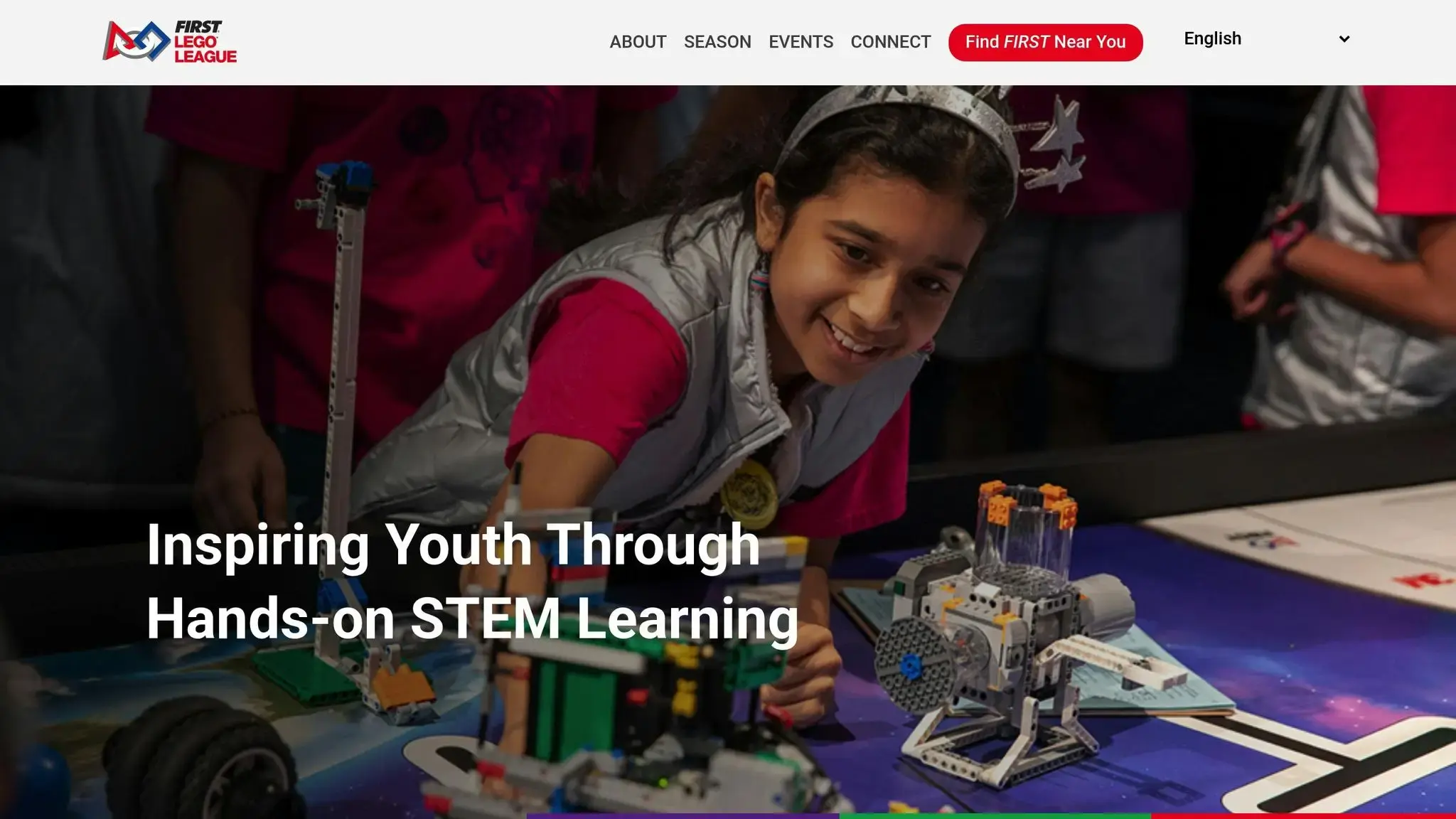
FIRST LEGO League (FLL) is all about introducing kids to STEM through LEGO building, coding, and teamwork. With three divisions – Discover (ages 4–6), Explore (ages 6–10), and Challenge (ages 9–14/15) – it provides a hands-on learning journey that grows with the participants. Let’s break down what makes each division unique and how it works.
Age Group Suitability
The FLL program is tailored to different age groups to ensure an age-appropriate experience:
- Discover (ages 4–6): A playful introduction to STEM concepts for younger kids.
- Explore (ages 6–10): Perfect for elementary-aged children, this division focuses on hands-on learning without the stress of competition.
- Challenge (ages 9–14/15): Designed for older kids, this division is available for ages 9–14 in the U.S. and Canada, and up to age 15 in other regions.
Programming Languages Used
FLL makes coding simple and engaging with LEGO’s visual programming tools. Using the LEGO Education SPIKE app and other LEGO robotics platforms, kids can program robots through drag-and-drop commands. This block-based coding approach is beginner-friendly while teaching essential programming logic.
Participation Format
FLL combines collaborative project work with opportunities to showcase results. Teams build and program robots throughout the season, then present their work at events. These events can be in-person or virtual, with video submissions often used for regional evaluations.
Skill Level Required
No prior experience with robotics? No problem. FLL is designed for curious minds of all skill levels. Coaches play a key role, guiding participants as they develop technical skills and learn to work as a team.
- FLL Explore is a great starting point for beginners.
- FLL Challenge steps up the complexity, focusing on advanced coding and collaboration. For those unsure about jumping into Challenge, Explore is a great place to begin.
The benefits go beyond robotics. According to surveys, 94% of coaches see improved problem-solving skills, and 95% notice better teamwork among participants. It’s a program that builds both technical know-how and life skills.
Competition Comparison Table
Choosing the right coding competition for your child can feel like a daunting task with so many options out there. To simplify the process, here’s a handy table that highlights essential details for each competition, helping you find the best fit based on your child’s age, skill level, and interests.
| Competition | Age Range | Programming Languages | Skill Level | Participation Format |
|---|---|---|---|---|
| CodeMonkey Challenge | 4–14+ years | Block-based coding, JavaScript | Beginner | Individual, Virtual |
| Google Code-In | 13–17 years | Python, JavaScript, various | Beginner to Intermediate | Individual, Virtual |
| CoderZ League | 8–16 years | Block-based coding | Beginner | Team, Virtual |
| Tynker Code Jam | 8–18 years | Block-based coding, Python, JavaScript | Beginner to Intermediate | Individual or Team, Virtual |
| Wonder Workshop Robotics Competition | 6–12 years | Block-based coding | Beginner | Team, Virtual |
| Scratch Olympiad | 7+ years | Scratch 3.0 | Beginner | Individual or Team, Virtual |
| ACSL Junior Division | Varies | Python 3, Java, C++ | Beginner to Intermediate | Individual tests (team participation), Virtual |
| FIRST LEGO League (FLL) Explore and Challenge | 9–16 years | LEGO visual programming | Beginner | Team, In-Person |
This table serves as a quick reference guide to complement the detailed insights provided earlier, helping parents and young coders align their choices with specific needs and goals.
Ages 6-8
For younger children just starting out (ages 6–8), competitions like Wonder Workshop Robotics Competition and Scratch Olympiad are fantastic introductions to coding. These contests use visual programming to teach the basics in a fun and accessible way.
Ages 8-14
For elementary and middle schoolers (ages 8–14), options like CodeMonkey Challenge, CoderZ League, and Tynker Code Jam offer a smooth progression from visual programming to text-based coding. These competitions provide a great way to build foundational skills while keeping the experience engaging.
Ages 13-18
Teens and older kids (ages 13–18) looking for a challenge can dive into Google Code-In, which introduces them to real-world open-source projects, or the ACSL Junior Division, where they’ll work with professional programming languages like Python 3, Java, and C++.
For those who thrive in collaborative settings, team-based competitions such as CoderZ League and FIRST LEGO League are excellent choices. These contests emphasize teamwork while sharpening coding abilities. On the other hand, individual competitions like CodeMonkey Challenge and Google Code-In are perfect for self-driven learners who prefer working independently and showcasing their personal achievements.
When selecting a competition, consider your child’s current coding experience. Beginners might feel most comfortable starting with Scratch-based contests, while those with prior coding knowledge can explore challenges involving Python, JavaScript, or Java. By carefully matching a competition to your child’s skill level and interests, you can help them grow their coding abilities while also fostering problem-solving and teamwork.
Conclusion
Getting involved in beginner coding competitions is a fantastic way for kids to sharpen their problem-solving skills, spark creativity, and learn the value of teamwork. These contests cater to a variety of learning styles, offering opportunities for both solo learners and those who thrive in group settings.
Building on the skills gained from these competitions, platforms like CodaKid provide the tools to take coding to the next level. Transitioning from beginner-friendly options like Scratch to professional languages such as Python and JavaScript becomes much smoother with a solid foundation. CodaKid specializes in teaching professional coding languages, including Python, JavaScript, and Java, while also covering exciting areas like AI, Minecraft modding, and Roblox game development. With over 100,000 students and a glowing 4.9/5 rating from more than 350 reviews, it’s clear the platform is making a difference. Flexible learning options are available, from self-paced courses starting at $29/month to private 1:1 lessons at $249/month. Students gain access to 750+ expertly designed videos, 800+ hours of projects, and unlimited help desk support.
Parents have shared glowing reviews of their experiences:
“My 12 year old loved their Minecraft programming course. It kick-started his interest in computer science. A huge plus for busy parents is the outstanding and swift support from CodaKid. No frustrating long deadlock, but friendly, competent help to keep the kids going and exploring. Brilliant!” – Ci Tro, Parent
Through these competitions and platforms like CodaKid, kids not only learn coding but also develop critical thinking, logical reasoning, and perseverance – skills that are essential for navigating our tech-driven world. Introducing children to programming early on, in engaging and fun ways, ensures they’re well-prepared for the challenges and opportunities of the future.
Combining the excitement of competitions with the robust resources provided by CodaKid creates the perfect springboard for young coders to thrive.
FAQs
How do I choose the right coding competitions for my child’s age and skill level?
To choose the best coding competitions for your child, start by thinking about their age, experience, and interests. Many contests are tailored for specific age groups, like 8–12 or 13–17 years old, and focus on creating a fun, interactive environment that helps kids build confidence as they learn.
Next, check the skill level and programming languages used in the competition. If your child is new to coding, look for beginner-friendly events that use languages like Scratch or Python. For kids with more experience, competitions involving JavaScript, web development, or even game design could be more exciting. As their abilities improve, you can encourage them to tackle more challenging contests.
Finally, think about what excites your child the most. Whether they love creating games, solving puzzles, or working on practical problems, finding a competition that matches their passions will keep them motivated and eager to participate.
What are the benefits of coding competitions for kids beyond just learning to code?
Coding competitions give kids more than just programming know-how – they’re a gateway to building essential life skills. Through these events, kids sharpen their critical thinking, problem-solving, and analytical abilities, skills that are invaluable in school and everyday situations. Beyond that, they foster creativity, resilience, and teamwork, all of which are key to tackling future challenges and thriving in various careers.
What’s more, these coding competitions boost confidence as kids work through real-world problems and watch their ideas come to life. It’s an exciting and interactive way to develop important skills while igniting a passion for technology and innovation.
How do online coding competitions ensure fairness for kids from different regions?
Online coding competitions ensure a level playing field by utilizing standardized platforms with consistent judging criteria and automated scoring systems. This approach helps reduce potential biases and ensures fair assessments for all participants.
To broaden access, many of these coding competitions feature global or regional qualifiers, giving kids from different locations an equal chance to join and showcase their skills.
Moreover, the problem sets are thoughtfully created to cater to a range of skill levels and experiences, making the competitions welcoming and accessible for young coders from all walks of life.