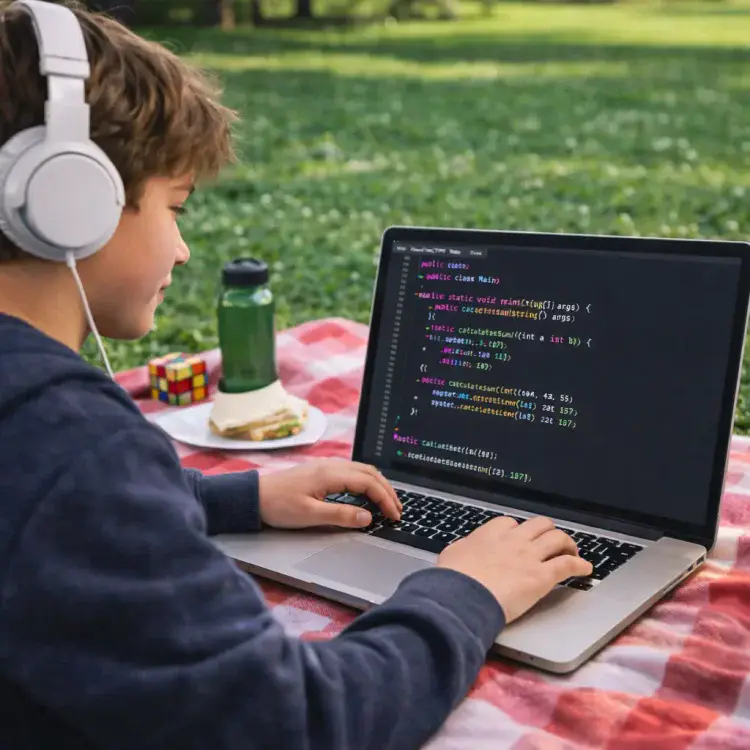
Teaching kids accessibility in coding is about helping them create technology that works for everyone. By learning concepts like keyboard navigation, screen reader compatibility, and user-friendly design, kids gain both technical skills and empathy for diverse users. Accessibility ensures apps and websites are usable by people with different abilities, like those relying on screen readers or navigating without a mouse.
Key Takeaways:
- Accessibility in coding means designing software usable by people with varying abilities.
- Kids learn empathy, problem-solving, and real-world coding skills by focusing on accessibility.
- Principles to teach: keyboard navigation, screen reader support, and design for diverse needs.
- Tools to start: Scratch, Blockly, Quorum, Swift Playgrounds, and platforms like CodaKid.
Accessibility isn’t just a coding skill – it’s a mindset that prepares kids to create solutions for everyone.
Table of Contents
Best Coding Curriculum for Kids & Teens (2026 Roadmap): Roblox, Minecraft, Python, AI
What Is Accessibility in Coding?
Accessibility in coding means creating software that works for everyone, regardless of their abilities. It’s about considering a wide range of user needs from the very beginning of the design process to eliminate barriers. This approach does more than just make technology usable – it also encourages young coders to develop a deeper sense of empathy.
Accessibility in Technology Basics
At its core, accessibility is about recognizing that people interact with technology in many different ways. For instance, some rely on keyboards instead of a mouse, while others use screen readers to browse websites. Teaching kids these fundamentals helps them view technology from a more inclusive perspective.
Why Kids Should Learn Accessibility
Teaching kids about accessibility early on encourages them to think about the diverse ways people use technology. This awareness goes beyond improving their coding skills – it equips them to tackle real-world challenges. It sharpens their problem-solving abilities, prepares them for future tech careers, and nurtures a mindset of empathy and understanding.
Key Accessibility Principles for Kids
Understanding why accessibility is important is just the first step. Here’s how kids can put it into action with three essential principles: keyboard navigation, screen reader compatibility, and inclusive design.
Keyboard Navigation and Input Options
Kids can learn to create programs that work seamlessly with just a keyboard. This involves setting up clear focus indicators and logical tab orders so users can move through buttons, menus, and forms without needing a mouse. A simple way to test this is by navigating their projects using only the Tab key to move and the Enter key to select. It’s a great habit that ensures their designs are usable for everyone.
Making Programs Work with Screen Readers
Screen readers help people with blindness or low vision by turning text and interface elements into speech or braille. To make their projects compatible, kids can add descriptive labels to images, buttons, and form fields. Including alternative text for pictures and organizing content with clear headings makes it easier for screen reader users to understand and navigate.
Design That Works for Everyone
Inclusive design is about creating interfaces that suit a range of abilities and preferences from the start. For example, kids can use high-contrast color schemes, choose fonts that are easy to read, and offer multiple ways to access the same information. This approach helps them consider users with different needs, like those with color blindness, motor challenges, or cognitive differences. It’s a simple way to make sure their projects are welcoming to all.
Coding Tools and Platforms for Teaching Accessibility
Teaching accessibility in coding becomes much easier with the right tools. The best platforms combine user-friendly interfaces with opportunities to practice inclusive design in real-world scenarios.
Block-Based Coding Tools
Block-based coding platforms are a great starting point for introducing programming and inclusive design. Tools like Scratch and Blockly offer visual, drag-and-drop interfaces that help young learners grasp programming basics while exploring how thoughtful design can make technology usable for everyone. These environments also encourage early discussions about accessibility, laying the groundwork for more advanced skills. As students grow more confident, they can transition to text-based platforms to deepen their understanding of accessible coding.
Text-Based Coding Platforms
Text-based coding environments build on the foundation provided by block-based tools, offering more advanced opportunities to incorporate accessibility. For example, Quorum, a programming language designed with accessibility in mind, emphasizes simplicity and clarity, making it an excellent choice for learners. Similarly, Swift Playgrounds provides interactive lessons where students can see how accessibility features are integrated into app development. These platforms help bridge the gap between beginner-level coding and the complex demands of professional software development.
CodaKid: A Complete Coding Platform
CodaKid stands out as a comprehensive platform that combines real-world programming languages with practical projects focused on inclusive design. Through courses in Python, JavaScript, and Java, students learn to integrate accessibility into their work.
CodaKid also offers engaging options like Minecraft modding and Roblox game development, where learners can create games while exploring how to make them more inclusive. This project-based approach ensures that students don’t just learn about accessibility in theory – they actively apply it by building games, websites, and apps that prioritize inclusive design.
The platform provides self-paced courses for $29/month (access to 85+ courses) and private one-on-one lessons for $249/month, giving students hands-on experience that prepares them for careers where designing accessible software is a key skill.
How to Teach Accessibility in Coding
Teaching accessibility in coding goes beyond just understanding concepts like keyboard navigation, screen reader support, and inclusive design. It’s about weaving these principles into practical, hands-on learning experiences. By using relatable examples and emphasizing thoughtful design, educators and parents can help students create code that works for everyone.
Using Everyday Examples
Make accessibility relatable by connecting it to everyday tech experiences. Challenge students to spot examples where certain designs work well for some users but exclude others. These discussions help students grasp why designing for a variety of needs is so important.
Adding Accessibility Features to Projects
Encourage students to think about accessibility from the very beginning of their coding projects. For instance, they could design features like adjustable text sizes or alternative navigation options. These tasks push them to consider how different users might interact with their creations, ensuring inclusivity is a core part of their design process.
Team Projects with Different Learners
Group projects are a great way to deepen understanding of accessibility. After adding accessibility features to their individual assignments, students can collaborate in diverse teams to refine these ideas. By testing each other’s work and sharing feedback, they’ll uncover barriers and brainstorm ways to make their projects more inclusive. This collaborative approach not only improves their coding but also fosters empathy and problem-solving skills.
Setting Up an Accessible Learning Space
Creating a coding workspace that’s inclusive ensures every student can actively participate and thrive.
Picking Accessible Hardware and Software
The backbone of an accessible coding classroom lies in selecting the right tools. For online classes, students will need a reliable computer or laptop equipped with a webcam and a stable internet connection.
If tablets are being used, consider adding an external keyboard, microphone, and camera. The external keyboard is especially crucial since coding involves extensive typing, and on-screen keyboards can slow down the process significantly.
Choose software with built-in accessibility features such as screen reader compatibility, keyboard navigation, adjustable text sizes, and support for multiple languages.
Platforms like CodaKid set a great example by offering coding courses in professional languages like Python and JavaScript, along with hands-on projects in Minecraft modding and Roblox development. They cater to different learning preferences with self-paced courses, private 1:1 lessons, and virtual camps, all using professional-grade tools.
Once the right tools are in place, focus on preparing materials that cater to diverse learning needs.
Preparing Materials for All Learners
Accessibility starts with presenting information in varied formats. Coding instructions should be available as large print documents for visually impaired students, audio recordings for auditory learners, and digital formats compatible with screen readers.
When creating coding worksheets or reference guides, use high-contrast color schemes and clear, easy-to-read fonts. A sans-serif font like Arial or Helvetica in at least 12-point size works well for students with dyslexia or other reading challenges.
For students who read Braille, provide key coding concepts in Braille format. While coding itself will likely be done on-screen with assistive technologies, having Braille reference materials allows for independent review of concepts.
Additionally, consider recording audio explanations for detailed coding concepts, project instructions, and debugging tips. These recordings serve as an excellent resource for auditory learners and can provide extra support when visual materials aren’t sufficient.
Once materials are tailored to meet diverse needs, integrate accessibility into daily classroom practices.
Making Accessibility Part of Daily Learning
Accessibility tools work best when they become a natural part of the learning process rather than being treated as special accommodations. Begin each coding session by introducing tools like keyboard shortcuts, screen readers, or voice recognition software. Teaching all students to use these tools together reduces stigma and promotes universal digital literacy.
Incorporate accessibility checks into project reviews. For instance, have students test their code using only keyboard navigation or with screen readers enabled. This hands-on practice helps students see how their coding decisions impact users with different needs.
Rotate the use of accessibility tools to expose students to various experiences. One week could focus on voice-controlled coding, while another highlights high-contrast displays or alternative input devices. This approach helps students view accessibility as an integral part of technology design rather than an afterthought.
Encourage peer support systems where students assist each other in navigating accessibility tools. This collaborative effort fosters empathy and strengthens technical understanding. Often, students can explain concepts to their peers in ways that feel more relatable than traditional instruction.
Conclusion: Building the Next Generation of Accessible Coders
Teaching accessibility in coding goes beyond simply creating websites or apps – it’s about nurturing creators who design with everyone in mind. When kids learn to code while prioritizing accessibility, they gain skills that stretch far beyond programming languages and syntax.
Coding fosters logical thinking and problem-solving skills in children, but adding accessibility into the mix takes it a step further. It encourages kids to think about diverse user needs and come up with practical solutions that work for everyone. This combination of technical know-how and empathetic design thinking equips them for a future where inclusive technology isn’t just a bonus – it’s a necessity.
Basic programming skills are quickly becoming as essential as reading and writing, especially as technology continues to shape our world. Platforms like CodaKid, which has already reached over 100,000 students across more than 140 countries, highlight the global demand for coding education. By embedding accessibility principles into these programs, we can ensure that tomorrow’s tech leaders create tools and products that serve everyone.
Starting early makes all the difference. When kids learn to test their projects with accessibility tools and consider the needs of diverse users, they develop a hands-on understanding of what it means to design for all. This not only builds empathy but also instills a mindset that values inclusive design as a core aspect of technology.
Preparing children with these skills sets them up for the future, blending technical expertise with social awareness. In today’s tech-driven world, having developers who naturally prioritize accessibility is more than just helpful – it’s essential for building a digital future that truly includes everyone.
FAQs
How does teaching accessibility in coding help children develop empathy and problem-solving skills?
Teaching accessibility in coding encourages kids to develop empathy by prompting them to consider the challenges faced by individuals with varying abilities. This approach helps them understand different perspectives and nurtures a mindset of inclusivity.
It also sharpens their problem-solving skills as they tackle the task of designing solutions that ensure technology is usable for everyone. By working on accessibility issues, kids adopt a user-first approach to problem-solving, equipping them to create thoughtful and impactful solutions in the future.
How can kids add accessibility features to their coding projects?
Teaching kids to include accessibility in their coding projects is an excellent way to nurture both their technical abilities and their sense of empathy. Start by explaining what accessibility means – how technology can be designed to ensure everyone, including people with disabilities, can use it. Use simple, relatable examples, like adding captions to videos or designing buttons that are easy to click.
As they work on projects, encourage them to think about features such as text-to-speech functionality, adjustable color contrast, or keyboard-friendly navigation. Many beginner-friendly coding platforms, like block-based coding environments, provide opportunities for kids to explore these ideas interactively. For older kids ready to take on more complex challenges, introduce programming languages like Python or JavaScript to build advanced accessibility features.
If you’re looking for a more structured approach, platforms like CodaKid offer courses where kids can learn coding using professional tools while incorporating accessibility into their projects. This not only sharpens their programming skills but also helps them develop an inclusive perspective.
Why should kids learn about accessibility in coding from an early age?
Teaching kids about accessibility in coding from an early age helps them develop empathy and understand the diverse needs of people who rely on technology. This awareness pushes them to design solutions that are more inclusive and easier for everyone to use as they advance in their skills.
Learning accessibility concepts builds social awareness and sharpens problem-solving abilities, essential skills for success in today’s technology-driven world.