Teaching Java to kids can be simple and fun if you focus on the right approach. Start with tools that simplify coding, introduce core programming concepts like variables and loops, and use hands-on projects to make learning interactive. Visual projects, such as animations and games, make abstract ideas easier to understand. Finally, create a supportive environment with access to resources and communities to keep kids motivated. Here’s a quick breakdown:
- Choose beginner-friendly tools: Platforms like CodaKid simplify coding with professional tools tailored for kids.
- Start with basics: Teach variables, loops, and conditionals using relatable examples.
- Incorporate projects: Minecraft modding or simple apps help connect coding with practical results.
- Make it visual: Animations and games keep kids engaged and make debugging easier.
- Provide support: Join coding communities, offer quick help, and celebrate milestones.
With patience and the right methods, kids can gain confidence and skills in Java programming.
Table of Contents
CodaKid Online Minecraft Modding Course
1. Pick the Right Tools and Setup
When introducing kids to coding, the tools and setup you choose can make or break their learning experience. The goal is to keep things simple enough to avoid frustration while still offering a genuine programming experience.
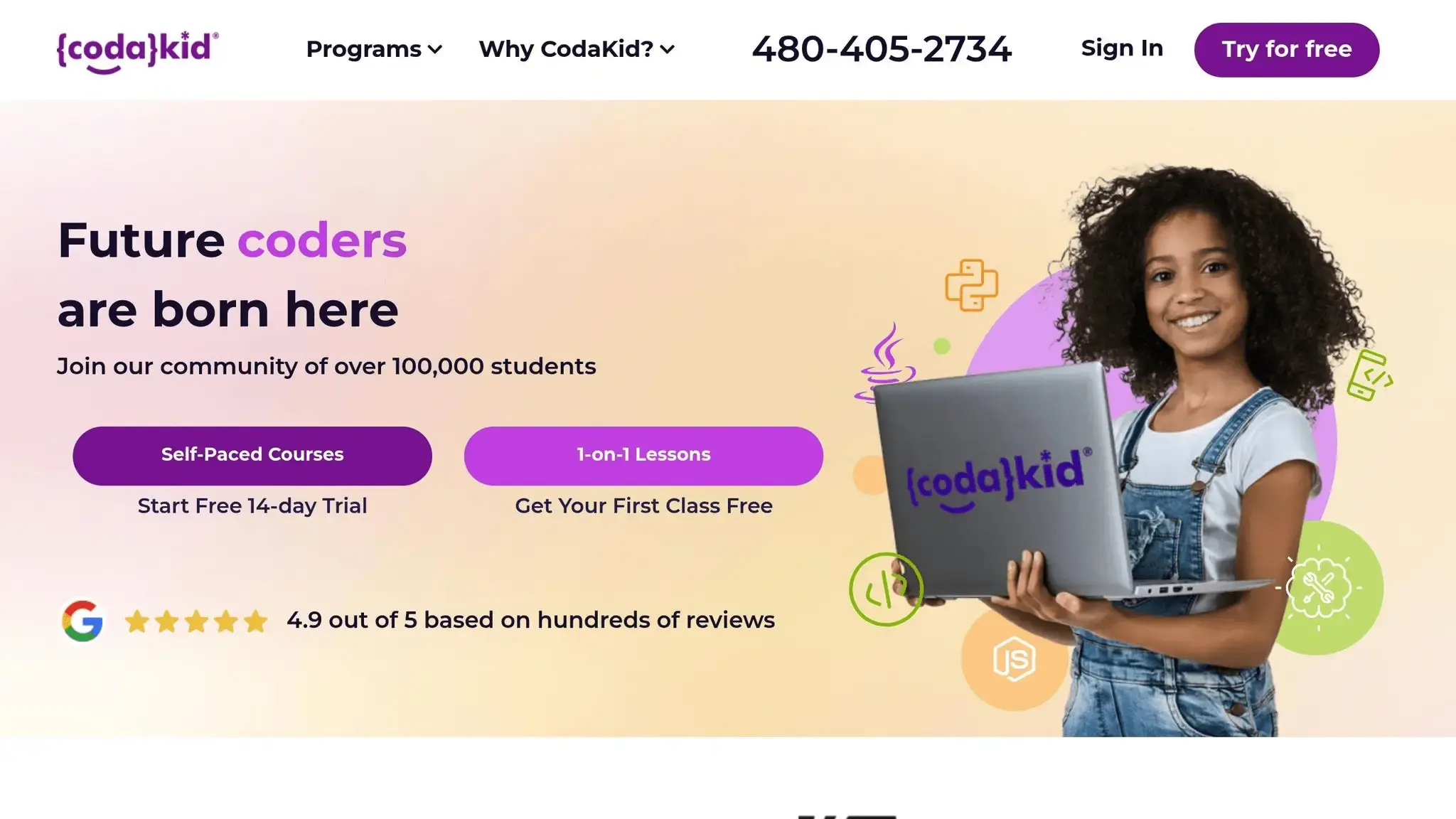
Start with platforms designed for beginners. These tools handle the tricky setup behind the scenes, letting kids dive straight into coding without being bogged down by technical hurdles. For example, CodaKid is a great option. It combines professional programming tools with a kid-friendly interface, making it easy for young learners to see their code in action. At $29 per month for self-paced courses (with a 14-day free trial), kids get access to over 85 courses that teach programming languages like Java – tools used by major tech companies – through fun, hands-on projects.
Private 1:1 Lessons (Teaching Java to Kids)
If your child needs more personalized guidance, CodaKid also offers private 1:1 lessons starting at $249 per month, with the first session free. These sessions pair learners with dedicated instructors who tailor lessons to suit their interests and pace. This personalized approach ensures kids stay engaged while building strong foundational skills.
Choosing the right setup also depends on your child’s age and experience. Younger kids (ages 7-9) often benefit from visual, game-like platforms where they can see instant results, keeping their interest alive. On the other hand, teens (ages 15-17) might be ready for more advanced courses that explore deeper concepts like object-oriented programming or data structures.
The trick is to strike a balance between real-world coding skills and age-appropriate presentation. Skip “toy” programming languages that don’t translate to practical skills, but also avoid overly complex development environments that could overwhelm beginners. Instead, opt for tools that grow with your child’s abilities.
Lastly, support is crucial. Choose platforms that offer robust resources like video tutorials, progress tracking, and help desk assistance. When kids hit a roadblock – and they will – having quick access to help can keep frustration at bay and maintain their enthusiasm for learning.
2. Start with Basic Programming Ideas
Before kids can dive into creating exciting Java projects, they need to get a handle on the basics of programming. Think of these concepts as the building blocks – like learning the alphabet before writing stories. Without this foundation, moving forward becomes tricky.
The three key ideas every budding programmer should know are variables, loops, and conditionals. These aren’t just Java-specific concepts – they’re the backbone of nearly every programming language.
Take variables, for example. You can explain them as labeled boxes that store information. Imagine a kid organizing their room: one box labeled “favorite game” might hold “Minecraft”, while another labeled “score” might contain the number 150. This analogy helps them see how programs store and retrieve information.
Loops are all about handling repetition. Instead of jumping straight into code like for (int i = 0; i < 10; i++), start with something familiar. Ask them to think about a game character being told to “jump 10 times” or “collect coins until the bag is full.” These everyday examples make the idea of repeating actions in code much easier to grasp.
Conditionals, on the other hand, introduce decision-making. Kids already use “if-then” logic in their daily lives – like, “If it’s raining, I’ll grab an umbrella.” In programming, conditionals let the computer make choices based on certain conditions, which is what makes programs interactive and dynamic.
The key to teaching Java concepts to kids is making them hands-on and relatable. Activities like sorting colored blocks or crafting step-by-step instruction games can make abstract ideas feel real. These exercises build problem-solving and logical thinking skills, laying the groundwork for tackling more advanced Java projects down the road.
3. Use Hands-On Projects
Once kids understand the basics of programming, hands-on projects can take their learning to the next level. These projects not only make abstract concepts more concrete but also keep kids engaged by showing them the real-world results of their efforts. Watching their code come alive is an exciting way to connect theory with practical skills.
For example, projects like Minecraft modding are a fantastic way of teaching Java’s creative possibilities to kids. By modifying Minecraft, kids can customize their favorite game – creating new items, tweaking game mechanics, or designing entirely unique experiences. This process offers instant visual feedback, which keeps them motivated and eager to learn more.
“My 12 year old loved their Minecraft programming course. It kick-started his interest in computer science.” – Ci Tro, parent
The secret to success lies in picking projects that align with your child’s interests and current skill level. Start small with simple modifications, then gradually introduce more complex challenges as they build confidence. Platforms like CodaKid provide structured, project-focused courses that guide kids step-by-step, offering a mix of clear instruction and creative freedom.
This hands-on approach not only strengthens programming skills but also creates an encouraging and supportive learning environment.
4. Make Lessons Fun and Visual
Using visual elements can transform abstract Java concepts into something kids can see and interact with. By focusing on visual projects, coding becomes less about memorizing syntax and more about creating something exciting. Watching their code come to life – whether through animations, games, or interactive apps – makes programming feel real and fun.
Starting with simple animations is a great way to introduce programming. Kids can code moving shapes, bouncing balls, or other playful visuals that instantly respond to their commands. These projects teach foundational concepts like loops, variables, and conditionals while keeping kids engaged with immediate feedback.
Game development is another fantastic way to deepen their understanding. By animating characters or designing game mechanics, kids get hands-on experience with Java while enjoying the thrill of interacting with their own creations. It’s not just about learning – it’s about having fun while doing it.
Graphical User Interface (GUI) projects add another layer of excitement. Whether it’s building a calculator, a drawing app, or an interactive quiz, these projects show how Java code translates into the buttons, windows, and tools we use every day. It’s a perfect way to connect coding with the real world.
The key is to pick projects that align with your child’s interests. For example, a digital drawing tool might be perfect for a budding artist, while a simple arcade game could excite a future gamer. Platforms like CodaKid offer courses packed with these kinds of engaging projects, helping kids link coding to activities they already love.
Visual learning also makes debugging more approachable. If a character won’t move, an animation runs too fast, or a button doesn’t work, kids can easily spot the problem. Fixing these issues becomes a fun puzzle to solve, turning what could be a frustrating task into a rewarding challenge.
5. Build a Supportive Learning Environment
Creating a space where kids feel encouraged and motivated is just as important as providing tools and projects. A positive learning environment can make all the difference in keeping kids engaged with Java programming. This sense of support naturally extends to building connections with others, which we’ll dive into next.
Joining coding communities can ignite excitement by showing kids they’re part of a broader network of peers. Online communities are especially valuable, offering a space where kids can share their projects, ask questions, and learn from others traveling the same path.
Quick access to help is crucial for keeping frustration at bay. For example, in 2025, CodaKid provides unlimited help desk support for its 85+ video courses, including those focused on Java programming. This means students can get the assistance they need right away when they run into coding challenges.
“The response to help requests is always immediate and they do a great job finding and explaining the issues he may be having.” – Christy Lynn, parent
This kind of immediate support ensures kids don’t lose momentum when they face obstacles. Parents frequently highlight how this approach keeps their children motivated and on track.
Competitions and hackathons offer a fun way for kids to test their skills and learn from others. These events provide a chance to solve real-world problems, collaborate, and showcase their Java knowledge in a dynamic setting.
Parental involvement also plays a big role. Parents don’t need to be coding experts – simply showing interest, celebrating achievements (big or small), and providing a quiet space for coding can reinforce the idea that learning Java is a process worth investing in.
Finally, flexible learning options like self-paced courses, private lessons, or group camps ensure that every child can find the right fit for their learning style and schedule.
Conclusion
Teaching Java to kids doesn’t have to be overwhelming. With the right approach, it can actually be an enjoyable and rewarding experience – for both the teacher and the student. The five strategies we’ve discussed work together to create a strong starting point for young programmers. Using the right tools and setup eliminates technical frustrations that can discourage beginners. Teaching basic Java programming concepts early on gives kids a clear foundation before tackling more advanced syntax. Incorporating hands-on projects keeps learning exciting and shows tangible results. Making lessons visual and fun helps kids stay engaged, turning abstract ideas into something they can see and understand. And finally, creating a supportive environment ensures they stay motivated, even when things get tricky.
Every child learns in their own unique way, and Java’s flexibility makes it a great choice for accommodating different learning styles.
Patience and consistency are key ingredients for success. Celebrate even the smallest milestones, like printing “Hello World” or completing a simple calculator project. These early achievements build confidence and set the stage for tackling more complex challenges down the road.
For parents and educators looking for structured support, platforms like CodaKid offer curated courses, engaging projects, and plenty of resources to make Java approachable for kids.
FAQs
What is a good age to start teaching Java to kids, and how should tools and projects be adapted for different ages?
Kids can begin learning Java as early as 8 to 10 years old, depending on their interest and ability to grasp basic programming concepts. For younger children, starting with block-based coding platforms can be a great way to build foundational skills before transitioning to Java. Older kids, on the other hand, can often jump straight into text-based coding.
To keep things fun and engaging, choose tools and projects that match the child’s age and skill level. Younger kids might enjoy creating simple games or animations, while older children and teens can tackle more advanced projects like building apps or designing Minecraft mods. The key is to ensure the projects are age-appropriate and spark creativity while encouraging problem-solving skills.
How can parents or teachers help kids learn Java if they don’t know programming?
Parents and teachers can absolutely help kids learn Java, even if they don’t have any programming background. Start by exploring kid-friendly platforms that offer step-by-step instructions and interactive lessons. These tools are designed to make coding accessible and fun, allowing kids to learn independently at their own pace.
Show enthusiasm for their efforts by taking an interest in their projects and celebrating their milestones. A supportive and encouraging environment can go a long way in keeping them motivated and excited about learning.
What are some fun and creative Java projects for kids to try?
To spark kids’ interest in learning Java, it’s all about tapping into their passions and letting them explore their creativity. For instance, they can dive into creating simple projects like a text-based adventure game or a basic calculator – fun ways to practice coding basics while seeing immediate results. Another awesome idea? Minecraft modding! Using Java, kids can tweak their favorite game, adding custom features and watching their code transform into something they can interact with.
These hands-on projects do more than teaching Java to kids. They build confidence and give kids a real sense of achievement as their ideas come to life.