Homeschool coding equips kids with skills for future jobs, especially in STEM fields, where demand is projected to grow significantly by 2030. This guide explains how using professional tools like Python, JavaScript, and GitHub can prepare homeschoolers for real-world programming, while platforms such as Minecraft, Roblox, and CodaKid make learning engaging and practical.
Key Takeaways:
- Why It Matters: Professional tools provide hands-on experience, preparing kids for in-demand careers.
- Getting Started: All you need is a basic computer, internet, and free software like Visual Studio Code or Replit.
- Top Tools: Python (AI, data), JavaScript (web), and Java (apps) are ideal for beginners.
- Interactive Learning: Platforms like Minecraft and Roblox teach coding through game creation.
- CodaKid: Offers self-paced courses and private lessons covering languages like Python and JavaScript, starting at $17/month.
Homeschool coding combines flexibility with real programming skills, helping kids build portfolios that stand out in a competitive job market.
Table of Contents
Inside CodaKid: The AI & Coding Course Every Parent Should Know About
Top Professional Programming Tools for Homeschool Coding
When it comes to coding, having the right tools can make all the difference, especially for homeschoolers. The following tools combine professional-grade programming languages with engaging, age-appropriate learning experiences, making them excellent choices for young learners.
Popular Programming Tools Overview
A solid homeschool coding education begins with a reliable development environment. Many professionals swear by free code editors like Visual Studio Code, a go-to tool for developers at major tech companies. It supports programming languages like:
- Python: Perfect for AI projects and data analysis.
- JavaScript: Essential for creating interactive web experiences.
- Java: Widely used for enterprise software and Android apps.
Understanding version control is also crucial. The GitHub Student Developer Pack provides free access to premium collaboration tools, helping students learn how to manage and share their projects effectively.
For a more accessible option, Replit offers a browser-based coding environment that supports over 50 programming languages. It allows students to write, test, and deploy code without needing to install anything. Plus, its AI-powered feature, Ghostwriter, can speed up the learning process.
Another standout is freeCodeCamp, which offers free, in-depth courses on topics like HTML, CSS, JavaScript, Python, data analysis, and machine learning. It’s a treasure trove for teens, featuring real-world coding projects that help build professional portfolios.
But homeschool coding doesn’t always have to be traditional. Game-based platforms bring coding to life in fun, interactive ways.
Game-Based Coding: Minecraft and Roblox
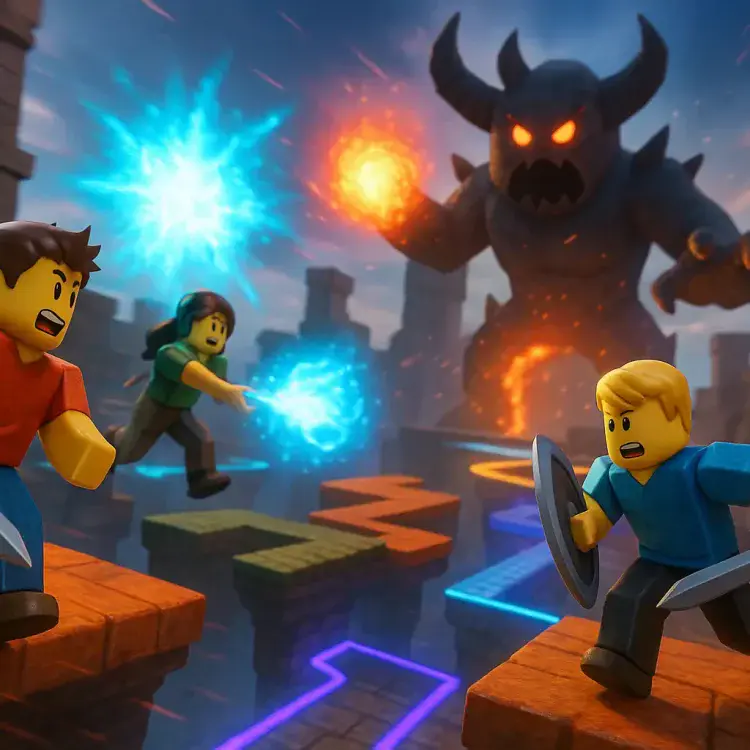
Learning through games makes coding feel less like work and more like an exciting challenge. Platforms like Minecraft and Roblox are more than just games – they’re gateways to real programming skills.
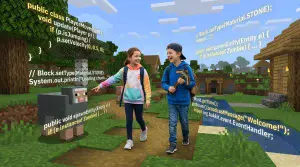
- Minecraft Modding: Students dive into Java programming by creating custom items, blocks, and game mechanics. Starting with block-based coding and transitioning to Java offers a smooth learning curve for younger kids.
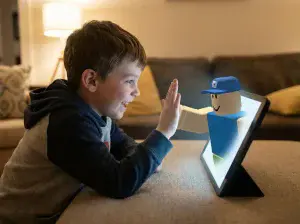
- Roblox Studio: Using Lua scripting, kids aged 10 and up can build multiplayer games, design virtual worlds, and even earn Robux (convertible to real money) through the Roblox Developer Exchange program. Both platforms teach core programming concepts like loops, variables, and functions.
Another option, Code Kingdoms, bridges gaming and coding education. Its beginner-friendly editor and supportive community have earned high praise from parents. One parent, Christy Lynn, shared:
“This has been a great addition to our home school curriculum! My son loves spending time in the program and even jumps back in after school when he’s finished his other work. The response to help requests is always immediate and they do a great job finding and explaining the issues he may be having.”
For a more structured approach, consider platforms like CodaKid, which blends professional tools with guided learning.
CodaKid Platform Overview
Designed specifically for homeschoolers, CodaKid is a coding academy that has served over 100,000 students across 120+ countries. It offers both self-paced courses and private one-on-one lessons.
- Self-Paced Courses: For $17 per month (billed annually), students gain access to 85+ courses covering topics like AI, Python, JavaScript, Minecraft modding, Roblox development, Unity, and Unreal Engine. With over 750 instructional videos and 800 hours of projects, it’s a comprehensive resource.
- Private Lessons: Starting at $249 per month, CodaKid’s one-on-one sessions use the Private Tutoring Mastery Method™, featuring personalized curricula, progress reports, and flexible scheduling. These lessons are taught by US-based instructors from top universities, with the first session offered free.
CodaKid emphasizes real programming languages from the start and has won awards like the Parents’ Choice Gold Award and BrainChild award. Parents consistently praise its quality. Terrence Masson, for example, shared:
“I’ve tried several online 1-on-1 coding classes for my son (starting at age 7, he’s now 9) and CodaKid is outstanding in the quality of its instructors and ease of operation; he’s doing Java coding for Minecraft mods and LOVES it.”
Jennifer H. added:
“We LOVE CodaKid. We couldn’t even imagine a better experience. My kids have attended several other programs and say CodaKid far surpasses the others.”
Students retain all their projects, software, and tools, building a portfolio they can showcase as they grow. Here’s a quick look at the programming languages CodaKid covers:
| Programming Language | Ages | Focus Areas | Difficulty Level |
|---|---|---|---|
| AI | 8+ to 9+ | Artificial Intelligence | Beginner – Advanced |
| JavaScript | 6+ to 10+ | Game Dev, Creative, Web | Intro – Advanced |
| Minecraft (Java) | 8+ to 9+ | Game Dev, Creative | Beginner – Advanced |
| Python | 10+ to 12+ | Game Dev, Creative | Intro – Advanced |
| Roblox (Lua) | 8+ to 9+ | Game Dev, Creative | Beginner – Advanced |
| Unity (C#) | 12+ | Game Dev, Creative | Intermediate – Advanced |
| Unreal Engine | 12+ | Game Dev, Creative | Intermediate – Advanced |
| Web Development | 10+ to 12+ | Web Dev, Creative | Advanced |
CodaKid’s blend of expert instruction, professional tools, and engaging learning techniques makes it a standout choice for homeschool families. With its proven success and glowing testimonials, it’s clear that this platform prepares students for real-world programming opportunities.
Setting Up Your Homeschool Coding Environment
Planning and gathering a few essentials can make all the difference when creating a home coding environment.
Creating a Dedicated Workspace
The first step to a productive homeschool coding setup is selecting the right computer. Despite common assumptions, you don’t need a high-end machine for most educational coding platforms. Even a modestly powered computer can handle the programming tasks your kids are likely to encounter.
Recommended Computer Specs
For smooth performance, aim for a computer with an Intel i5 processor (2.6 GHz or faster), 8 GB of RAM, and a Full HD display (1920 x 1080). This setup can easily support development tools, web browsing, and educational platforms running simultaneously.
Affordable Options to Consider
If you’re on a budget, there are plenty of options:
- Chromebooks: Starting around $150, with 4 GB of RAM.
- Windows Laptops: Entry-level models begin at $250.
- Raspberry Pi: Costs as little as $25, but you’ll need to add a monitor, keyboard, and mouse.
- iPads: Priced from $350, though adding a keyboard and mouse enhances usability.
Don’t overlook certified refurbished devices – they often deliver excellent value for the price.
Peripherals Matter
A proper keyboard and mouse are essential for coding, offering better control and precision. Bluetooth options can help keep your workspace tidy by reducing cable clutter.
Minimizing Distractions
Having a dedicated area for coding can greatly improve focus and learning. For households with multiple children, noise-canceling headphones can be a game-changer, helping to block out distractions. Jessica Parnell, CEO of Bridgeway Academy, emphasizes the importance of tailoring learning environments to individual needs:
“The one constant that always remains true is that there’s no such thing as a ‘cookie cutter child.’ Each child is fearfully and wonderfully made and as a result, learns and functions differently. It’s our job to ensure that we’re raising each child to fulfill their individual purpose and when we can teach in a way that inspires them, we are on our way to homeschool success.”
Once your workspace is set up, it’s time to focus on the software and tools your child will need.
Installing Software and Tools
A well-prepared workspace sets the stage for installing the necessary software. Start by ensuring you have an updated web browser and a reliable internet connection.
Tools for Specific Platforms
Depending on the coding activities, you’ll need platform-specific tools. For instance:
- Minecraft Modding: Requires Java development tools.
- Roblox Studio: Comes with built-in Lua scripting features.
These platforms introduce programming fundamentals like loops, variables, and functions in a fun, interactive way.
Try Before You Buy
Make use of free trials to determine if a tool aligns with your child’s learning preferences before committing to a subscription.
Building Your Homeschool Coding Curriculum
Create a curriculum that grows alongside your child’s coding abilities, adapting to their progress and interests.
Project-Based Learning for Skill Development
One of the best ways to teach coding is through project-based learning. Instead of relying on memorization, kids learn by creating real projects – like guessing games, animations, or calculators. These hands-on activities help reinforce coding concepts while giving kids a sense of accomplishment. From simple games to more advanced mods, these projects not only teach the basics but also allow kids to build a portfolio of their work.
Moving from Block-Based to Text-Based Coding
The shift from block-based coding to text-based coding is a big step, typically happening between ages 8 and 12. Languages like Python and JavaScript are great for beginners because their syntax is straightforward and easy to read. Tools like Edublocks, TinkerCAD, and Makecode serve as helpful bridges, showing both block-based and text-based code side by side. Platforms like Blockly even allow students to convert block programs into Python or JavaScript.
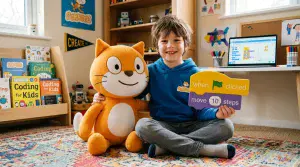
This transition works best when kids build on familiar ideas. For instance, in Scratch, creating a variable involves dragging a specific block, while in Python, you simply type something like score = 0. Using visual aids like diagrams, flowcharts, and step-by-step instructions can help students grasp debugging and syntax. With regular practice and support, kids gain the confidence and skills to take on more advanced, real-world coding tasks. Platforms such as CodaKid make this shift smoother by offering guided projects that progress from beginner to advanced levels.
Using CodaKid as Your Main Resource
CodaKid provides a solid framework for a homeschool coding curriculum, covering everything from beginner concepts to advanced development skills. With over 85 courses on topics like AI, Python, JavaScript, Minecraft modding, and Roblox development, it eliminates the challenge of planning lessons from scratch.
The platform caters to different learning styles with both self-paced courses and personalized lessons. Its project-based approach ensures kids aren’t just passively watching tutorials – they’re actively building games, apps, and AI tools. These projects not only teach essential coding skills but also boost confidence as kids see their creations come to life.
With a 4.9 out of 5 rating from more than 350 reviews, CodaKid’s well-structured curriculum and expert support make it an excellent choice for homeschool coding education. It’s a resource that grows with your child, guiding them from the basics to professional-level skills.
Tips for Homeschool Coding Success
Once you’ve set up a solid curriculum and a conducive home environment, some strategies can help ensure your child’s coding journey is both productive and enjoyable. Success in homeschool coding often comes down to maintaining focus, practicing regularly, and celebrating progress along the way.
Building Regular Practice and Creativity (Homeschool Coding)
When it comes to coding, consistency matters. Studies show that giving learners autonomy can significantly boost their engagement. Instead of overwhelming your child with long, exhausting sessions, aim for manageable daily practice – about 30 minutes a day. Techniques like the Pomodoro Method, which alternates 25 minutes of focused work with 5-minute breaks, can help keep energy and focus levels high.
Set SMART goals to guide progress. These are goals that are specific, measurable, achievable, relevant, and time-bound. For instance, saying, “Complete three Python lessons this week”, is much clearer and more actionable than simply stating, “Learn Python.” Use tools like a coding journal, a Trello board, or even a simple notebook to track these goals and visualize accomplishments.
Let your child take the reins when it comes to project selection. Personalized projects spark interest and motivation. Whether they want to create a game, design animations, or build an interactive story, this choice makes the process more engaging. Research backs this up: fifth graders who participated in Scratch-based programming lessons saw their computational thinking skills improve significantly, with scores climbing from 56.3 to 74.8 in areas like decomposition, pattern recognition, and algorithmic thinking.
“Coding is today’s language of creativity. All our children deserve a chance to become creators instead of consumers of computer science.” – Maria Klawe, Computer Scientist and Educator
Encourage your child to apply their coding skills to real-world projects like building a to-do list app or a personal portfolio website. Debugging – finding and fixing errors – is a crucial part of the learning process, so help them see mistakes as opportunities to grow.
These habits lay the groundwork for tapping into external resources and community support.
Using Support and Community Resources (Homeschool Coding)
Learning doesn’t have to happen in isolation. Connecting with coding communities can provide valuable support and encouragement. Platforms like freeCodeCamp, Stack Overflow, Reddit coding forums, and Discord servers offer opportunities for your child to tackle coding challenges, join group projects, and collaborate with others. These spaces often lead to mentorship opportunities and can help solve tricky coding problems quickly.
Take advantage of support systems offered by coding platforms. Many platforms provide live help desks, forums, and guided tutorials to assist learners when they hit a roadblock. For example, CodaKid offers immediate expert feedback, which can help your child overcome obstacles and maintain their learning momentum.
Pair programming is another great way to make coding more interactive. Encourage your child to work with siblings, friends, or other homeschoolers. Collaborating on projects teaches teamwork, introduces different problem-solving strategies, and makes the learning process more social and enjoyable.
You might also consider joining local homeschool coding groups or setting up virtual meetups with other families. These connections not only provide technical help but also offer emotional support during tougher learning phases.
Tracking Progress and Celebrating Wins (Homeschool Coding)
Keeping track of progress is essential. Use journals or work samples to document your child’s journey. Record lesson schedules, curriculum details, test scores, project photos, and even drafts of their work. A visual timeline showing early attempts alongside completed projects can highlight how far they’ve come.
Go beyond just counting completed lessons – track coding metrics like understanding of key concepts (variables, loops, conditionals), problem-solving abilities, and code quality. You can also measure how well they handle increasingly complex tasks.
Hold weekly check-ins to review progress. These brief 10–15 minute sessions can cover achievements, challenges, and future goals. Simple rubrics for assignments can help children evaluate their work, while learning journals provide a space to reflect on what they’ve learned, struggled with, and accomplished.
“The bottom line is that, when you homeschool, you’re with your kids all day, every day. You see their progress.” – Kris Bales, Founder of Weird, Unsocialized Homeschoolers
Celebrate milestones, both big and small, to keep motivation high. A major accomplishment, like completing a significant project or mastering a new programming language, could be marked with a party, a family outing, or a special treat. Smaller victories, like solving a tricky bug or grasping a new concept, can be rewarded with something simple, like picking a movie or baking cookies together.
Certificates for completed projects can also be a great confidence booster. Display them proudly or create a photo book showcasing your child’s journey, complete with screenshots of their code, project designs, and photos of them working. These tangible reminders of their progress can inspire them to keep going.
Preparing the Next Generation of Coders
When kids dive into homeschool coding with professional tools, they’re not just learning to write code – they’re gaining skills that extend far beyond the screen. STEM jobs are projected to grow by 10.5%, outpacing the 7.5% growth rate for non-STEM fields, with a median annual salary of $95,000 compared to $40,000 in other industries. This makes early coding education a powerful step toward future career success.
By learning programming languages like Python, JavaScript, Java, and C# with industry-standard tools, kids build a strong foundation that directly translates to practical opportunities. At CodaKid, students move beyond drag-and-drop coding and start working with real code, using the same tools professionals rely on.
Creativity and Innovation
But coding isn’t just about technical skills – it’s a gateway to creativity and innovation. Through projects like building games, animations, and apps, kids learn to think analytically and solve problems logically. They develop essential skills like algorithm design, abstract reasoning, and sequential thinking. This kind of learning transforms children into technology creators, not just users.
CodaKid’s curriculum reflects this well-rounded approach.
“We believe that every company – regardless of industry – will be powered by AI, and that AI education is essential for preparing the next generation for the jobs of the future.” – CodaKid
Beyond technical know-how, coding education also fosters critical soft skills. Kids build persistence and resilience as they troubleshoot and debug their own code, learning through trial and error. These experiences equip them for higher education and a rapidly changing workforce where skills like coding, data analysis, robotics, and AI are increasingly sought after.
CodaKid offers an extensive platform with over 85 courses, 750 instructional videos, and 800 hours of student projects. From AI fundamentals to web development and game design, students gain hands-on experience and build impressive portfolios they can showcase in future academic or career pursuits.
This approach ties together concepts from math, logic, language, and creativity, helping students develop skills that are useful across a variety of fields. It’s about preparing for the interconnected demands of today’s world.
The results speak volumes. CodaKid has taught over 100,000 students across 120+ countries and earned accolades like the Parents’ Choice Gold Award and recognition as an SIIA CODiE Finalist. With an average rating of 4.9 out of 5 from more than 350 reviews, the platform consistently proves its ability to prepare young learners for thriving careers in technology.
FAQs (Homeschool Coding)
How can I keep my child excited and engaged while learning coding at home?
To keep your child interested and excited about learning coding at home, focus on making the process fun and hands-on. Try integrating game-based learning and practical projects to highlight how coding can be applied in real life. Let their imagination run wild by encouraging them to create their own games, apps, or even websites.
You can also make coding a social activity by hosting family coding nights or organizing group projects with their friends. Setting small, reachable goals and celebrating every milestone can build their confidence and keep them motivated. Lastly, explore kid-friendly coding tools that present lessons in an engaging and playful way to ensure their enthusiasm stays strong.
Why should homeschoolers use professional coding tools like Python and JavaScript instead of beginner-friendly languages?
Learning to code with tools like Python and JavaScript can be a game-changer for homeschool students. Python stands out for its simple, easy-to-read syntax, which is perfect for beginners. It allows students to dive into problem-solving without getting bogged down by overly complex code structures. On the other hand, JavaScript, a staple in web development, introduces students to creating interactive and dynamic programs, giving them a taste of how coding works in real-world scenarios.
What makes these languages even more appealing is their flexibility and widespread use in professional settings. By mastering Python and JavaScript, homeschoolers not only expand their project possibilities but also build skills that are highly relevant in today’s tech-driven world. These experiences can provide a strong foundation for future opportunities in programming and beyond.
How do platforms like Minecraft and Roblox help kids learn programming?
Platforms such as Minecraft and Roblox turn programming into an exciting adventure by blending creativity with problem-solving. In Minecraft, kids can craft and code their own virtual worlds, picking up essential concepts like abstraction, decomposition, and algorithmic thinking along the way. Meanwhile, Roblox introduces them to actual coding through Lua scripting, teaching them how to structure programs and think logically while designing their own games.
What makes these platforms even more special is their focus on collaboration and community. Kids can share their creations, explore others’ work, and learn together. By tapping into tools they already love, children get a chance to develop coding skills in a fun, hands-on environment.