Artificial Intelligence (AI) is part of everyday life, from voice assistants like Alexa to YouTube recommendations. Teaching kids about AI helps them understand the technology they interact with daily, builds critical thinking, and prepares them for a tech-driven future. Here’s how to explain AI to children based on their age:
- Ages 5-7: Use stories and games to introduce AI as a “smart helper” that learns and improves over time. Tools like Scratch and simple robotics can make learning fun.
- Ages 8-10: Help kids spot AI in their daily lives, like streaming recommendations or voice assistants. Encourage hands-on projects like building chatbots or apps.
- Ages 11-14: Dive into how AI works, such as training models or understanding data patterns. Discuss ethical considerations like bias in AI.
- Ages 15+: Explore advanced AI topics, its impact on industries, and career opportunities. Teens can experiment with programming languages like Python and machine learning tools.
Parents don’t need to be tech experts. Point out AI in everyday devices, encourage curiosity, and discuss its strengths and limitations. Connect AI to your child’s interests – whether art, sports, or music – for a more engaging learning experience. Platforms like CodaKid offer structured courses, while at-home activities like creating AI art or testing voice recognition make learning interactive and practical.
Table of Contents
Inside CodaKid: The AI & Coding Course Every Parent Should Know About
AI Basics: Simple Definitions for Kids
Artificial intelligence, or AI, is like teaching computers to think and learn – a bit like how people do! Instead of just following exact instructions, AI helps computers understand information, spot patterns, and make decisions on their own. It’s all about what AI does, without getting into tricky technical stuff that might confuse young minds.
At its heart, AI lets computers learn from experience and adapt. Imagine showing a computer how to solve puzzles, and over time, it gets better and better at it. That’s AI in action – computers becoming “smart” in their own way.
Kids interact with AI more often than they might realize. To make it easier to understand, there are two main types of AI they encounter in their daily lives. Let’s break them down with some simple, relatable examples.
AI That Analyzes and Understands
This type of AI acts like a detective. It looks at data, spots patterns, and figures things out. For instance:
- When your phone unlocks by recognizing your face, AI is comparing your face to stored data.
- When you ask Alexa or Siri a question, AI listens to your voice, understands your words, and responds.
Kids also see this kind of AI in apps that identify objects using the device’s camera or in GPS apps that study traffic to suggest the fastest way home. Even video games use AI to adjust the difficulty level based on how well someone is playing. It’s all about understanding and reacting to the world around it.
AI That Creates New Things
This type of AI is like a creative helper. Called Generative AI, it can make new things like art, stories, or music. For example:
- Apps that transform kids’ drawings into animated characters.
- Chatbots that can write poems or tell stories.
What’s cool is that this AI doesn’t just copy what it’s seen – it learns from lots of examples and then creates something original. It’s similar to how a child might look at several drawings and then come up with their own unique masterpiece.
Making AI Real for Kids
AI shows up in everyday tools that kids use, like apps with cameras, GPS, or step counters. Think about:
- Fitness apps that count steps.
- Camera apps with fun filters that turn photos into something silly.
- Music apps that recommend new songs based on what you already like.
For older kids curious about the details, you can explain how AI works behind the scenes. It uses data to study complex information, find patterns, and make predictions. This helps them understand that AI isn’t magic – it’s a tool that solves problems and comes up with new ideas using data.
How to Explain AI to Kids by Age Group
Teaching AI concepts to kids requires tailoring your approach to their developmental stage. Children at different ages learn in unique ways, so adjusting explanations, examples, and activities is key to helping them understand. Here’s how to break it down by age group.
Ages 5-7: Stories and Games as Learning Tools
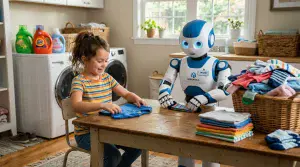
For younger kids, learning happens best through play and imagination. At this stage, introduce AI as a “smart helper” that learns by observing and practicing. Keep it simple and fun – think of AI as a friendly robot or computer that gets better at tasks over time.
Storytelling works wonders here. Create tales about robots learning to recognize animals or computers improving at games with practice. Pair these stories with hands-on activities like coding puzzles or block-based platforms like Scratch, where kids can build animations and games by dragging and dropping blocks of code. You can even explore basic robotics by using sensors and simple commands.
A fun activity could involve training a basic AI model. For example, show a program pictures of cats and dogs until it learns to tell them apart. Highlight how some video games use AI to adjust difficulty based on the player’s skill, making the experience more enjoyable. These playful interactions help children start connecting AI to the technology they encounter every day.
Ages 8-10: Spotting AI in Everyday Life
By this age, kids can begin identifying AI in the world around them. They’re ready to explore how AI powers things they interact with daily, like streaming recommendations or voice assistants such as Alexa or Google Assistant.
Encourage them to try platforms like Thunkable, where they can create multiplayer games or mobile apps. They could also experiment with AI-powered projects, such as building chatbots or training systems to recognize sounds or images. For example, an animal lover might create an app to identify bird species, while a music enthusiast could explore how AI generates melodies by spotting patterns.
This is also a great time to nurture critical thinking. When kids see AI-generated suggestions or content, prompt them to ask questions like, “How does it know this?” or “What kind of information is it using?” These discussions help them understand AI’s role in decision-making and its limitations.
Ages 11-14: Diving Into How AI Works
Pre-teens and early teens can handle more abstract concepts and are often eager to learn the “how” behind technology. This is the perfect time to explore the mechanics of AI.
Use hands-on activities to explain AI’s learning process. For example, show how recommendation systems analyze movie ratings or how image recognition improves with more data. Teens can create projects like chatbots, handwriting recognition systems, or simple prediction models. These activities also provide an opportunity to discuss fairness and bias in AI. Explain how biased training data can lead to flawed AI decisions and why human oversight is critical.
At this stage, kids can also build more advanced robotics projects. Help them program robots to learn from their surroundings and make decisions based on sensor input. These experiences lay the groundwork for deeper discussions about AI and its applications.
Ages 15+: Advanced AI Concepts and Career Exploration
Teenagers are ready to tackle complex topics like machine learning, ethics, and AI’s societal impact. They can explore how AI affects industries such as healthcare, entertainment, and transportation, as well as consider its implications for privacy and automation.
Encourage them to dive into online courses or participate in open-source projects and science fairs. Many teens at this level can work with programming languages like Python and experiment with machine learning libraries.
Career discussions also become relevant. Talk about how AI is reshaping various fields and encourage them to think critically about its role in society. The goal isn’t necessarily to steer them toward AI-specific careers but to help them become informed individuals who understand and can engage with the technology shaping their future. This understanding equips them for a wide range of opportunities in an AI-influenced world.
Parent Tips: How to Support AI Learning at Home
Helping your child explore AI doesn’t require a tech background – it’s all about weaving simple, everyday discussions into their routine. Building on the age-appropriate activities mentioned earlier, these tips will guide you in nurturing your child’s understanding of AI through relatable examples and meaningful conversations.
How to Start Talking About AI
Start by pointing out AI in the devices your child already interacts with. For instance, when they ask Siri a question, Netflix suggests a show, or a website recommends a product, explain that these are examples of AI using data to predict preferences and identify patterns.
You can also highlight how your phone’s camera recognizes objects or converts speech to text. Compare this to how your child learns – just as they recognize a friend’s voice after hearing it repeatedly, the phone learns to understand speech through exposure to countless voice samples.
If your child enjoys gaming, use that as an example. Many games feature computer-controlled opponents that adapt to the player’s behavior. This shows how AI can make decisions and adjust based on past interactions.
To make AI relatable, draw parallels to human learning. For example, explain that just as they get better at riding a bike with practice, AI systems improve as they process more data.
Teaching Kids to Think Critically About AI
Once your child grasps the basics, encourage them to think deeper about how AI works. When they encounter AI-generated content or personalized recommendations, prompt them to question the process: How was this decision made? Is the information accurate?
Be open about AI’s limitations. Explain that AI isn’t perfect – it can make mistakes, especially if it hasn’t been trained on enough examples or if the data it learned from was flawed. Misunderstood voice commands or incorrect photo identifications can serve as simple, real-life illustrations.
Introduce the concept of data privacy in an age-appropriate way. For older kids, explain that while AI learns from user data, it’s important to be cautious about the kind of information shared online.
Encourage curiosity by asking questions together, like, “How do you think the AI figured that out?” or “What might it not be able to do?” These discussions help your child develop a balanced understanding of both AI’s strengths and its shortcomings.
Connecting AI to Your Child’s Interests
AI becomes much more exciting when it aligns with your child’s passions. If they enjoy art, explore AI-powered drawing tools that can inspire their creativity. For sports fans, talk about how teams use AI to analyze player performance. Animal lovers might be fascinated by AI tools used in wildlife conservation, such as systems that identify endangered species or apps that recognize bird songs.
For kids interested in music, try AI programs that compose melodies or assist with songwriting. Avid readers can explore AI writing tools that translate languages or spark new storytelling ideas. By linking AI to their hobbies, you’ll make learning about it more engaging and fun.
Tools and Resources for Learning AI
Choose tools that match your child’s age and provide hands-on experience with AI concepts.
CodaKid for AI and Coding Education

CodaKid offers courses tailored to different age groups, starting with its AI curriculum for kids aged 9 and up, and programming courses for children as young as 6. The platform focuses on teaching real-world coding skills using professional programming languages like Python, JavaScript, and Java. This approach ensures students gain practical experience that builds a strong foundation for future learning and careers.
CodaKid’s programs align with the age-based strategies discussed earlier, offering a structured pathway from beginner to advanced AI concepts. Their learning options include:
- Self-paced program: $29/month, featuring over 85 courses.
- Private one-on-one lessons: $249/month, with a customized curriculum.
- Virtual camps: Focused on intensive project-based learning.
With a curriculum that includes over 750 instructional videos, more than 800 hours of hands-on projects, and 10 educational pathways, CodaKid helps students progress from basic coding to advanced AI development. Parents can easily monitor their child’s progress to ensure essential skills are being mastered.
These structured courses complement at-home activities, creating a well-rounded learning experience.
Hands-On AI Activities for Kids
In addition to formal courses, engaging in hands-on activities at home can make learning AI enjoyable and interactive. Here are some ideas:
- AI Art Creation: Kids can use drawing programs that adapt to their input, allowing them to see how AI replicates their style or completes their artwork. This helps them grasp concepts like pattern recognition in a fun, visual way.
- Simple Chatbot Building: Children aged 10 and older can create basic chatbots, designing personalities, writing responses, and testing interactions. This introduces them to natural language processing in an accessible way.
- Voice Recognition Experiments: Kids can test how different devices handle accents, background noise, or even made-up words. Observing and documenting results highlights the strengths and limitations of AI.
- Pattern Analysis Projects: By analyzing family entertainment choices or local weather patterns, children can learn how data collection plays a role in machine learning.
- Game Modification: Tweaking in-game AI, such as altering difficulty levels or opponent strategies, allows kids to explore decision-making and adaptive systems within a familiar setting.
These activities provide instant feedback, making abstract AI concepts easier to understand while keeping the learning process engaging. Together with structured programs, they create a seamless and enjoyable introduction to AI for kids.
Conclusion: Preparing Kids for an AI Future
Teaching kids about AI goes beyond just keeping up with the latest tech trends – it’s about equipping them with the tools to navigate and succeed in a world shaped by artificial intelligence. Starting early and tailoring your approach to their developmental stage can spark both confidence and curiosity about this transformative technology.
The key is to meet kids where they are. A 6-year-old might enjoy learning how computers recognize patterns and make predictions, while a 13-year-old could dive into how streaming platforms use recommendation systems. By tying AI concepts to things they already love – like storytelling for younger kids or gaming for teens – you’re not just introducing technology; you’re making learning feel exciting and meaningful.
To support this journey, resources like CodaKid and fun, hands-on activities at home make it easier to build a strong foundation in AI. Combining structured learning with everyday exploration helps create a well-rounded understanding that grows over time.
As a parent, you don’t need to become an AI expert overnight. Your role is to encourage curiosity, celebrate discoveries, and guide your child in thinking critically about the technology they encounter. When kids start asking questions like “How does this work?” or “What are its strengths and weaknesses?” they’re developing critical thinking skills that will serve them well in any field. By blending age-appropriate learning with practical experiences, you can help them build these skills step by step.
FAQs
How can I explain AI ethics to my child in a way they can understand?
When talking about AI ethics with your child, it’s essential to tailor your approach to their age and level of understanding. For younger kids, you might explain that AI is like a super-smart helper, but it has to follow rules to make sure it treats everyone fairly and doesn’t cause harm. You could use simple, relatable examples to get them thinking, like asking, “What if a robot only helped certain people and ignored others? Does that seem fair?”
For older kids or teens, you can explore more complex ideas, such as bias in AI or the ways AI decisions affect society. Connect the discussion to things they’re familiar with – like how apps suggest videos or songs – and ask them to consider how those recommendations are made. Encourage open conversations and emphasize the importance of building technology that benefits everyone equally.
What are some fun and simple ways to teach my child about AI at home?
You can help your child explore AI concepts through fun and age-appropriate activities. For younger children, explain AI as “teaching computers to think and learn.” Use familiar examples like voice assistants or smart devices they already know. For instance, you could ask them, “How do you think Alexa understands what you’re saying?” to spark their curiosity.
With older kids, try hands-on projects like building simple chatbots or experimenting with AI-powered apps. Discuss everyday examples, such as how AI suggests movies or predicts the weather. If they show an interest in coding, platforms like CodaKid offer beginner-friendly courses that make learning AI and programming both interactive and enjoyable.
Keep the conversation light and let their questions steer the discussion. By linking AI to things they encounter daily, you can help them grasp these ideas in a way that feels natural and relatable.
How can I help my child understand and think critically about the AI tools they use?
To help your child develop a thoughtful approach to AI tools, start by explaining how these technologies work and what they’re designed to do. Break it down simply: AI relies on patterns and data to function, which means it isn’t perfect. It can make mistakes or even reflect biases based on the information it’s been trained with.
Encourage your child to think critically by asking questions like: How does this tool decide what to do? or What are its weaknesses? Dive into the ethical side of things too – talk about how AI affects privacy and fairness, and why being responsible with technology matters. These conversations can empower your child to navigate AI tools with a more informed and thoughtful perspective.