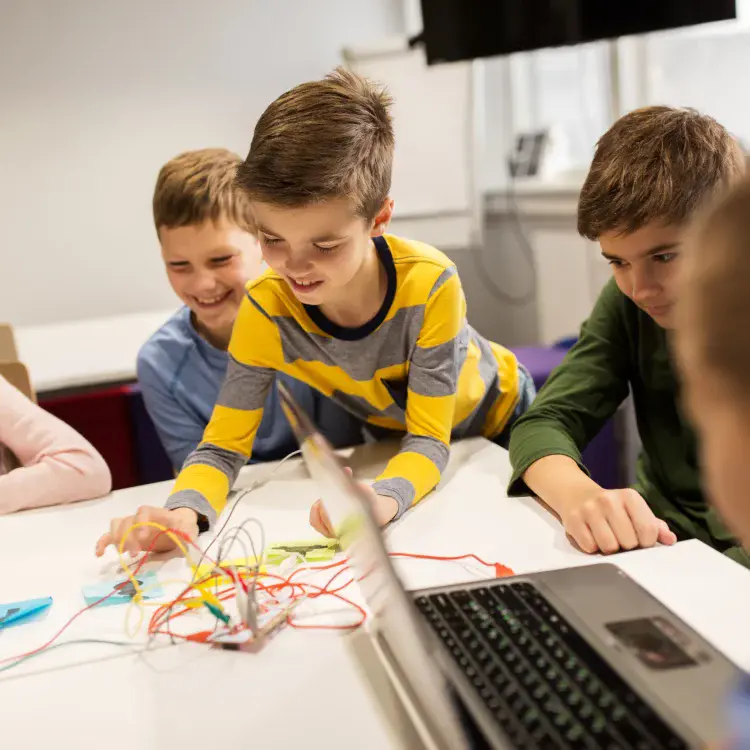
Team coding helps kids gain confidence by encouraging collaboration, improving problem-solving skills, and building social abilities. Unlike solo programming, which can feel overwhelming, working in teams allows children to share tasks, learn from peers, and feel supported. This approach not only makes programming less intimidating but also strengthens communication, leadership, and resilience.
Key takeaways:
- Shared tasks reduce stress: Kids can focus on specific roles, like debugging or design, making challenges feel manageable.
- Improved problem-solving: Collaboration helps children break complex problems into smaller parts and combine strengths.
- Boosted confidence: Peer support, positive feedback, and shared successes make coding feel approachable and rewarding.
- Social growth: Kids develop teamwork, communication, and conflict resolution skills that extend beyond coding.
Table of Contents
Is Coding Good for Kids?
How Team Coding Improves Problem-Solving Skills
Team coding makes tackling programming challenges much easier. Instead of one child juggling syntax rules, tracking variables, debugging errors, and planning a project all at once, teams can divide the tasks and approach problems from different perspectives. Here’s how team coding enhances problem-solving skills by spreading responsibilities and encouraging logical thinking.
Sharing the Mental Load (Team Coding)
Solo projects can feel overwhelming for young learners. In team coding, kids can split up the workload – one might focus on designing the interface while another works on debugging or handling the program’s logic. This division of labor not only reduces stress but also helps each child build confidence and a deeper understanding of their role.
“As each person takes on a role in a larger project, they can learn the importance of delegating tasks. They learn how to coordinate their efforts and support one another.”
Sharing tasks also makes projects more efficient. When everyone focuses on their specific job, the team can move faster toward their shared goal.
“Teamwork allows for projects to be completed more efficiently. When you can share tasks, everyone can focus on their job, working together towards a common goal.”
Clear communication and effective task delegation not only streamline the process but also help individuals feel more confident in their contributions.
Strengthening Computational Thinking Through Collaboration (Team Coding)
Team coding doesn’t just lighten the load; it also sharpens computational thinking. This skill – breaking complex problems into smaller, manageable parts – flourishes in group settings. By working together, children can discuss and refine systematic approaches, reinforcing logical reasoning.
Teams benefit from a mix of strengths. One child might excel at spotting patterns, while another is great at organizing information. By pooling these abilities, they can solve problems that might feel insurmountable for a solo coder.
“Learning to code requires individual coders to communicate effectively with each other in order to manage and delegate tasks while working towards a common goal. The more experience children have of collaborative work, the greater their ability to become contributing members of a team. Additionally, collaboration-based projects can help children to effectively handle conflict and disagreement, and to learn how to harness the strengths and resources of each team member.”
Through collaboration, kids not only develop technical skills but also learn how to navigate teamwork and resolve conflicts – essential skills for any problem-solving scenario.
Building Programming Confidence Through Teamwork
When kids code together, programming becomes less intimidating and more of an exciting journey. Working as a team creates an environment where children feel comfortable trying new ideas, learning from mistakes, and celebrating their successes. Activities like building a robot or solving a coding puzzle unite kids around shared goals, making complex problems feel more approachable and less overwhelming.
Peer support is a key ingredient in boosting programming confidence. Positive feedback and encouragement from teammates during coding projects help children feel valued and capable, building their confidence in tackling technical challenges. Through collaboration, kids also develop vital communication skills – like presenting and defending their ideas, giving constructive feedback, and refining their work – all of which further strengthen their self-assurance.
Closing Confidence Gaps in Coding (Team Coding)
Research shows that team-based environments are particularly effective at helping kids maintain confidence as they face increasingly advanced programming concepts. These environments celebrate both group achievements and individual contributions, ensuring every child feels their strengths – whether in logical thinking, creativity, or debugging – are recognized and valued.
The collaborative nature of team coding also teaches kids to view setbacks as shared challenges rather than personal failures. This mindset not only builds resilience but also encourages a problem-solving approach that will serve them well as their coding skills grow.
Individual vs. Team Coding: Confidence Outcomes
When comparing solo and team programming, studies highlight the advantages of group activities in creating more engaging and enjoyable learning experiences. These shared experiences not only improve kids’ attitudes toward programming but also directly increase their confidence levels. By exchanging ideas and learning from one another, children sharpen their technical skills while also developing interpersonal abilities that boost their overall self-confidence.
On the other hand, while solo programming can hone technical expertise, it often lacks the social interaction and shared accomplishments that make team coding so impactful. Teamwork naturally fosters peer learning and mentorship, where more experienced coders can guide their peers. This dynamic strengthens confidence for everyone involved.
The benefits of this collaborative success go beyond just coding, helping kids grow socially and emotionally as well.
Social and Emotional Development Through Team Coding
Team programming offers kids a unique space to grow socially and emotionally while honing their technical skills. When children collaborate on coding projects, they encounter real-world social dynamics, building relationships and learning to work effectively with peers. This shared experience fosters empathy, emotional awareness, and a sense of belonging in their learning environment.
The benefits of team coding stretch beyond the walls of the classroom or coding session. Kids gain an appreciation for different perspectives and problem-solving methods, skills that help them adapt to various situations and interact with others thoughtfully. These lessons also strengthen their communication and leadership abilities, preparing them for teamwork in any setting.
Developing Teamwork and Communication Skills (Team Coding)
Coding as a team teaches kids how to express their ideas clearly and listen to others. Working on joint projects requires explaining coding logic, asking thoughtful questions, and offering constructive feedback. These interactions naturally build verbal communication skills.
Team programming also introduces children to discussions and decision-making. They learn to weigh options, consider pros and cons, and reach agreements as a group. It shows them that disagreements don’t have to lead to conflict – they can actually lead to better solutions when handled collaboratively.
Leadership skills also emerge during these projects. Different team members take on leadership roles depending on their strengths – whether it’s debugging, designing, or organizing tasks. Rotating leadership helps kids recognize their own capabilities while boosting the confidence of the entire team.
Time management and accountability become part of the process as well. Kids learn to meet deadlines, divide work fairly, and stay responsible to their teammates. These habits reinforce both their social and technical growth.
Creating Peer Support and Encouragement (Team Coding)
Team programming cultivates an environment where kids naturally teach and learn from one another. Explaining concepts to peers not only helps struggling teammates but also strengthens the understanding of the child doing the teaching. This peer-to-peer interaction fosters trust and confidence on both sides.
The emotional safety within a collaborative setting is especially valuable for kids who may feel intimidated by technology. Watching peers make mistakes and ask questions normalizes the learning process, reducing anxiety and making it easier for everyone to participate.
Beyond coding, team projects create opportunities to celebrate shared successes and provide encouragement during challenges. Solving a tough bug or completing a difficult project becomes even more rewarding when the victory is shared. Kids learn to value their teammates’ efforts and contributions, building a supportive environment that helps them bounce back from setbacks.
The sense of belonging that comes from team programming helps kids see themselves as part of a larger community of creators. This connection often leads to lasting friendships and collaborations, enriching their learning journey far beyond individual projects.
Practical Coding Challenges: Safe Learning for Confidence
Practical coding challenges play a big role in creating a supportive and creative learning environment, especially when teamwork is involved. These challenges allow kids to explore coding without the fear of being judged individually. By working together, children can take risks, learn from their mistakes, and build technical skills, all while being encouraged by their peers. The collaborative nature of these activities turns what might feel like failure into a chance for everyone to grow and learn together.
When kids collaborate on coding projects, it naturally reduces the fear of making mistakes. If one team member struggles with a concept, others can step in with advice or a different perspective. This shared effort helps ease the anxiety around errors and shifts the focus from individual shortcomings to collective problem-solving.
Team-based coding also creates a space where kids feel comfortable sharing ideas they might not be sure about. They come to understand that asking questions, experimenting, and even failing are all part of the coding process. This mindset is key to building lasting confidence in programming and technology.
Benefits of Low-Pressure Challenges
Low-pressure challenges, where responsibilities are shared, make it easier for kids to embrace creativity. In these settings, they can approach complex problems with the support of their peers, working through obstacles as their ideas take shape and evolve into finished projects.
The iterative process of team coding teaches kids that progress comes through practice and refinement. They see how early ideas can grow and improve through collaboration and persistence. This experience helps them develop resilience and reinforces the idea that programming is a journey of continuous learning, not a race to perfection.
In these low-pressure environments, peer feedback becomes helpful rather than harsh. Kids learn how to give and receive suggestions in a way that promotes growth for everyone involved. They also discover the difference between critiquing a piece of code and critiquing the person who wrote it, which builds a healthier approach to teamwork and problem-solving.
Practical Applications of Team Programming
Team coding becomes even more engaging when it’s tied to real-life problems that kids can relate to. Whether it’s designing simple games, creating basic websites, or building apps to solve everyday challenges, these projects show how programming can be a tool for creativity and practical problem-solving.
For example, game development allows kids to combine storytelling with technical skills, making it both fun and educational. Web development projects might involve creating sites for imaginary businesses or personal portfolios. Meanwhile, problem-solving apps could tackle issues in schools or communities, like organizing events or designing interactive educational tools for younger students.
Platforms like CodaKid make these kinds of team projects accessible and exciting. Kids can dive into activities like Minecraft modding, Roblox game creation, or web development, all tailored to their interests and daily experiences. This hands-on approach encourages collaboration while letting young programmers experiment with real coding languages and professional tools, giving them a solid foundation to build on as they grow.

How Parents Can Support Team Coding at Home
Encouraging kids to work together on coding projects is a great way to build teamwork, improve communication, and sharpen problem-solving skills. By pairing up children in small groups of two or three with complementary strengths, parents can create an environment where collaboration thrives. This setup not only helps kids learn to share ideas and tackle challenges as a team but also boosts their confidence as they see the benefits of working together.
To make these experiences even more effective, parents can tap into reliable digital tools and resources. Platforms like CodaKid provide project-based coding courses designed to engage kids while promoting teamwork. These resources not only teach valuable technical skills but also help children develop social confidence, creating a strong foundation for collaborative learning at home.
Conclusion: The Impact of Team Coding on Kids
Team coding offers more than just a way to learn programming – it shapes critical life skills and fosters personal development. By working together to solve problems, kids not only enhance their technical abilities but also build confidence in tackling challenges, expressing ideas, and supporting their peers. Studies suggest that collaborative coding can significantly improve problem-solving skills while easing the stress often associated with learning.
Through team-based coding, children discover that collaboration strengthens their individual abilities and equips them for future success, particularly in STEM fields where teamwork is essential. Early exposure to these environments helps kids develop a natural ease with group problem-solving, a skill that serves them well throughout school and beyond.
The benefits extend beyond technical knowledge. Skills like effective communication, active listening, and giving constructive feedback – all cultivated through team programming – become valuable tools in both academic and personal settings. Team-based coding nurtures confident, cooperative thinkers ready to succeed in an interconnected world, beyond just programming skills.
This collaborative approach doesn’t just reinforce programming skills; it also builds a foundation for lifelong teamwork. Providing kids with consistent opportunities to engage in group coding projects emphasizes both technical growth and positive social interactions. Platforms such as CodaKid offer structured, team-oriented coding challenges in a safe and supportive space, helping kids grow into creative, capable, and STEM-ready individuals.
FAQs (Team Coding)
How does working in coding teams help kids develop social and emotional skills?
Team coding projects teach kids more than programming—they build crucial social and emotional skills through collaboration. Working together on programming tasks teaches them how to share ideas, respect different viewpoints, and solve problems as a team. Along the way, they pick up valuable traits like cooperation, patience, and the ability to adapt.
Unlike coding solo, group challenges create a sense of responsibility and boost confidence through shared accomplishments. Kids build resilience by navigating team dynamics, exchanging constructive feedback, and supporting each other toward shared goals. This collaborative approach not only sharpens their technical know-how but also equips them for teamwork in the real world.
How can parents encourage teamwork through programming activities at home?
Parents can help their children develop teamwork skills through programming by encouraging collaborative projects. Siblings or friends can team up to tackle coding challenges, create simple games, or design websites together. These activities teach technical skills while building essential abilities like communication, problem-solving, and effective teamwork.
Parents can involve kids in group tasks like planning meals, organizing family events, or completing household projects together. These everyday activities let children practice teamwork while working toward shared goals in a supportive, natural setting. Celebrate their efforts and successes, big or small, to build confidence and reinforce the value of collaboration.
How does team coding help kids build confidence in programming?
Team coding empowers kids to grow their confidence by working together to tackle challenges. Collaborating in a group gives them the chance to exchange ideas, ask questions freely, and learn from one another. This shared experience makes tough problems feel less overwhelming and builds a sense of mutual support.
By working as a team, kids also strengthen important social skills like active listening, empathy, and leadership. They learn to give and receive constructive feedback while dividing tasks based on each team member’s strengths. These lessons sharpen their coding skills and boost confidence in navigating both technical challenges and social interactions.