Want to help your child learn coding but not sure where to start? In 2026, the best small-group coding classes have become a popular choice for teaching kids everything from Python to AI tools for programming. The big question: Should you choose cohort-based classes or self-paced programs? Here’s the quick breakdown:
- Cohort-Based Classes: Fixed schedules, live instructors, and peer collaboration. Great for kids who thrive on structure and real-time interaction.
- Self-Paced Classes: Learn anytime with pre-recorded lessons. Ideal for independent learners and busy families.
Key Differences:
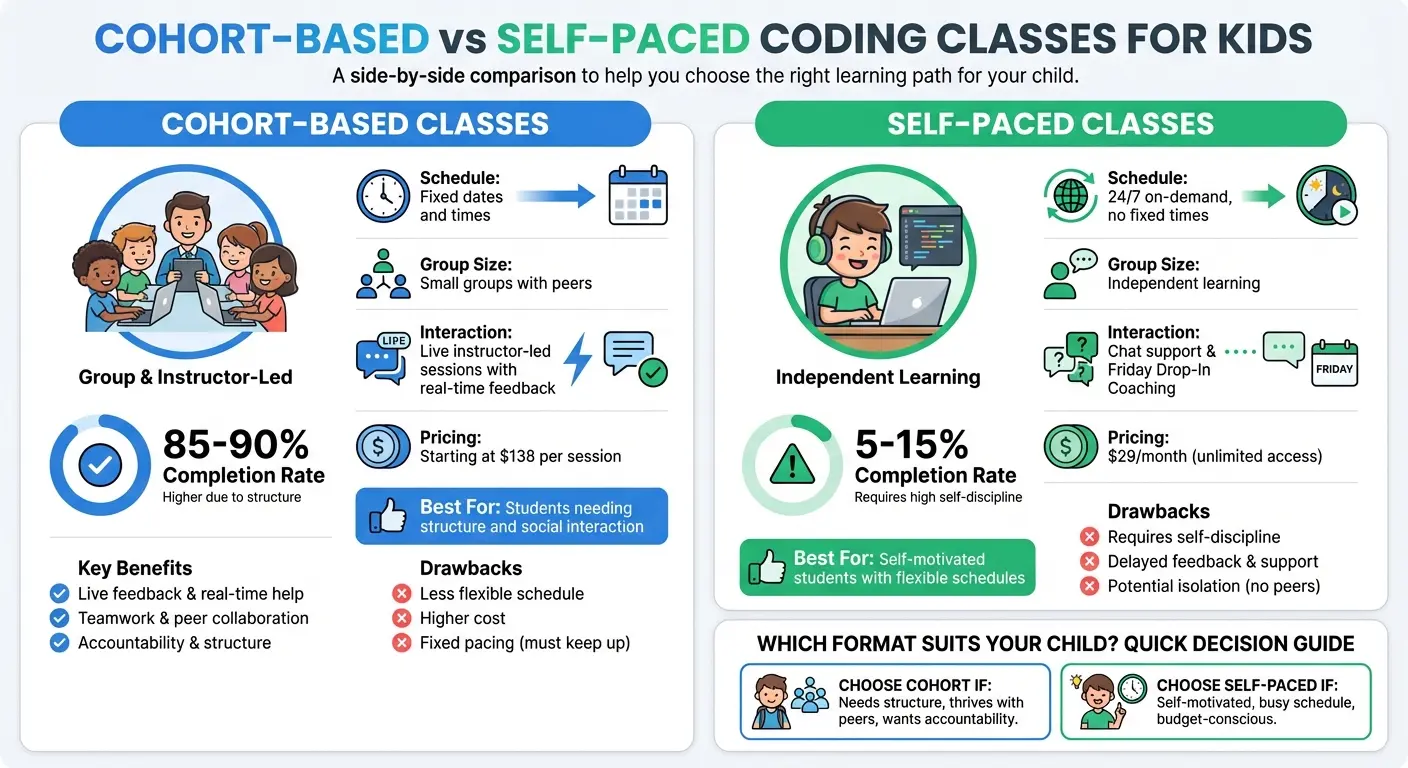
- Cohorts: Higher completion rates (85–90%), live feedback, and teamwork. Costs vary, starting around $138 per session.
- Self-Paced: Flexible schedules, lower prices ($29/month), but requires self-motivation. Completion rates are lower (5–15%).
Both formats teach essential coding skills while catering to different learning styles and family schedules. Want more details? Let’s dive deeper into how each format works and what makes them a fit for your child.
Cohort-Based vs Self-Paced: The Best Small-Group Coding Classes for Kids: Complete Comparison
Table of Contents
The Best Cohort-Based Small-Group Coding Classes Explained
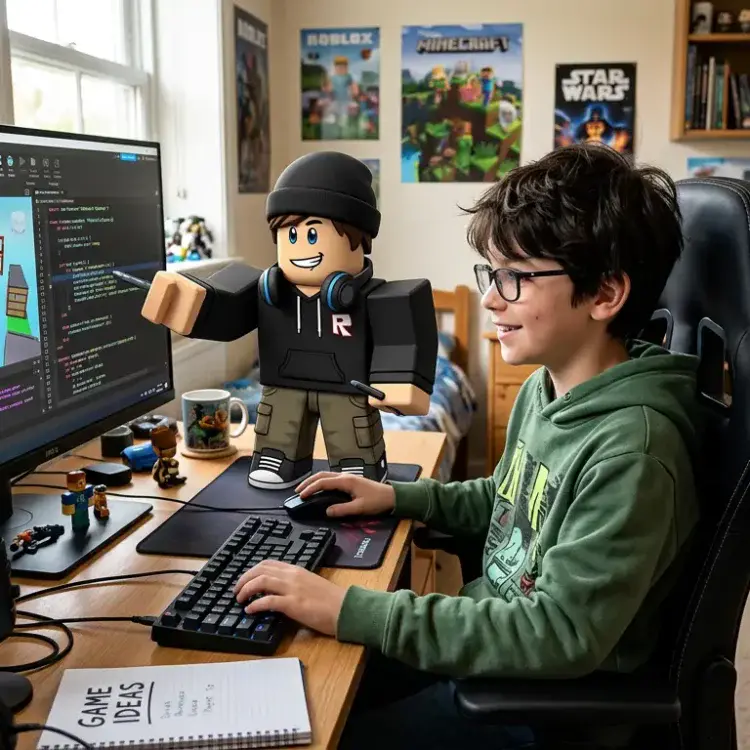
Cohort-based classes bring students together to progress through a curriculum as a group, much like a traditional classroom setting. These small-group sessions are led by a dedicated instructor who guides students through hands-on projects, such as building Minecraft mods or designing Roblox games. This shared experience not only encourages collaboration but also fosters mutual learning among participants.
How Cohort-Based Classes Are Structured
These classes operate on fixed schedules, often offered as one-week camps during school breaks or as 12-week semester programs. Session lengths and timings can vary depending on the program.
Students are grouped by age – such as 7–9, 9–12, or 10–14 years old – to ensure lessons are tailored to their developmental stage. The instructor leads the group through each lesson, starting with an introduction to key concepts before transitioning into hands-on coding projects. While students work on their projects, they receive immediate help with debugging and can also gain inspiration by observing their peers’ work. Some programs even feature “Demonstration Days”, where participants showcase their completed projects. This structured approach promotes both collaboration and real-time feedback.
Advantages of Cohort-Based Classes
One standout benefit of cohort-based classes is the emphasis on peer collaboration. Seeing classmates bring their projects to life often inspires and motivates students. Parent Sara G. shared:
“The small class size is great and the teacher is excellent for his age and interests.”
The fixed schedule helps maintain consistent learning. Instructors are on hand to provide instant feedback and assist with debugging, which keeps students on track. Parent Chanathip N. noted:
“Emma really enjoyed taking the course and observing her classmates’ work.”
Beyond coding, this collaborative setup helps students develop teamwork and communication skills – abilities that are valuable far beyond the world of programming.
Drawbacks of Cohort-Based Classes
While cohort-based classes offer many benefits, they do come with challenges. One key drawback is the lack of scheduling flexibility. Families juggling multiple extracurricular activities may find it hard to accommodate a class with fixed meeting times. Missing a session could mean falling behind, although some programs provide recorded lessons to help students catch up.
Another issue is pacing. In a group setting, some students might feel pressured if the material moves too fast, while others could lose interest if the pace is too slow. Additionally, these classes can be expensive; for instance, some programs charge around $138 for a four-week session. Technical issues during live sessions can also disrupt learning, so it’s essential to choose programs with reliable technical support.
The Best Self-Paced Small-Group Coding Classes Explained
Self-paced coding classes allow students to learn at their own rhythm, accessing course materials whenever it suits them. Instead of attending fixed sessions, kids can log into a platform to watch high-quality video tutorials. These videos can be paused, rewound, and replayed as needed, making this format ideal for families juggling busy schedules. This approach encourages a self-driven and interactive learning experience.
How Self-Paced Classes Are Structured
The backbone of self-paced learning lies in on-demand video lessons. Students can move through the material at their own speed, practicing coding and testing their projects without the pressure of keeping up with a group. For instance, CodaKid’s platform offers over 750 videos and more than 800 hours of student projects to explore.
To prevent students from feeling isolated, many programs include live drop-in coaching sessions. These are scheduled times – like Friday afternoons – where students can get real-time assistance from instructors. Additionally, platforms often provide Help Desk support via chat or email, ensuring that technical roadblocks don’t halt progress. Some programs also enhance the experience with community events, workshops, and opportunities to beta-test projects alongside professional developers, adding a social and collaborative element to the learning process.
Advantages of Self-Paced Classes
The flexibility of self-paced classes is a major perk. Families can integrate coding lessons into their schedules without worrying about missing key content due to other commitments like sports, music lessons, or vacations. Students who quickly grasp concepts can move ahead, while those needing more time can revisit lessons as often as necessary.
Another benefit is the broad access to curriculum. Unlike cohort-based classes that focus on a single track, self-paced programs often provide unlimited access to a variety of courses. Topics can include Scratch, Python, Minecraft, Roblox, and even AI, all under one subscription. For example, CodaKid offers over 85 video courses for $29 per month or $199 annually (about $17 per month). Parent Ci Tro shared:
“A huge plus for busy parents is the outstanding and swift support from CodaKid. No frustrating long deadlock, but friendly, competent help to keep the kids going and exploring.”
In terms of cost, self-paced programs are significantly more affordable than private tutoring plans. Subscriptions typically range from $17 to $29 per month, compared to live classes that can cost anywhere from $138 to $250 or more per month.
Drawbacks of Self-Paced Classes
One of the biggest challenges with self-paced classes is maintaining discipline. Without regular meeting times or deadlines, it’s easy for students to procrastinate. Completion rates for online self-paced courses are notoriously low, often between 5% and 15%, with dropout rates reaching up to 90%. A study by HarvardX and MITx found that only about 5.5% of students completed their self-paced courses.
Another drawback is the delay in receiving feedback. Unlike live classes, where teachers can provide immediate guidance, students in self-paced programs might have to wait for responses through help desks or drop-in sessions. The lack of regular peer interaction can also lead to feelings of isolation, which may reduce motivation to complete the course.
Parents can play a key role in addressing these challenges. Setting consistent study schedules, breaking goals into smaller, manageable steps, and checking in weekly to review progress can help keep students on track. Encouraging participation in optional live drop-in sessions and community events can also combat isolation and enhance the overall learning experience.
CodaKid Virtual Camps: Cohort-Based Learning
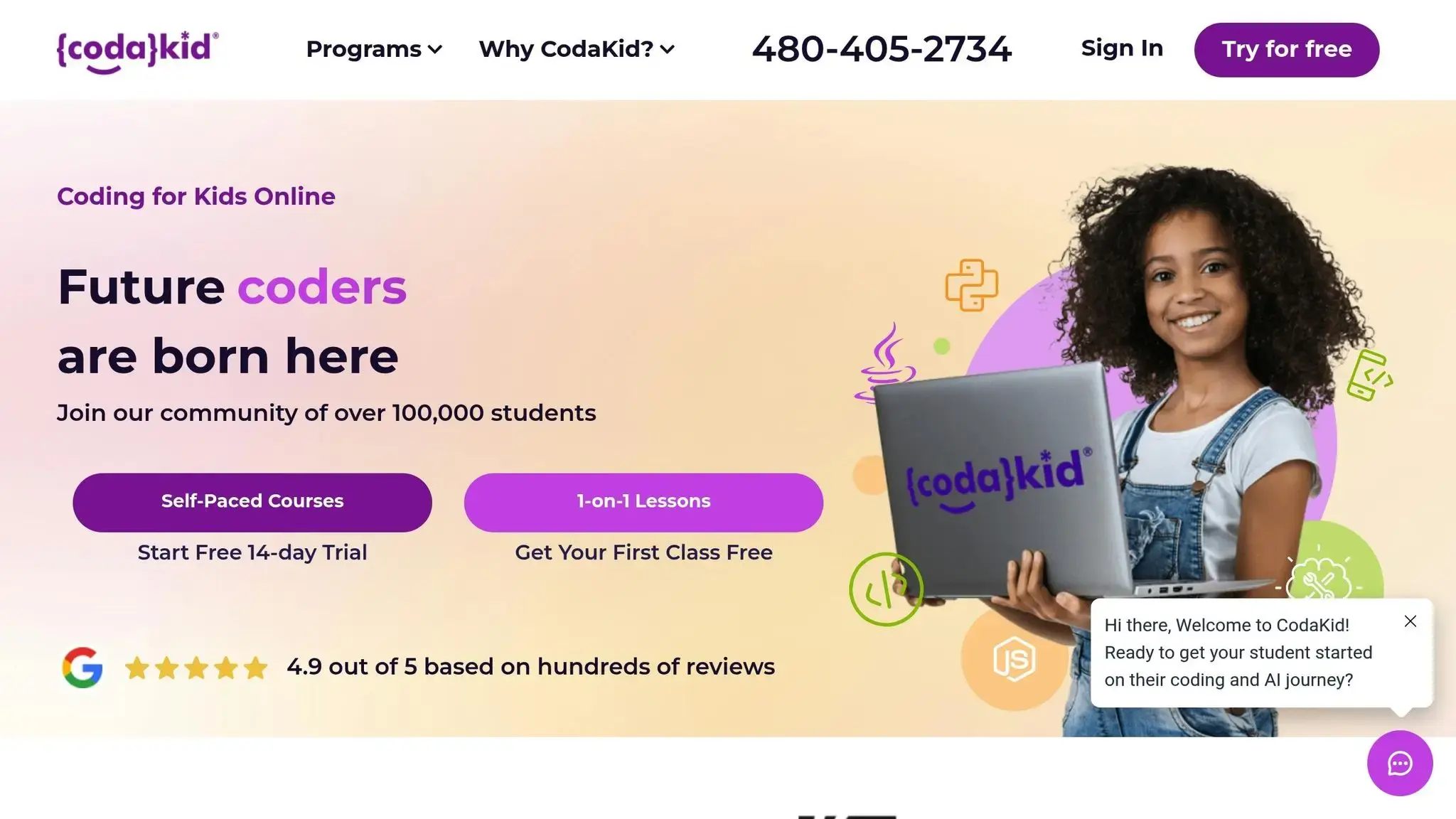
CodaKid’s virtual camps bring together small groups of kids for focused, project-driven learning experiences. These programs are designed to guide participants through building real-world projects, starting with foundational concepts and progressing to fully functional applications over several weeks. Let’s dive into how these camps are structured to deliver hands-on coding experiences.
How CodaKid Virtual Camps Are Organized
CodaKid offers two main formats for its virtual camps: a two-day workshop (two hours per day) or a 12-week Academy (one hour per week). To ensure an engaging and effective learning environment, classes are grouped by age and skill level so students collaborate with peers who are at a similar stage in their coding journey.
The curriculum focuses on creating complete, functional projects rather than isolated exercises. Kids work on exciting projects like building a Roblox sword-fighting game using Lua, crafting Minecraft mods, or developing AI-powered web applications with tools like Cursor, ChatGPT, and Three.js. Some workshops even integrate machine learning tools like YOLO and OpenCV for more advanced challenges.
A standout feature of the curriculum is “Vibe Coding”, where students use AI tools to accelerate prototyping in professional programming languages such as Python, JavaScript, Java, and Lua. Beyond live classes, students gain 24/7 access to the CodaKid platform, which includes video recordings of sessions for review and between-class technical support. Upon completing the program, participants receive a graduation certificate to celebrate their achievements.
What Makes CodaKid Virtual Camps Effective
CodaKid’s small-group format fosters personalized attention and meaningful collaboration among peers. The program’s success is rooted in its “Mastery Method”, which uses guided questioning to help students develop critical problem-solving and software design skills.
Instructors play a key role in this process. CodaKid selects its teaching staff from the top 50 universities in the United States, ensuring they bring both technical expertise and strong teaching abilities to the table. With over 100,000 students worldwide and a 4.9-star rating based on 350+ reviews, CodaKid has earned accolades like the Parents’ Choice Gold Award and recognition as a SIIA CODiE Finalist for Best Coding Solution. One parent, Jo Warn, shared:
“Ethan has an incredible way of communicating and interacting with Jonathan which makes every coding class so beneficial and an exciting part of Jonathan’s education. What great instructors CodaKid choose.”
The combination of live instruction, recorded sessions, and round-the-clock technical support ensures that students stay on track and continue to grow their coding skills with confidence.
CodaKid Self-Paced Courses: On-Demand Learning
Unlike fixed-schedule programs, CodaKid’s self-paced courses offer families complete control over their learning routines. Kids can log in anytime and progress at their own speed using professional-grade programming tools. Let’s take a closer look at how these courses are structured to support effective learning.
How CodaKid Self-Paced Courses Are Organized
CodaKid’s self-paced library includes over 750 video tutorials spread across 10 pathways, offering more than 800 hours of hands-on projects. The courses follow a straightforward “watch, pause, code, design, and test” method. Students watch a short video, apply what they’ve learned by writing code, and then test their projects for functionality.
The curriculum uses kid-friendly programming languages and tools, such as Python, JavaScript, Java, Lua, C#, HTML, CSS, and Unreal Blueprints. These courses are categorized by skill level, starting with “INTRO” and “BEG” labels for beginners and advancing to more challenging tracks for intermediate and advanced learners.
Introductory courses can often be completed in just a few hours, while advanced tracks might take 20 hours or more. As learners advance, they earn badges, accumulate points, and receive certificates of completion. Students can replay, rewind, and adjust the video speed, allowing them to spend extra time on tougher concepts or move quickly through familiar material. This structured approach ensures a balance of flexibility and comprehensive learning.
What Makes CodaKid Self-Paced Courses Effective
One of the biggest benefits of the self-paced model is its adaptability. For busy families in the U.S., this means coding for elementary students can fit into any schedule. Kids can tackle lessons in short 30–60 minute chunks during the week or dive into longer sessions over the weekend. Progress is saved automatically, so they can pick up right where they left off.
Students also have access to unlimited help desk support through chat and email, with optional screen-sharing sessions for more complex problems. The support team, made up of skilled engineers and educators, responds quickly to help learners stay on track. As one parent, Ci Tro, shared:
“A huge plus for busy parents is the outstanding and swift support from CodaKid. No frustrating long deadlock, but friendly, competent help to keep the kids going and exploring.”
Additionally, students can join Live Drop-In Coaching sessions every Friday afternoon for extra assistance. Family dashboards provide real-time updates on progress, keeping parents informed. By combining on-demand video lessons, hands-on projects, and responsive human support, CodaKid’s self-paced courses deliver a flexible yet guided experience, making them ideal for independent learners who value both freedom and expert help when needed.
CodaKid Cohorts vs Self-Paced: Side-by-Side Comparison
Both learning formats at CodaKid deliver professional coding instruction, but they cater to different needs and preferences. While self-paced courses offer flexibility and independence, cohort-based programs provide structure and real-time interaction. Here’s a closer look at how the two compare.
Feature Comparison: Cohorts vs Self-Paced (Best Small-Group Coding Classes)
The table below highlights the primary differences between CodaKid’s self-paced courses and cohort-based programs:
| Feature | Self-Paced Courses | Cohort-Based (Virtual Camps & Academies) |
|---|---|---|
| Group Size | Independent | Small groups with peers |
| Schedule | 24/7 on-demand; no fixed times | Fixed dates and times |
| Interaction | Chat support & Friday Drop-In Coaching | Live instructor-led sessions with real-time feedback |
| Primary Tools | Scratch, Python, Roblox, Minecraft, AI, JavaScript, Java | AI, Roblox, Minecraft, Python, Fortnite |
| Pricing | $29/month (unlimited access) | Varies by program |
| Completion Rate | Lower (industry average 5%–15%) | Higher (industry average 85%–90%) |
| Best For | Students with intrinsic motivation; flexible schedules | Students needing structure and social interaction |
Self-paced courses are priced at $29 per month or $199 annually. Families can opt for the Family Plan at $45 per month or $270 per year, which covers up to three students. Meanwhile, cohort-based program costs vary depending on the specific offering. Research from 2026 highlights a stark contrast in completion rates: cohort-based courses boast rates of 85% to 90%, compared to just 5% to 15% for self-paced formats. As Roman Shauk, an EdTech content writer, puts it:
“It is obvious where the learning pendulum is swinging, given the completion rate of less than 5% for self-paced compared to over 90% for CBC.”
Understanding these distinctions can help you choose the format that aligns with your child’s needs.
How to Choose the Right Format for Your Child
When deciding between the two formats, consider your child’s learning preferences, schedule, and motivation.
Your child’s learning style plays a central role. Self-paced courses suit students who are self-driven and enjoy working independently. On the other hand, cohort-based programs are ideal for those who thrive with deadlines, real-time feedback, and peer interaction.
Think about your family’s schedule. Self-paced courses allow for maximum flexibility, letting kids learn whenever it fits into their day. This is perfect for families juggling multiple extracurriculars. However, cohort-based programs require attendance at specific times and may not suit a packed schedule.
Motivation level is another key factor. Students who need external accountability often excel in cohort settings, where live instructors and peer engagement keep them on track. The higher completion rates in cohort-based programs reflect this advantage. Conversely, naturally curious students who prefer to learn at their own pace may find self-paced courses more appealing, with over 800 hours of projects available to explore.
For gifted or advanced learners, private 1:1 lessons (starting at $249 per month) let instructors tailor sessions to the student’s level, focusing on advanced topics like Java or C#. For beginners, the self-paced 14-day free trial is a great way to dip their toes into coding with beginner-friendly languages like Scratch or Python before committing to a program.
Conclusion: Choosing Between CodaKid’s Learning Formats
Main Differences Between the Two Formats (Best Small-Group Coding Classes)
When deciding between CodaKid’s learning formats, it all comes down to structure versus flexibility. Self-paced courses offer 24/7 access to over 85 courses and 800+ hours of content for $29 per month. This option is ideal for independent learners who want to explore platforms like Scratch, Python, and Roblox at their own speed. On the other hand, cohort-based programs – such as Virtual Camps and Academies – run on fixed schedules with live instructors from top U.S. universities. These programs use CodaKid’s Mastery Method, which emphasizes critical thinking through guided questioning, live feedback, and peer interaction to keep students engaged.
With these differences laid out, here are some practical tips to help you decide which format is the best fit for your child.
Practical Tips for Parents (Best Small-Group Coding Classes)
Both formats provide excellent coding education, but the right choice depends on your child’s learning style and your family’s needs.
- Test the waters: Start with the 14-day free trial for self-paced courses to see if your child enjoys independent learning and can manage their own pace.
- Consider motivation levels: If your child is naturally self-driven, the self-paced option might be perfect. But if they need structure and regular reminders, a cohort-based program offers accountability and live interaction.
- Factor in your schedule and budget: Self-paced courses are affordable at $29 per month (or $45 per month for a Family Plan covering up to three students), making them a flexible option. Meanwhile, Top-rated virtual camps are great for school breaks, and private 1:1 lessons – starting at $249 per month – provide personalized attention and faster progress.
Parents often highlight CodaKid’s strong support team and ability to keep kids engaged. With a 4.9 out of 5-star rating from over 350 reviews and honors like the Parents’ Choice Gold Award, both formats ensure high-quality instruction. By weighing your child’s learning style and your family’s schedule, you can confidently choose the format that works best for your needs.
FAQs (Best Small-Group Coding Classes)
What makes cohort-based coding classes a great option for kids?
Cohort-based coding classes give kids a structured and interactive way to learn, helping them build skills while boosting their confidence. With a set schedule – like weekly sessions over a 12-week period – students can track their progress and hit clear milestones. This consistency keeps them motivated and makes it easier to see their growth. Plus, learning in a small group of peers creates a collaborative space where kids can exchange ideas, tackle challenges together, and celebrate their wins, making the process both productive and enjoyable.
These classes also offer real-time support from instructors, so students can get instant feedback and clarify any confusion right away. The small group setting strikes a balance between personalized attention and teamwork. Beyond just coding, kids pick up essential soft skills like communication, problem-solving, and accountability – tools that will serve them well in school and beyond.
How can parents keep kids motivated in self-paced coding courses?
Parents play a crucial role in keeping kids motivated and focused when they’re learning to code on their own. One way to start is by establishing a consistent routine – something like a 45-minute “coding hour” twice a week. Treat it just like any other extracurricular activity. Pair this schedule with small, achievable goals, like finishing a Scratch project or debugging a Python script. And don’t forget to celebrate their wins! Simple rewards, such as family recognition or a favorite treat, can go a long way in keeping them excited.
Encourage your child to make the most of built-in support tools, like live instructor assistance, whenever they hit a roadblock. Teaching them to ask questions early can help avoid frustration and keep the process fun. It’s also important to create a distraction-free workspace equipped with reliable internet and any tools they’ll need, like Scratch or Roblox Studio.
To make coding more enjoyable, consider hosting family “show-and-tell” sessions where your child can showcase their projects. Showing genuine interest in their progress not only boosts their confidence but also turns coding into a shared family experience.
How do I decide between cohort-based and self-paced coding classes for my child?
When deciding between cohort-based and self-paced coding classes for your child, think about their learning style, schedule, and level of motivation.
Cohort-based classes follow a structured schedule with live sessions, group activities, and immediate feedback. These are ideal for kids who enjoy working with others, benefit from peer interaction, and thrive in a collaborative setting. The interactive format often keeps students more engaged and increases the likelihood of completing the course.
Self-paced classes, on the other hand, offer flexibility, letting kids learn at their own speed and revisit lessons whenever they need to. This format is a great fit for independent learners, families with unpredictable schedules, or children who might feel overwhelmed by strict deadlines. However, self-paced courses may require more involvement from parents and tend to be easier on the budget compared to live cohort classes.
The right choice comes down to your child’s personality, how much real-time support they need, and what works best for your family’s routine. Both options have their strengths, so focus on what aligns with your child’s learning preferences and your family’s circumstances.