Looking for the best online coding camps for kids in 2026? Here’s a quick breakdown of CodaKid’s seasonal online camps to help you decide:
- Winter Camps: Short, 1-week programs (2 hours/day) during December-January breaks. Great for beginners or quick projects.
- Spring Camps: Flexible 4-5 day sessions (60-90 minutes/day) in March-April, ideal for keeping kids engaged during school breaks.
- Summer Camps: Longer, immersive 1-week courses (2 hours/day) in June-August. Perfect for tackling advanced topics like AI and game development.
Each camp offers age-specific tracks:
- Ages 6–10: Scratch for visual coding.
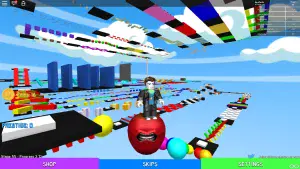
- Ages 8–14: Minecraft modding (Java) or Roblox game creation (Lua).
- Ages 12+: Advanced tools like Python, Unity (C#), and Unreal Engine (C++).
Pricing starts at $29/month for self-paced courses or $249/month for private lessons. Camps are designed to fit school breaks and focus on hands-on projects like Minecraft mods, Roblox games, AI, and more.
Quick Comparison:
| Feature | Winter Camps | Spring Camps | Summer Camps |
|---|---|---|---|
| Duration | 1 week (2 hrs/day) | 4-5 days (60-90 mins/day) | 1 week (2 hrs/day) |
| Age Range | 6–17 years | 7–15 years | 6–18 years |
| Languages/Tools | Scratch, Python, Java | Lua, Java, Python | Python, AI, C#, C++ |
| Focus | Quick intro projects | Mid-year skill boost | Advanced mastery |
| Pricing | $29–$349/month | $29–$349/month | $29–$349/month |
Choose based on your child’s interest, skill level, and schedule. For a trial, start with a free Scratch or Python class.
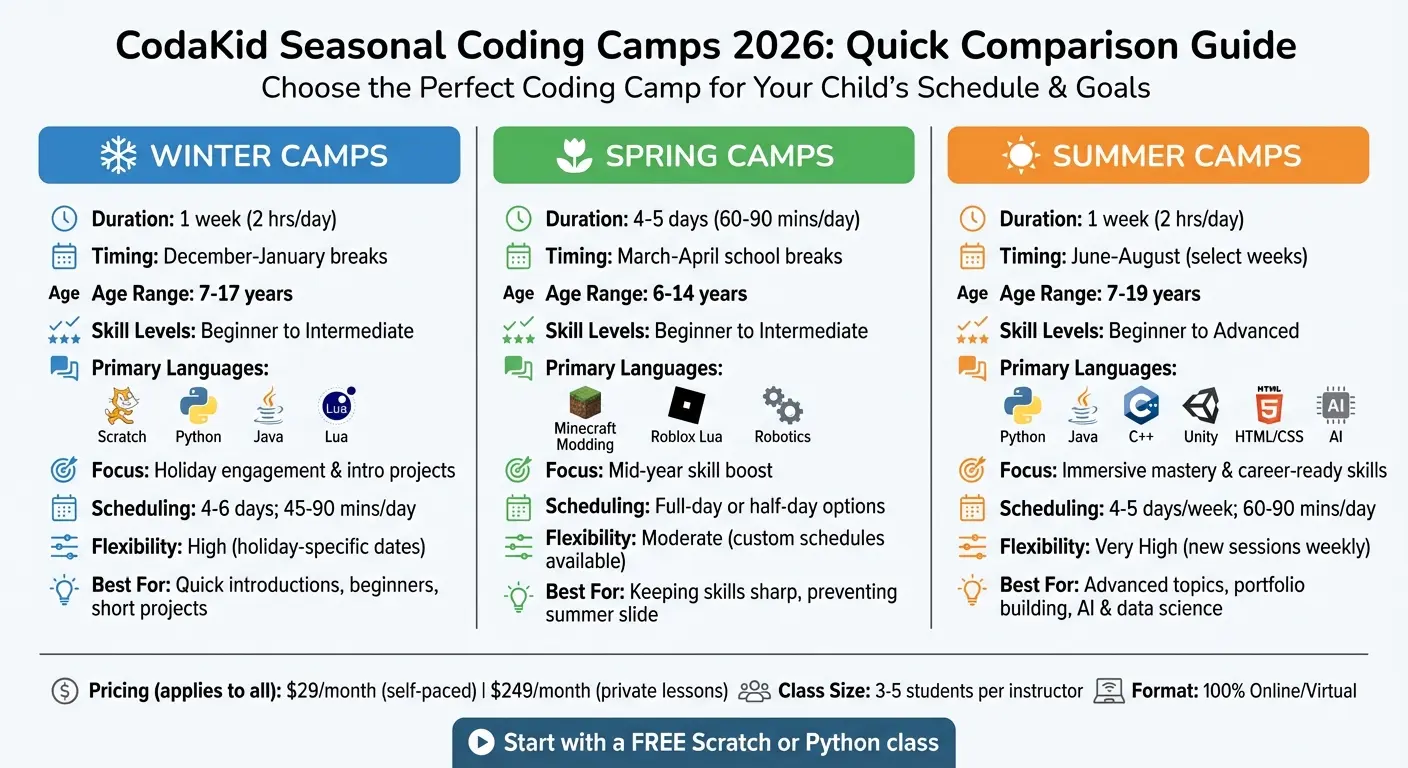
CodaKid Seasonal Coding Camps Comparison: Winter vs Spring vs Summer 2026
Table of Contents
1. Winter Coding Camps
CodaKid’s winter coding camps are designed to fit seamlessly into December and January breaks, offering focused learning without interfering with holiday traditions. These one-week virtual camps meet for two hours daily and are carefully scheduled to avoid major holidays like Christmas and New Year’s, so families can fully enjoy their celebrations. Here’s a closer look at what these camps offer.
Programming Languages
The camps are tailored to different age groups, ensuring students work on projects that match their skill levels and interests.
- Elementary students (ages 6–10): Begin their coding journey with Scratch, a block-based platform that introduces coding logic in a fun, visual way.
- Middle schoolers (ages 11–14): Dive into text-based programming with projects like Minecraft modding using Java, game creation in Roblox with Lua, or even web development with HTML and CSS.
- High school students (ages 15–18): Tackle advanced topics like Python for AI, C# for Unity, and C++ for Unreal Engine. Some tracks even explore AI integration using real-world APIs.
Age Suitability
CodaKid ensures a tailored experience by grouping students by age, aligning the curriculum with their developmental stages. Younger students focus on foundational skills, while high school participants engage with professional-level topics like data science and advanced game engines. This approach ensures every student is both supported and challenged appropriately.
Skill Levels
These camps are open to beginners and experienced coders alike. Tracks are divided into levels:
- Explorer (Beginner): Introduces coding basics through hands-on projects, perfect for first-time learners.
- Advanced: Pushes students with prior experience to tackle complex concepts like object-oriented programming and advanced logic.
By focusing on real-world outcomes – such as creating playable games or functional apps – students stay engaged and motivated throughout the week.
Scheduling and Pricing
The camps run for one week with daily two-hour sessions. Pricing starts at $29 per month for a self-paced subscription, granting unlimited access to over 85 courses. For personalized learning, private one-on-one lessons are available, starting at $249 per month. Group sessions are priced at $349 for the entire series.
2. Spring Coding Camps
CodaKid’s spring camps are held during mid-March to April, perfectly timed for school breaks. These camps run over four to five consecutive days, with daily sessions lasting 60 to 90 minutes. They’re a great option for families looking to keep kids engaged with coding challenges during their time off.
Programming Languages
The spring camps offer a variety of programming languages tailored to different skill levels. For younger kids, the journey starts with Scratch, a visual, block-based coding platform where they can create animations and simple games. As students grow more confident, they move on to text-based coding with Lua for Roblox scripting and Java for Minecraft mods. For those ready to dive deeper, Python courses cover topics like AI, machine learning, and computer vision. These tracks are thoughtfully designed to match the learning pace of each age group.
Age Suitability
These camps cater to kids aged 7–15. Beginners start with foundational visual coding, while older or more experienced participants tackle text-based projects that challenge their creativity and skills.
Skill Levels
Whether your child is a complete beginner or has some coding experience, CodaKid’s spring camps have something to offer. The beginner track introduces essential coding concepts through hands-on projects, while the advanced track focuses on object-oriented programming and problem-solving. Thanks to the self-paced format, families can start the program when it fits their spring break schedule.
Scheduling and Pricing
CodaKid offers flexible pricing to suit different needs. Unlimited self-paced courses are available for $29/month, while one-on-one instruction is priced at $249/month. This setup ensures families across the country can join, no matter when their spring break falls. Group sessions are priced at $349 for the entire series.
3. Summer Coding Camps
Summer is the perfect time for young minds to dive into coding, and CodaKid’s summer camps provide an engaging, hands-on experience. Held during select weeks in June, July, and August, these virtual camps offer a focused, one-week journey with daily two-hour sessions. This setup keeps kids engaged while making the most of their summer break.
Programming Languages
The curriculum is designed to cater to a variety of interests and skill levels, introducing students to an impressive lineup of programming languages. Younger kids start with Scratch, a visual coding platform that teaches logic through fun animations and simple game creation. As they advance, students can explore Python for projects in artificial intelligence, machine learning, and data science – fields expected to see a 34% increase in software-related jobs. Other languages featured include Lua, Java, JavaScript, HTML/CSS, and C# for Unity, ensuring there’s something for everyone, whether they’re just starting out or already building complex projects.
Age Suitability
These camps are tailored for kids aged 6–18. Younger participants focus on visual coding, while older students tackle advanced topics like AI and data science, making the program adaptable to different age groups.
Skill Levels
From beginners to seasoned coders, the camps provide a range of challenges. Newcomers work on interactive projects to build confidence, while experienced students delve into object-oriented programming and real-world applications.
Scheduling and Pricing
The summer camps strike a balance between structure and flexibility. Each session runs for one week, with daily two-hour classes. For ongoing learning, families can opt for a self-paced subscription at $29/month or invest in one-on-one sessions priced at $249/month. This variety ensures there’s an option to suit every schedule and budget. Group sessions are priced at $349 for the entire series.
Pros and Cons
Here’s a closer look at the benefits and challenges of each seasonal camp option, summarizing their unique strengths and limitations.
Winter camps are perfect for short, focused projects during holiday breaks. They work well for beginners or those looking for a low-commitment introduction to coding. The fixed holiday schedule can be a downside, especially if it clashes with family travel plans. These camps work best for completing one straightforward project.
Spring camps shine when it comes to flexible scheduling. Many programs align with different school district breaks in March and April, and some even allow custom schedules if arranged at least two weeks in advance. This mid-year option is great for refreshing skills and keeping students engaged, preventing the so-called “summer slide.” However, the shorter duration can make it tough to dive into more complex, multi-layered projects.
Summer camps offer the most immersive experience, with daily sessions often spanning several weeks. This extended format allows students to progress from beginner to advanced levels, making it a prime choice for building portfolios and tackling advanced topics like AI and data science. The downside? A bigger time commitment – some programs require up to 4 hours daily, including independent project work.
Quick Comparison:
| Feature | Winter Camps | Spring Camps | Summer Camps |
|---|---|---|---|
| Primary Languages | Scratch, Python, Java, Lua | Minecraft Modding, Roblox Lua, Robotics | Python, Java, C++, Unity, HTML/CSS, AI |
| Age Range | 7–17 years | 6–14 years | 6–18 years |
| Skill Levels | Beginner to Intermediate | Beginner to Intermediate | Beginner to Advanced |
| Scheduling | 4–6 days; 45–90 mins/day | Full-day or half-day options | 4–5 days/week; 60–90 mins/day |
| Flexibility | High (holiday-specific dates) | Moderate (custom schedules available) | Very High (new sessions weekly) |
| Learning Goal | Holiday engagement & intro projects | Mid-year skill boost | Immersive mastery & career-ready skills |
While each camp type caters to different goals and schedules, a shared concern for online programs is the lack of full-day supervision, which might be challenging for families needing childcare. However, online camps often feature small class sizes – typically 3–5 students per instructor – providing personalized attention that larger, in-person programs may struggle to match. These factors help parents decide which seasonal camp best aligns with their child’s needs and interests.
Conclusion (Best Online Coding Camps for Kids)
Finding the right coding camp for your child means aligning their interests and goals with the camp’s seasonal format. Each season offers something unique: Winter camps are great for quick introductions, Spring camps provide flexible mid-year opportunities, and Summer camps dive deeper into advanced projects. These options reflect CodaKid’s dedication to making coding education engaging and age-appropriate.
The programming focus is equally important. If your child enjoys gaming, camps that teach Minecraft modding or Roblox coding could be a perfect fit. For students aiming to build skills for college or future careers, summer programs that include Python, Java, or AI development can help them create a strong portfolio.
Class size also plays a key role, offering personalized support when challenges arise. For families seeking year-round learning, CodaKid provides self-paced courses at $29/month, allowing students to learn at their own pace.
When deciding, factor in your family’s schedule and your child’s preferred learning style. Whether they thrive in structured settings or prefer more independent, flexible work, there’s a camp that matches their needs.
Still unsure? Start with a free introductory class in Scratch or Python to see if it sparks their interest before committing to a full seasonal camp. With thoughtfully designed seasonal camps, CodaKid ensures your child can find the right balance of learning and challenge throughout the year.
FAQs (Best Online Coding Camps for Kids)
How do the winter, spring, and summer online coding camps differ?
CodaKid tailors winter coding camps for the holiday season, offering short, week-long sessions during late December and early January. These camps often feature festive-themed projects and popular programming tools like Scratch, Python, Java, Minecraft, Roblox, and AI platforms such as ChatGPT. With small class sizes – no more than five students per instructor – and flexible scheduling, students enjoy a personalized learning experience. Participants also receive certificates of completion, and camps come with a happiness guarantee to ensure satisfaction.
Summer camps, in contrast, are longer programs running throughout the traditional school vacation months. These camps cover a wider curriculum, including coding languages like Python, Java, JavaScript, C++, and C#. They often provide multi-week enrollment options, promotional discounts, and referral incentives, making them a great choice for families seeking extended educational opportunities. While summer camps don’t focus on seasonal themes, they offer a broad selection of courses to accommodate various skill levels and are available year-round.
We currently lack specific details on spring coding camps, so we cannot make a direct comparison at this time.
How do online coding camps tailor their programs for different ages and skill levels?
CodaKid tailors every online coding camp to match kids’ ages and skill levels, ensuring a learning experience that meets them exactly where they are in their coding journey. For younger kids (ages 5–8), the focus is on block-based coding platforms like Scratch. These platforms make coding fun and accessible by introducing concepts like loops, sequencing, and event handling through interactive projects like simple animations and games. Preteens (ages 9–12) often transition to text-based programming languages such as Python or Lua, diving into programming basics like conditionals, data types, and even basic graphics. Teens (13 and older) can explore more advanced areas, including web development (HTML, CSS, JavaScript), AI projects, or app creation, giving them the tools to build websites, develop games, or prototype mobile apps.
Skill levels are another key component of these camps, typically divided into beginner, intermediate, and advanced tracks. Beginners focus on learning essential syntax and completing guided projects. Intermediate students take on more challenging tasks, such as nested loops and advanced game mechanics. Advanced learners tackle real-world coding problems, like creating multi-step projects, working with APIs, and collaborating on group assignments. With small class sizes and personalized teaching approaches, these programs ensure that kids can learn at their own pace while staying engaged and motivated.
What are the pricing options for CodaKid camps, and what do they include?
CodaKid provides several pricing plans designed to suit various learning preferences and schedules. These plans usually come with access to live instruction, hands-on lessons, and project-based activities aimed at teaching kids practical coding skills. The specific features and offerings may differ based on the selected camp or subscription.
For the latest pricing details and a full breakdown of what each plan includes, it’s best to visit CodaKid’s official website or reach out to their support team. This way, you’ll have all the information needed to choose the right option for your child.